Tag Archives: USA

In Europe, the Era of Easy Decisions is Over

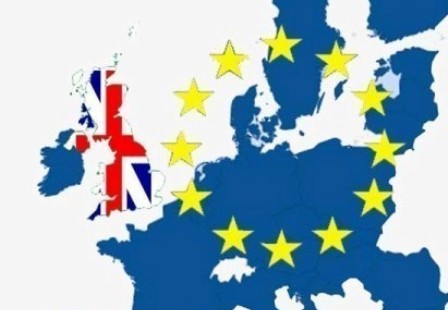
The EU’s strategic weight in the world will be reduced by the absence of the UK, as the EU is losing a relatively young, diverse and creative member state. 

[John Bruton | Oped Column Syndication]


Make no mistake about it, the latest version of Brexit is a very hard Brexit. The UK Government has abandoned the legally binding commitment in the previous deal to align with EU regulatory standards to the greatest extent possible. That is now dropped in favour of a political aspiration.

The more the United Kingdom diverges from the European Union standards the greater is the likelihood that the EU will have to place tariff and other barriers in the way of UK imports to the EU, and now also to Northern Ireland. The problem will be particularly acute for agricultural goods.

The EU/UK trade negotiation has yet to begin, but I believe it will be both lengthy and difficult. This is a direct result of the “red lines” for Brexit chosen by the UK (no custom union membership, no single market membership and no European Court of Justice jurisdiction). This was a legitimate choice for the UK to make, but the costs of the choice are yet to be revealed and understood. When they are, it will be too late to change course.

Many in the UK say they just want to “get Brexit over with”. The impatience is understandable, but the truth is that agreeing the Withdrawal Treaty will not actually get Brexit “over with”. The additional bureaucracy will be permanent. If there is not to be a no deal crash out, the transition period will have to be much long than the end of 2020, because the trade negotiation will only be in its early stages by then.

The only way to get  the agony of Brexit over with, would be to revoke Brexit. There is little popular support for that, so Brexit will drag on and preoccupy British politics for years.

By choosing a harder Brexit than Mrs May, and agreeing that the controls will be in the Irish sea, Boris Johnson has chosen to prioritize the interests of  hardline Brexiteers in England over the interests of the DUP in Northern Ireland. Such a choice was inherent in Brexit, which is why it will remain a puzzle for historians to discern why the DUP chose to support Brexit with such enthusiasm in the first place.

THE WORLD AFTER BREXIT

I would like to turn now to the world after Brexit, and about the European Union, of which we will continue to be a member and in whose success we will now have a disproportionate interest.

The world has become a much more unpredictable place than it was 10 years ago.

The era of easy decisions may be over.

A European country, Ukraine, has been successfully invaded by it neighbour, Russia, breaking solemn undertakings that had been given. We have been reminded of the importance of defence.

There is widespread evidence of interference in elections and democratic processes by authoritarian regimes in other parts of the world. Voting software is being infected. Campaigns are being hacked. National rules on election spending can be circumvented via the social media.

The United States has created doubt around its defence commitments to Europe. It has walked away from its Kurdish allies in Syria, and Europe was not able to fill the gap, although the refugees from that conflict are more likely to end up in Europe than in America. In fact Europe is dependent on Turkey and North Africa to curb mass migration to the southern shores of the EU.

The EU has not developed a migration policy, which, if properly organised , could bring dynamism to our continent to compensate for the loss of dynamism that will inevitably flow from the ageing of the native European population.

The US is undermining the rules based international order in the field of trade. It is refusing to allow the appointment of replacement judges to the WTO’s appellate court, which will soon lead to that court ceasing to function. This is happening just at the time that our nearest neighbour may find itself relying on the WTO once its post Brexit transition period expires.

THE RISE OF CHINA

China is returning to the dominant position it held in the world economy in the two millennia up to 1800.

It is doing this on the strength of its human capital, not its physical capital. It is educating more engineers that the US and the EU combined.

It is doing it through its competitive and  innovative firms, not through its monopolistic state enterprises. Chinese R and D spending will exceed US Rand D this year and far exceeds EU R and D.

It is ahead of everyone in 5G communications, at the time the world economy is becoming ever more digital.

Chinese firms own Volvo, Pirelli and recently bought the firms supplying robots to the German car industry. EU could not buy the equivalent Chinese firms.

Chinese military spending exceeds that of all EU states combined and is already half that of the US.

If the US thinks it can use trade policy to arrest Chinese development, it is probably making a mistake.

But the US is right to insist on fair competition. China must be treated in the WTO as a developed country, and not get concessions intended for much poorer countries.

In its response to the Chinese challenge, the EU should maintain its robust competition policy and should not try to pick industrial winners from Brussels.

THE RESPONSE OF EUROPE

Europe would be much better placed to defend its own interests, and to act as a balancing power in the world, if the euro functioned as a global reserve currency.

To achieve that, we need to create a Capital Markets Union and complete the Banking Union. This requires a harmonisation of company insolvency rules throughout the EU or the Eurozone.

The Eurozone must have a capacity to cope with localized shocks and to prevent contagion.  We need viable proposals for a Eurozone wide reinsurance of bank deposits, and Eurozone wide reinsurance of the unemployment  benefit systems of member states..

BREXIT IS A SETBACK FOR EUROPE……..STAGNATION MUST BE AVOIDED

There is no doubt but Brexit has been a setback for Europe.

True, the EU had maintained its unity and stability, in stark contrast to the way in which the UK system has been convulsed by the divorce. But that does not take away from the fact that we are losing a relatively young, diverse and creative member state.

The EU’s strategic weight in the world will be reduced by the absence of the UK.

The population of the remaining members of the  EU are, in global terms, relatively elderly, pessimistic and risk averse. This could lead the EU to make big mistakes.

I give some examples of this.

Many member states refuse even to contemplate the amendment of the EU Treaties because of the risk of defeats in referenda. If that remains the attitude, the EU will simply stagnate. Every successful human organisation must have the capacity to change its rules if this is demonstrably necessary. The US is unable to amend its constitution and we can see the problems that has led to.

Unlike the US, the EU has been able to attract and accommodate new member states over the last 50 years. At last week’s Summit, France the Netherlands and Denmark blocked the opening of accession talks with North Macedonia even though that country has done everything the EU asked to qualify, even changing its name, which was a highly sensitive matter.

The fact that this rejectionism was led by President Macron, who makes great speeches about European integration, is particularly disquieting. I hope he changes his mind. Yes, we need tougher means of ensuring that the rule of law in respected in the most rigorous way but that could have been dealt with in the negotiations with North Macedonia, which would have gone on for years any way.

THE SINGLE MARKET

We must defend the integrity of the EU Single Market, at the borders of the European Union and throughout its territory.

Ireland must be seen to be, fully compliant with EU Single Market rules. Otherwise Ireland’s geographic position will be used against it by competitors for the investment.

The EU Single Market is not complete. There is much more to do.

An April 2019 Study “Mapping the Cost of non Europe” estimated that

  • completing the  classic single market would add  713 billion euros to the EU economy.
  • completing Economic and Monetary Union would add a further 322 billion, and
  • completing a digital single market a further  178 billion euros.

A more integrated energy market would save a further 231 billion and a more integrated EU approach to fighting organised crime would be worth 82 billion.

Cross border VAT fraud is costing 40 billion. This will be an area of special concern in regard to traffic between Britain and Northern Ireland.

These are some of the reasons why we must complete the Single Market.

Services account for three quarters of EU GDP.

But  we have been very slow in creating a single EU market for services.

In the field of Services, only one legislative proposal had been adopted during the term of the outgoing Commission, a proportionality test for new regulations on professions.

All other proposals are blocked.

I think that a major obstacle is vested interests in national or regional governments, who do not want to give up power.

By completing the Single Market, the EU can show that it has much more to offer to the world than a post Brexit Britain.

To help complete the Single Market, Ireland should be open to qualified majority voting on energy and climate matters.

We should also be open to carefully defined individual amendments to the EU Treaties if they can be shown to the public to deliver real benefits.

A LEVEL PLAYING FIELD

The existing Withdrawal Agreement protects UK environmental, product and labour standards, in a way that a mere Trade Agreement will never do.

In any trade negotiation with a post Brexit Britain, maintaining a level competitive playing field will be vital.

No subsidies, no cartels, and no undercutting of EU standards must be insisted upon.

Likewise the UK must not be allowed to undercut the EU on worker protection, environmental and product quality standards. The UK will have to set up bureaucracies to devise and enforce UK standards. 200 EU environmental laws will have to be replaced by the UK. Westminster will be busy.

EU WIDE DEMOCRACY

It is over 40 years since the first European Parliament election.

While the  EP elections are hotly contested, the contests are often really about national issues.

A genuine EU wide debate does not take place, because the elections are confined within in national constituencies. An EU “polis” or public opinion has not yet been created.

My own view is that the President of the Commission should be elected separately from the Parliament, using a system of proportional representation (PR).

We must have strong national democracy if we are to have a strong EU, and we must have strong national democracy if we are to have strong states.

There are remarkable differences in the level of confidence people in Europe feel in their own national democracy. According to a recent Pew Poll, 72% of Swedes have confidence in how their national democracy works. Within the Netherlands confidence in their system was  68%, in Poland it was 61% and in Germany 65%.

But , at the other end of the spectrum, only  31% of British, and 32% of Spaniards and Italians had confidence in their own democratic systems.

To build confidence in the EU, we also need to rebuild confidence in democracy itself, at every level of governance.


John Bruton is the former Prime Minister of the Republic of Ireland  (1994-97) and the former European Union Ambassador to the United States (2004-09). He has held several important offices in Irish government, including Minister for Finance, Minister for Industry & Energy, and Minister for Trade, Commerce & Tourism.

Amid Worsening Crisis with Russia, Georgia Conducts Military Exercises with USA

The USA gradually changed the orientation of the exercises it carried out in Georgia to reflect more what Georgia wanted: the ability to fight Russia.

[Joshua Kucera | Eurasianet]


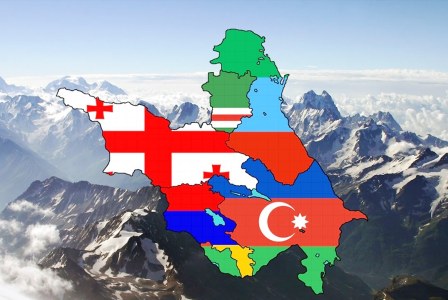
About 1,500 American troops are in Georgia for joint military exercises, a show of support amid a festering crisis with Russia. The exercises, Agile Spirit 2019, are the seventh iteration of drills led by the USA and Georgia but which in recent years also have included other countries.

The drills are aimed at getting partner militaries acquainted with deploying to Georgia and operating alongside Georgian troops; a significant part of the exercises is in fact getting the USA equipment into Georgia.

Over the years the exercises have steadily grown in scale and ambition; this year’s version of Agile Spirit, which formally kicked off July 27, will reportedly be the largest yet, with 3,000 troops total from Georgia, the USA, and 12 other countries (all of them NATO members except Ukraine). The USA contingent is a bit larger than in last year’s exercises, when 1,400 Americans took part.

When they were first conceived in the 2000s, joint exercises with the USA were aimed at getting Georgian troops ready for deployments to USA-led missions to Iraq and Afghanistan, where the Georgians would patrol or guard facilities.

But the 2008 war over South Ossetia exposed the Georgian military’s “inability to push back the attacks of Russian tank and aviation,” said Irakli Aladashvili, a Georgian military expert, in an interview with the news website Caucasian Knot. Over the following years, the USA gradually changed the orientation of the exercises it carried out in Georgia to reflect more what Georgia wanted: the ability to fight Russia. “Recently the exercises are developed to precisely, for example, stop an attack of a tank unit of the likely enemy and to beat back air attacks of its aviation and artillery counterfire,” Aladashvili said.

The prospect of war with Russia, while still remote, has gained urgency this summer following anti-government and anti-Russia protests in Tbilisi that have drawn a harsh reaction from Moscow. Add to that the Kremlin’s dismay at what has happened in next-door Armenia, where the new government is not as enthusiastic about its relationship with Russia as Moscow would like. One prominent commentator even predicted that Russia could invade and occupy some part of Western Georgia to show Armenia a lesson – and that was before this crisis began.

Both Georgian and American officials have shied away from directly connecting these exercises with the current crisis or with Russia at all. When Georgian journalists asked Defense Minister Levan Izoria about the prospect that they might be received poorly in Moscow, Izoria responded only that Georgia would continue to “coolly and rationally” pursue its strategic goals.

Russian officials have been less reticent. The exercises “are intended as a demonstration of force and an attempt to show that NATO remains present at Russia’s western and southern borders. NATO’s desire is to set up bases along the entire border, all the way to the Pacific Ocean,” said Igor Morozov, a member of Russia’s Federation Council, in an interview with state-funded RT.

Other Russian commentators noted with some irony that the official rhetoric around the exercises included claims that they would be aimed at “maintaining [a] stable and secure environment over the Black Sea region.”

“In dangerous circumstances, [exercises with NATO countries in the region] could quickly lead to fighting,” Ruslan Balbek, a member of the Duma representing Crimea, told RT. “All these multinational democratic militaries led by the USA know this as well, and that they are irritating. However, the Americans need only tension. The main thing is that it doesn’t become a military conflict.”

Of all Georgia’s neighbors, the only one participating in Agile Spirit 2019 is Turkey. Armenia and Azerbaijan, which have participated in previous USA-Georgia exercises, are both staying out this time. In Armenia that has caused some consternation among advocates of closer ties with the West and the USA in particular.

“The issue is not the military exercises per se,” said Arman Babajanyan, a member of parliament from the opposition Bright Armenia party, in a Facebook post. “Much more significant is that Russian pressure on Yerevan is growing and seems to have its first manifestations, even though the authorities are trying carefully to conceal this fact. One of the achievements of the Armenian Revolution was the abolition of the Armenia-Russia ‘vassal’ relations, the return of which could cast a shadow over the political significance of these historical events.”

This article was originally published on Eurasianet.


Joshua Kucera is the Turkey/Caucasus editor at Eurasianet, and author of The Bug Pit.


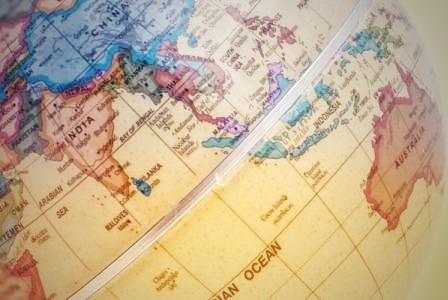
Europe, a new security actor in Indo-Pacific

The increasingly apparent fragility of the rules-based order, as well as a lively debate on security and defence, are stepping up European interest in the Indo-Pacific.

[Dr Eva Pejsova | Policy Forum]


French President Emmanuel Macron’s call for the creation of a “real European army” last November revived a lively debate both outside and inside Europe. Is it the end of the transatlantic romance? How will it impact NATO? Who is supposed to be the enemy? What does it mean for the global strategic chessboard? And is it even feasible?

While the dream of a European ‘army’, in a traditional sense, is probably not likely to materialise overnight, the European Union’s (EU) ambition to boost its strategic autonomy is real and shaping up.

Over the last two years, European security and defence integration have taken a great leap forward. The ‘awakening’ of the Permanent Structured Cooperation (PESCO) – boosting its military readiness; a push for an integrated defence industrial policy through the European Defence Fund – bolstering competitiveness and freedom of operational action; or the recent creation of the French-driven European Intervention Initiative (EI2) are some of the concrete steps undertaken since 2017, signaling a change from its status as a civilian power.

What’s behind this change are multiple external and internal factors. First, there has been the realisation that Europe can no longer simply rely on its transatlantic ally to face its many regional and global security challenges.

It is also an effort to take on greater responsibility as a global security provider. The US disengagement from the Iran deal, the Intermediate-Range Nuclear Forces (INF) Treaty, and climate change commitments have revealed the fragility of the global rules-based order and values that Europe wants to champion.

Internally, boosting defence cooperation has finally become a useful element of convergence among often-divided member states, many of whom are facing pressure from rising nationalism, populist movements, and the lasting migration crisis.

As a colleague recently wrote, depending on its scale, the ‘army’ can be understood as a step towards greater responsibility over Europe’s security, hedging against strategic uncertainties, or as an act of emancipation.

Either way, a more strategically autonomous Europe should be better equipped to protect its foreign policy interests.

But what does it all mean for the Indo-Pacific, and what are these interests?

For the longest time, Europe’s efforts to play a role in Asia’s security have been systematically downplayed by traditional regional actors. For Beijing, Europe was merely considered to be echoing US interests. For Washington, it was seen as too opportunistic and not critical enough of China. For both and most other countries in between, the EU was simply a large trading block without any military capacity and with absolutely no say nor added value to regional security.

But times have changed and Europe has never been more concerned and interested in Asian affairs.

One reason for this is China. The multiplication of activities along the Belt and Road Initiative (BRI) brought many of the region’s problems to Europe’s doorstep. Debt-traps, non-transparent investments, and interference in domestic politics have started to pose a direct threat to the EU’s unity and security.

As the world’s largest trading power, Europe’s prosperity is vitally dependent on Asia’s stability and is sensitive to disruptions, especially in the maritime domain – something it tries to act on through its growing security engagements in and with its Asian partners.

Europe has also become more realistic. The 2016 EU Global Strategy, which provides the guiding principles of its new foreign and security policy, urges for a stronger Europe to address current challenges under the concept of “principled pragmatism” – with international law and its underlying norms as a benchmark.

Subsequent strategies on specific countries and sub-regions, such as the China and India Strategy, echo these principles, and so does its latest Strategy on connecting Asia and Europe, which is of the greatest interest to the Indo-Pacific theatre.

Contrary to some speculations, this strategy does not pretend to counterpoise or compete with the BRI. Rather, it should be read as ‘terms of reference’ for the EU’s vision of connectivity – which should be sustainable, comprehensive, rules-based, and transparent. To achieve that, it encourages cooperation with all stakeholders, including China.

The emergence of the ‘Indo-Pacific’ as a concept has been closely watched in Brussels. With its geographical scope, focus on connectivity and maritime security, as well as the values of freedom and openness it promotes, it is well aligned to its own interests and ambitions in the region.

The involvement of some EU member states provides an additional incentive. Indeed, Macron’s call for a stronger, more responsible Europe serves France’s own strategic interests well. In a post-Brexit world, France would be the only European country with an effective military presence in the Indo-Pacific. Additionally, France is a close strategic partner of Japan, Australia, and India, and a key driver of European engagement in regional security.

The EU can serve as an amplifier to member states’ foreign policies where interests align, and the Indo-Pacific is certainly one of them. But stability in the region cannot be sustained without taking into account all players, existing institutions and security structures.

A year ago, I pointed out some of the potential dangers with the concept: an escalating rivalry between ‘the Quad’ and China; smaller countries left with a binary choice; and neglect of existing regional cooperative platforms and multilateral governance. These are all still potential dangers today.

With its unique experience, economic weight, and extensive diplomatic network, Europe can provide a much needed normative underpinning as well as greater legitimacy to the new geopolitical construct. The promotion of rule of law, economic integration, cooperative security, multilateralism, good governance, and economic, social and environmental sustainability stand at the core of Europe’s approach to international security, which can be its best contribution to peace and stability in Asia, including some of its greatest security hotspots.

The EU is clearly a different type of a security actor in the Indo-Pacific. In many ways, it can be seen as that odd friend that is too complicated to understand and not very charismatic, but one that shares the same vision and can be trusted to stand up for values that are crucial for making the new regional order sustainable.

The question now is whether this newly found strategic autonomy will translate into an equally ambitious foreign policy. As we gear up for the next European elections in May 2019, populist movements are in the ascendency. The risk is that domestic problems that currently shake European capitals – from the gilets jaunes to rising identity politics, anti-immigration and nationalist tendencies – will distract from maintaining a coherent foreign policy course.

The second, equally important question, is whether traditional Indo-Pacific powers – Australia, India, Japan, and the US at the forefront – will be willing to acknowledge its added value and ready to accept a new, and somewhat odd, player entering the game.

This article was originally published on Policy Forum.


Dr Eva Pejsova is a Senior Analyst at the EU Institute for Security Studies (EUISS) dealing with East Asia, maritime security and EU – Asia relations.


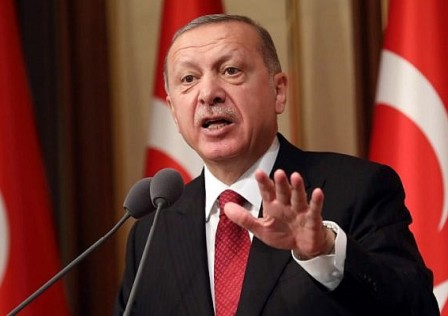
Turkey’s Local Elections: Erdogan, Opposition Parties and Kurds

If there is a phrase that sums up the local elections results, it might be “revenge of the Kurds.”

[Conn M. Hallinan | Oped Column Magazine]


Turkish President Recep Tayyip Erdogan, whose political power had remained unchallenged for last 18 years, is suddenly facing several domestic and foreign crises, with no obvious way out.

It is unfamiliar ground for a master politician like Erdogan, who has moved nimbly from the margins of power to the undisputed leader of the largest economy in the Middle East.

The problems that Erdogan has been facing lately are largely of his own making: an economy built on a deeply corrupt construction industry, a disastrous intervention in Syria and a declaration of war on Turkey’s Kurdish population. All of these policies have backfired badly.

Erdogan’s conservative Justice and Development Party, also known as the AK Party, had lost control of all of Turkey’s major cities, including the country’s political center, Ankara, and the nation’s economic engine, Istanbul in the local elections of March 31, 2019. Worth noting that Istanbul contributes more than 30 percent of Turkey’s GNP.

That is not to say that the man is down and out. The AK Party is demanding a re-run of the Istanbul election and is preventing the progressive mayors of several Kurdish cities in Turkey’s southeast from assuming office.

Erdogan is not a man who is shy of using brute force and intimidation to get his way. Close to 10,000 of his political opponents are in prison, hundreds of thousands of others have been dismissed from their jobs, and opposition media is largely crushed. The final outcome of the election is by no means settled.

Erdogan’s problems will only be exacerbated if he continues to use force.

The Kurds are a case in point. When the leftist Kurdish-based People’s Democratic Party (HDP) made a major electoral breakthrough in 2015 – winning 81 seats in the Parliament and denying the AK Party a majority – Erdogan responded by ending peace talks with the Kurds and occupying Kurdish towns and cities.

However, instead of cowing the Kurds, it sowed the wind, and the AK Party reaped the hurricane in the March election.

An analysis of the Istanbul mayor’s race shows that the AK Party and its right-wing National Movement Party alliance won about the same percentage of votes it had in last year’s presidential election. The same was true for the AK Party’s opposition — the secular Republican People’s Party (CHP) and its ally, the right-wing Good Party.

The difference was that the HDP did not field a candidate, and its imprisoned leader, Selahattin Demiratas, urged the Kurds and their supporters to vote against Erdogan’s candidate. They did so in droves and tipped the balance to the CHP’s candidate. That pattern pretty much held for the rest of the country and accounts for the AK Party’s loss of other cities, like Izmar, Antalya, Mersin and Adana.

When the Turkish state waged a war against the Kurds in the 1980s and ’90s, many fled rural areas to take up life in the cities. Istanbul is now about 11 percent Kurdish. Indeed, it is the largest grouping of urban Kurds in the world. So if there is a phrase that sums up the election, it might be “revenge of the Kurds.”

But the AK Party’s loss of the major urban centers is more than a political setback. Cities are the motors for the Turkish economy and for the past 18 years Erdogan has doled out huge construction projects to AK Party-friendly firms, which, in turn, kick money back to the Party. The President has delivered growth over the years, but it was growth built on the three “Cs”: credit, corruption and cronyism.

Those chickens have finally come home to roost. Foreign currency reserves are low, Turkey’s lira has plummeted in value, debts are out of hand, and unemployment – particularly among the young and well educated – is rising.

In a rare case of political tone deafness, Erdogan focused the recent campaign around the issues of terrorism and the Kurds, ignoring polls that showed most Turks were far more worried about high prices and joblessness.

Where Erdogan goes from here is not clear.

Turkey is holding talks with the International Monetary Fund (IMF) about a possible bailout, but Erdogan knows that this means increased taxes and austerity, not exactly the kind of program that delivers votes.

There will be no elections until the 2023 presidential contest, so there is time to try to turn things around, but how? Foreign investors are wary of Turkey’s political volatility, and the Europeans and Americans are unhappy with Erdogan’s erratic foreign policy.

The latest dust-up is fallout from Turkey’s disastrous 2011 decision to support the overthrow of President Bashar Assad of Syria. Assad has survived – largely because of Russian and Iranian support – and now Turkey is hosting millions of refugees and bleeding out billions of dollars occupying parts of northern Syria.

Turkey initially tried to get NATO to challenge Moscow in Syria – even shooting down a Russian warplane – but NATO wanted no part of it. So Erdogan shifted and cut a deal with Moscow, part of which involved buying the Russians new S-400 anti-missile and aircraft system for $2.5 billion.

Backing the extremists trying to overthrow Assad was never a good hand, but Erdogan has played it rather badly.

The S-400 deal made NATO unhappy, as the NATO doesn’t want high-tech Russian military technology potentially eavesdropping on a NATO member country, particularly on American warplanes based in Turkey’s Incirlik Air Base.

The US Congress is threatening to block Turkey’s purchase of the F-35 fifth generation fighter plane, even though Turkey is an investor in the project. The Trump administration has also warned Ankara that it will apply the 2017 Countering America’s Adversaries Through Sanctions Act if Turkey buys Russian military equipment. Sanctions could damage Ankara’s already troubled economy, given that Turkey is officially in a recession.

The Americans are so upset about this S-400 business, that the Senate recently proposed lifting an arms embargo on Cyprus and signing energy agreements with Greece and Egypt — two of Turkey’s major regional rivals.

Blocking Turkey’s purchase of the F-35 may end up being a plus for Ankara. The plane is an over-priced lemon. Some of Erdogan’s advisers argue that Ankara could always turn to Russia for a fifth generation warplane (and one that might actually work).

There is some talk about throwing Turkey out of NATO, but that is mostly bluff. The simple fact is that NATO needs Turkey more than Turkey needs NATO. Ankara controls access to the Black Sea, where NATO has deployed several missile-firing surface ships. Russia’s largest naval base is on the Crimean Peninsula and relations between Moscow and NATO are tense.

strategic turn toward Moscow seems unlikely. The Russians oppose Turkey’s hostility toward the Kurds in Syria, don’t share Erdogan’s antagonism toward Egypt, Israel and Saudi Arabia, and have differences with Ankara over Cyprus and the Caucasus.

And for all the talk about increasing trade between Russia and Turkey, the Russian economy is not all that much larger than Turkey’s and is currently straining under NATO-applied sanctions.

On the one hand, Ankara is angry with Washington for its refusal to extradite Fethullah Gulen, a Muslim leader that Erdogan claims was behind the failed 2016 coup. On the other hand, the Turkish President also knows that the US pretty much controls the IMF and he will need American support if he goes for a bailout.

How Erdogan will handle his domestic problems and foreign entanglements is anyone’s guess.

Erdogan the ‘politician‘ made peace with the Kurds, established a good neighbor policy regionally and lifted tens of millions of Turks out of poverty. But Erdogan the ‘autocrat‘ pulled his country into a senseless war with the Kurds and Syria, distorted the economy to build an election juggernaut, jailed political opponents and turned Turkish democracy into one-man rule.

If the local elections were a sobering lesson for Erdogan, they should also be a wakeup call for the mainstream Turkish opposition. The only reason the CHP now runs Turkey’s major cities is because the Kurdish HDP took a deep breath and voted for the Party’s candidates. That must not have been easy. The CHP was largely silent when Erdogan launched his war on the Kurds in 2015 and voted with the AKP to remove parliamentary immunity for HDP members. That allowed the Turkish President to imprison 16 HDP parliamentarians, remove HDP mayors, and smash up Kurdish cities.

The Kurds demonstrated enormous political sophistication in the recent Turkish balloting, but they will not be patient forever. Erdogan can be challenged, but – as the election demonstrated – only by a united front of center-left and left parties. That will require the CHP alliance to find a political solution to the demands of the Kurds for rights and autonomy.


Conn M. Hallinan is a California-based independent journalist. He is a regular columnist for the think tank Foreign Policy In Focus and holds a PhD in Anthropology from the University of California, Berkeley.


Is Neo-Liberal Economic Model as Glorious as it is Portrayed?

Although neo-liberal economic model is proven to be a complete failure in the first country (the United States) of its full implementation, yet this model of complete misery is applied across the world, including Greece.

[Fotini Mastroianni | Oped Column Syndication]


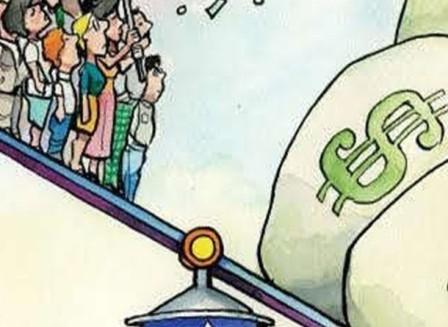
The neo-liberal economic model is being represented as more glorified in many countries. In Greece too, the permanent message of the mass media is the glorification of the neo-liberal economic model, which supports the idea that the concentration of wealth in the hands of the rich people will be spread to the lower classes and, thus, create wealth for the whole society.

Is that the case?

The United States (US) is a global superpower and has become the economic model for many countries. However, many are unaware of the consequences of the US’s economic power for its own population, particularly for the middle and working class.

In the US, the winners are the very rich, while the other social classes belong to the losers. In particular, between 1979 and 2006, the working-class income rose only 10% in 27 years and the income of the middle class increased by 21%.

This 21% is not as good as it may seem, taking into account the smallest number of people in American households (i.e. families with one kid compared to families with more kids in the past). Therefore, the income per person seems to be greater than it actually is.

In fact, the middle-class income rose by only 0.7% per year. It’s worth noting that the middle class is working much longer hours nowadays compared to the end of the 1970s. Without these extra hours, the increase in the US household income would be negligible. In contrast, the income of the rich for the same period has increased by 260%.

Regarding pensions, the middle class and working class are in a worse state. Employees are increasingly burdened with the cost of their retirement, and the state-guaranteed pension is only for a few.

Pensions are based on participation patterns like 401(K) plan, which is a retirement savings plan sponsored by an employer. This plan lets the employees save and invest a portion of their paycheck (pay cheque) before taxes are taken out. However, the scope of investment with this 401(K) plan is limited. One can invest money into mutual funds mostly composed of stocks, bonds and money market investments.

These schemes exposes the American employees to, for instance, the adverse affects of a fall of the stock market, such as in 2007 and 2008, as well as the one that is predicted for the near future. As a result, many Americans run the risk of having little or no income in their pensionable years.

Furthermore, medical costs have been squeezing the income of the middle class and the working class, as they have to bear the insurance cost. Employees spend too much on medical coverage ($ 7,290 per person in 2007 and 12,872 in 2018), while the state has less doctors, nurses and hospitals per individual than other wealthy countries. As a result, mortality – due to lack of early care in the US – is very high, and the ones who are over seventy-five years are at greater risk.

There’s the widespread believe of an American dream that one can be born poor, but s/he can become rich in the course and, thus, escape from the aforementioned problems.

However, the figures are disappointing. Only one in seven could rise to the high income class in the 1970s, whereas today the ratio is one in ten. Those who belonged to the high income category of 1% of the American population were in the same category in the 1970s as evidenced by the heredity of wealth. Hence, social mobility has been, and will be, more difficult for the lower classes due to the accumulation of wealth.

The neoliberal economic model is proven to be a complete failure in the first country of its full implementation i.e. the United States of America. Yet this model of complete misery for the middle and working class is applied throughout Europe and across the world, and Greece is no exception.


Fotini Mastroianni is an economist, MBA lecturer, writer, blogger from Athens, Greece. She had taught, among others, at the University of Wales & the University of Glyndwr.


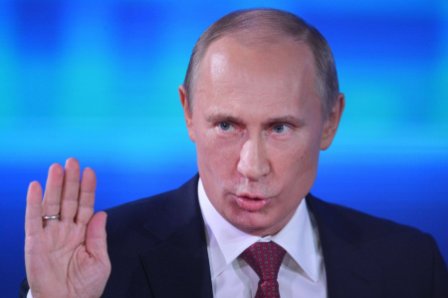
Inside Putin’s Head

Vladimir Putin tries to legitimize his disregard of the ‘rule of law’ by claiming that all former territories dating back to the Byzantine Era and native Russian speakers must be protected by “Mother Russia”. However, the reality is: these territories give Russia access to warm water ports necessary to ship its oil and weapons.

[Cynthia M. Lardner | Oped Column Syndication]


Russian Federation President Vladimir Putin’s approach to foreign relations and military engagement is opportunistic, aggressive and expansionist. These traits – the anti-thesis of multilateralism and cooperation – are driven by Putin’s mental schema that he has been called upon to defend everyone of Russian descent.

Putin’s actions over the last decade, especially in Ukraine, the Crimean Peninsula, Georgia, South Ossetia and Abkhazia, have cost him his G8 seat and open dialogue with NATO and other foreign powers, to the point where many consider this a resurgence of the Cold War. Since 2015 Russia has been slapped with an increasing number of Western sanctions. The Russian plutocracy remains largely unscathed due to their inter-relationship with the Russian government. Then there is Russia’s vast oil reserves upon which the European Union and other countries are heavily dependent.

Furthermore, more than $250 billion in goods and services exchanged annually between Russia and its largest trading partner, i.e. Western Europe. Russia is also non-discriminatory in its sale of weapons and military technology to foreign powers, including Iran and North Korea. It’s the Russian people, living under Putin’s authoritarian rule, who have, undoubtedly, been forced to endure the adverse economic impact caused by the rapid decline of the ruble.

Russia is one of the five permanent members of the United Nations Security Council, and each of these members has veto power, extending to the enforcement of all international tribunal decisions and, if necessary to dispatch peacekeeping missions. Thus, the Russian Federation is protected from international judicial civil accountability in the International Court of Justice or the Permanent Court of Arbitration, which hears cases between United Nations member nations.

As Russia is not a party to the Rome Statue, it is not subject to criminal liability before the International Criminal Court. By way of example, assuming, arguendo, that there was a viable enforcement mechanism, Russia could have been held responsible for the illegal annexation of Crimea under the Minsk II Agreement, and for its actions in Syria. In sum, Putin rules the Russia with impunity and without accountability.

Gorbachev and Kissinger Speak Out

Mikhail Gorbachev, the last General Secretary of the Communist Party of the Union of Soviet Socialist Republics (USSR), received a Nobel Peace Prize in 1990 for summits held with Presidents Ronald Reagan and George H.W. Bush resulting in the 1987 Intermediate-range Nuclear Forces (INF) Treaty. The summits were instrumental in bringing the post-World War II Cold War to its conclusion.

The goodwill generated by Gorbachev and his successor Boris Yeltsin, the first president of the newly created Russian Federation, dissipated when Yeltsin resigned as president, appointing Vladimir Putin the acting president until official elections were held in early 2000. He has been re-elected three consecutive times. Based on his interference with any contender posing an actual threat, Putin could hold the presidency indefinitely.

When the Cold War ended Russia expected to be accepted by the West. This never fully materialized. Putin views that Russia has been left disconnected from post-World War II Europe and threatened by the continuation of NATO.

Dialogue between the West and Russia has deteriorated to the point where it is once again in Cold War mode. Many, including NATO Secretary General, Jens Stoltenberg, and Gorbachev have warned that the continued isolation of Russia could lead to armed conflict on European soil.

Gorbachev warned:

The situation hasn’t been this bad in a long time, and I am very disappointed in how world leaders are behaving themselves. We see evidence of an inability to use diplomatic mechanisms. International politics has turned into exchanges of accusations, sanctions, and even military strikes… I am sure no one wants war, but in the current febrile atmosphere could lead to great trouble, and ordinary people are not yet aware of the threat hanging over them…

Legendary former US Secretary of State Henry Kissinger, who has been in contact with both US President Donald Trump and Russian President Vladimir Putin, and Gorbachev agree that, minimally, a détente [easing of hostility] is needed to ease the tensions between the two countries, which would simultaneously ease tensions around the world.

A logical starting place for dialogue would have been to discuss the mutual charges of violations have placed the INF Treaty in jeopardy and the renewal of the 2010 New Strategic Arms Reduction Treaty put bounds on the US-Russian nuclear competition, is due to expire in less than three years. These treaties provide desirable Mutual Assured Stability between the two countries. But the vision most of the world was left with was Putin tossing a soccer ball to Trump.

After the July Helsinki summit between Putin and Trump, Kissinger sadly concluded, “I think we are in a very, very grave period for the world.”

Chicken or the Egg: The Sanctions Conundrum

Since assuming power, Putin has proven himself to be an antagonist. There are several factors driving Putin’s aggressive, opportunistic and expansionist tactics.

Putin believes himself to be irrevocably tied to Europe dating all the way back to the Byzantine Era. Putin has justified his actions by repeatedly stating that it is his duty to protect all the people of Russian descent even if they reside outside of Russia.

While Russia was sanctioned for the Russo-Georgian War, those sanctions do not compare to the sanctions imposed innumerable times by the EU and the US since 2015. The first set of these sanctions were imposed for the 2014 illegal annexation of the Crimean Peninsula for Ukraine. Russia then lost its seat on the G8. It was the illegal annexation and continued occupation of Crimea that initially left Russia diplomatically out in the cold. While the Minsk Protocols were violated, the reality is that Russia is going to continue occupying Crimea in order to access the warm water port [in Sevastopol] in order to transport its oil [through Black Sea]. This creates a diplomatic conundrum for those wise enough to advocate that the current Cold War be transformed into a détente.

More recently, Russia has been sanctioned for tampering with the 2016 US Presidential election and for being found culpable for a chemical weapons attack in Great Britain on a former KGB agent and his daughter. In the eighteen months, Russia has seen diplomats expelled from several countries – most recently in Greece – for a variety of reasons.

Russian Foreign Minister Sergei Lavrov has alleged that Russia – despite the sanctions – has increased its economic and military capacities. The value of the ruble, however, tells a different story. After years of sanctions, the ruble has only slightly recovered.

Sanctions have not proven effective. In the case of the Crimean Peninsula, the sanctions will continue indefinitely despite their ineffectiveness in achieving anything other than increasing Russian ire [anger].

Crisis Group’s senior analyst for Russia, Anna Arutunyan, advocates for a more common sense approach to the imposition of future sanctions:

Rather than creating incentives for changes in Russian policy or behaviour, such sanctions instead serve to reinforce the Kremlin’s narrative that the West will besiege Russia whatever it does. To work more effectively, any fresh Western sanctions should target specific actions – if necessary piece by piece – rather than conflating all of the Kremlin’s aggressive activities abroad. Western powers should lay out clearly what would need to happen for those sanctions to be lifted.

Weakening Democratic Nations

Putin wants to see Western democratic nations weakened. Due to historical ties, that desire to disrupt is greater where the European Union is concerned.

The July summit with Trump made an international mockery of democracy and the ‘rule of law’, and further damaged the US’s relationships with traditional allies. The preceding G7 and NATO summits and meeting with British Prime Minister Theresa May were coups for Putin as they evidenced a weakening amongst Western allies.

A weakening of the ties between democratic nations generates confusion and diminishes the power of the strongest leaders, such as German Chancellor Angela Merkel and French President Emmanuel Macron. Insecurity is increased by the inconsistencies between Trump and senior US military officials.

What’s more, the threat perceived by the Baltics, the Scandinavia, the Balkans, Poland, Ukraine and Georgia has reached an unacceptable level.

Ukraine and Georgia

Along with the well-known ongoing armed conflict in Ukraine’s Donbas region (where Russian troops and mercenaries push for control of even more landmass), there was and is a similar – but lesser known – scenario playing itself out in Georgia.

The trigger was the 2008 NATO Summit, where Georgia and Ukraine were given a commitment that at a future date they would accede to the NATO member-state status. Putin is speculated to believe that his engaging aggressive and expansionist tactics in both Georgia and Ukraine would slow down or even halt the accession process.

Georgia, once a part of the USSR, is wedged between the Middle East, Russia, Iran and Turkey and is an important corridor for oil pumped from the Caspian Sea. This month is the 10th anniversary of the start of the Russo-Georgian War in which Russia drove Georgian troops out of two breakaway provinces, South Ossetia and Abkhazia. To date, the Kremlin continues to illegally occupy these territories going so far as so construct nineteen military bases in South Ossetia alone.

Georgia is still being attacked by militants using covert tactics that, until recently, were ignored by the media. Pro-Russian militants are taking back Georgia hectare by hectare under cover of darkness, saving Russia from the burden of engaging in an all-out [direct] armed conflict with Georgia. There are times when Georgian farmers wake up only to discover warning signs, barbed wire and even surveillance cameras on what was only the day before part of their farms.

Based on his ill-conceived belief predating the USSR, Putin tries to legitimize his disregard of the ‘rule of law’ by claiming that all former territories dating back to the Byzantine Era and native Russian speakers must be protected by “Mother Russia”, including Georgia, especially South Ossetia, and the Crimean Peninsula. However, the reality is: these territories give Russia access to warm water ports necessary to ship its oil and, no doubt, weapons.

Admiral James Foggo, Commander of US Naval Forces Europe and Africa, stated that Russia is deploying more submarines to the Mediterranean, Black Sea and North Atlantic at the highest rate since the end Cold War.

At the 2018 NATO Summit, the alliance’s member-states reaffirmed their commitment to Georgia that it will accede to NATO member-state status. Putin responded with the expected threat that if NATO added Georgia on Russia’s southern flank, it would “respond appropriately to such aggressive steps which pose a direct threat to Russia.”

The Baltics, Poland and Scandinavia

Then there’s the threat to the EU’s north — specifically Poland, Latvia, Estonia and Lithuania.

The Soviet Union seized Lithuania in 1939. On March 11, 1990, Lithuania declared that it was an independent state, the first of the Soviet republics to do so. While Poland was not a Soviet satellite state, it was under Soviet and, then, Russian control until 1989.

At present, [Russia’s] neighboring countries, Finland and, to a lesser degree, Sweden and Norway have a heightened sense of fear of Putin’s tactics. The Lithuanian and Swedish governments have gone so far as to disseminate materials to their citizens about how to spot a Kremlin agent and what to do in the event of an attack.

Finland was under Russian control until 1917 and the two countries share an 833 mile border. For over 100 years, Finland has tread a fine between Europe and Russia. An EU member since 1995, Finland is not a NATO member. However, Finland participates in nearly all sub-areas of the Partnership for Peace programme and has provided peacekeeping forces to the NATO missions in Afghanistan and Kosovo.

But, it is Poland and Lithuania that face the biggest threat due to the strategic location of the Suwalki Gap, a narrow 64 mile piece of land connecting NATO member-states Poland and Lithuania. Occupation of the Suwalki Gap or bordering Lithuanian territory by Russia would cut off the three Baltic States from other NATO countries. The US Army Europe commander Lieutenant General Ben Hodges stated that the Suwalki Gap is a high potential Russian military target.

Analysts have compared Suwalki Gap to the Cold War era’s German Fulda Gap, where NATO planned and prepared for hypothetical USSR attacks.

NATO has enhanced its forward military presence in more than five regions.

NATO has also created new five cyber warfare centers in Finland, Estonia, Poland, Germany and France.

At a time when NATO needs to rely on Poland, it has boldly challenged adherence to the ‘rule of law’. In January, Poland passed a bill criminalizing any suggestion Poland was complicit in the Holocaust, resulting in sharp criticism by the EU and the US. In July, Poland pulled away from the EU when it changed its judicial system in violation of the rules set by the EU. These are odd tactics for a country that is fearful of Russia. It is questionable what impact Russian operatives supporting far-right nationalists have had on recent events in Poland.

There’s [Russian] Western Military Command for countering NATO. Headquartered in St. Petersburg, the Western Military Command covers 26 federal subjects (including Moscow and Kaliningrad), bordering Poland, the Baltic States, Finland and Norway. A May 2018 Rand Corp report described it as “Russia’s most-capable ground and air forces”.

Strengthening Russia as an independent international player does not give rest to our NATO colleagues. They are trying in every possible way to prevent Russia from becoming a geopolitical competitor, all the more having allies,” stated Russian Defense Minister Sergei Shoigu.

Not only have Russia’s actions and capabilities increased in alarming and confrontational ways, its national-security policy is aimed at challenging the US and its NATO allies and partners,” said Admiral Foggo.

Putin has heightened the threat level by engaging leaders from those European states which are either not part of the EU or were former USSR satellite states, and also by engaging voters who feel disenfranchised from the EU or the US. Additionally, Putin controls a vast propaganda machine and a host of cyber-warfare tactics that has interfered with numerous elections, most notably in the US, France, Austria and Germany, as well as inciting anti-democratic and even white supremacist protests.

Russia has used soft power to deter former Soviet republics and states to Russia’s west and south from joining NATO and the EU. Putin’s authoritarian leadership is admired by Czech Republic President Miloš Zeman, Hungary Prime Minister Viktor Orbán and Serbian Prime Minister Alexander Vucic.


Cynthia M. Lardner is an American journalist residing in the Netherlands and is a contributing editor to Tuck Magazine and the International Policy Digest. Ms. Lardner holds degrees in journalism, law, and counseling psychology.


Russia is America’s Friend

“Russia is our friend.” It’s a case that could fill volumes. I don’t make this case suffering under some delusion of the perfect saintliness of the Russian government, neither now nor at any time in history.

[David Swanson | Oped Column Magazine]


Last May I was in Russia when fascists held a rally in my hometown of Charlottesville, not to be confused with their larger rally which followed in August. At the May rally, people shouted “Russia is our friend.” I was on a Russian TV show called Crosstalk the next day and discussed this. I also discussed it with other Russians, actual friends in the human sense. Some of them were completely bewildered, arguing that Russia never had slavery and couldn’t be the friend of Confederate-flag-waving people whom they saw as advocates for slavery. (Anti-Russian Ukrainians have also waved Confederate flags.)

I don’t think slavery or serfdom was on the minds of the people shouting “Russia is our friend.” Rather they believed the Democratic/Liberal accusation that the Russian government had tried to help make Donald Trump President, and they approved. They may also have thought of Russia as a “white” ally in their cause of white supremacy.

I think there is a case to make that, in fact, in a very different sense, “Russia is our friend.” It’s a case that could fill volumes. I don’t make this case suffering under some delusion of the perfect saintliness of the Russian government, neither now nor at any time in history. In 2015, the Russian military approached me and asked if I would publish their propaganda under my own name. I told them to go to hell publicly. I’ve had Russian media censor my criticisms of Russia and highlight my criticisms of the US (yet they allow more criticism of Russia than big US media allows criticism of US foreign policy).

I make the following case because I think it is overwhelming yet fervently ignored. I’ll just note a few highlights.

While the US and Russia were war allies during World War I, the US, in 1917, sent funding to one side, the anti-revolutionary side of a Russian civil war, worked to blockade the Soviet Union, and, in 1918, sent US troops to Murmansk, Archangel, and Vladivostok in an attempt to overthrow the new Russian government. They abandoned the effort and withdrew in April, 1920. Most people in the US do not know this, but many more Russians do.

The threat of the communists, as an example, albeit a deeply flawed one, of taking wealth away from oligarchs was a driving force in US foreign affairs from 1920 up to, all during, and long after World War II. Senator and future president Harry Truman was far from alone in wishing to help the Russians if the Germans were winning, but the Germans if the Russians were winning, so that more of both would die. Senator Robert Taft proclaimed an elite view, shared by some West Point generals, that a victory for fascism would be better than a victory for communism. Wall Street had helped to build up Nazi Germany. Without the help of IBM, General Motors, Ford, Standard Oil, and other US businesses right through the war, the Nazis could not have done what they did. The US government was complicit in these acts of treason, avoiding bombing US factories in Germany, and even compensating US businesses for damage when hit.

The Russians had turned the tied [tide] against the Nazis outside Moscow and begun pushing the Germans back before the US ever entered World War II. The Soviets implored the US to attack Germany from the west from that moment until the summer of 1944 — that is to say, for two-and-a-half years. Wanting the Russians to do most of the killing and dying — which they did — the US and Britain also did not want the Soviet Union making a new deal with or taking sole control of Germany. The allies agreed that any defeated nation would have to surrender to all of them and completely. The Russians went along with this.

Yet in Italy, Greece, France, etc., the US and Britain cut Russia out almost completely, banned communists, shut out leftist resisters to the Nazis, and re-imposed rightwing governments that the Italians called “fascism without Mussolini.” The US would “leave behind” spies and terrorists and saboteurs in various European countries to fend off any communist influence.

Originally scheduled for the first day of Roosevelt’s and Churchill’s meeting with Stalin in Yalta, the US and British bombed the city of Dresden flat, destroying its buildings and its artwork and its civilian population, apparently as a means of threatening Russia. The US then developed and used on Japanese cities nuclear bombs, a decision driven largely by the desire to see Japan surrender to the US alone, without the Soviet Union, and by the desire to threaten the Soviet Union.

Immediately upon German surrender, Winston Churchill proposed using Nazi troops together with allied troops to attack the Soviet Union, the nation that had just done the bulk of the work of defeating the Nazis. This was not an off-the-cuff proposal. The US and British had sought and achieved partial German surrenders, had kept German troops armed and ready, and had debriefed German commanders on lessons learned from their failure against the Russians. Attacking the Russians sooner rather than later was a view advocated by General George Patton, and by Hitler’s replacement Admiral Karl Donitz, not to mention Allen Dulles and the OSS. Dulles made a separate peace with Germany in Italy to cut out the Russians, and began sabotaging democracy in Europe immediately and empowering former Nazis in Germany, as well as importing them into the US military to focus on war against Russia.

The war launched was a cold one. The US. worked to make sure that West German companies would rebuild quickly but not pay war reparations owed to the Soviet Union. While the Soviets were willing to withdraw from countries like Finland, their demand for a buffer between Russia and Europe hardened as the US-led Cold War grew, in particular the oxymoronic “nuclear diplomacy.”

Lies about Soviet threats and missile gaps and Russian tanks in Korea and global communist conspiracies became the biggest profit makers for US weapons companies, not to mention Hollywood movie studios, in history, as well as the biggest threat to peace in various corners of the globe. The US drew Russia into a war in Afghanistan and armed its opponents. Efforts at nuclear disarmament and diplomacy, which more often than not came from the Soviet side, were routinely thwarted by Americans. When Eisenhower and Khrushchev seemed likely to talk peace, a US spy plane was shot down, just after an American who’d been involved with those planes defected to Russia. When Kennedy seemed interested in peace, he was killed, purportedly by that very same American.

When Germany reunited, the US and allies lied to the Russians that NATO would not expand. Then NATO quickly began expanding eastward. Meanwhile the US openly bragged about imposing Boris Yeltsin and corrupt crony capitalism on Russia by interfering in a Russian election in collusion with Yeltsin. NATO developed into an aggressive global war maker and expanded right up to Russia’s borders, where the US began installing missiles. Russian requests to join NATO or Europe were dismissed out of hand. Russia was to remain a designated enemy, even without the communism, and even without constituting any threat or engaging in any hostility.

When Russia gave the US a memorial in sorrow for the victims of 9/11, the US practically hid it, and reported on it so little that most people don’t know it exists or believe it’s a false story.

When Russia has proposed to make treaties on weapons in space or cyber war or nuclear missiles, the US has regularly rejected such moves. Russia’s advocacy for the Iran agreement meant nothing. Obama and Trump have expelled Russian diplomats. Obama helped facilitate a coup in Ukraine. Trump has begun weapons shipments to the coup government, which includes Nazis. Obama tried to facilitate an overthrow in Syria. Trump escalated the bombings, even hitting Russian troops. Trump accuses Russia — the one allied power not still occupying Germany — of dominating Germany, while trying to prevent Russia from selling its fossil fuels.

Russia is accused, and found guilty prior to convincing evidence, of shooting down an airplane, of “aggressively” flying near US planes on Russia’s borders, of “conquering” Crimea through a popular vote, of poisoning people in England, of torturing and murdering a man in prison, and of course of “hacking” an election — an accusation which, if evidence is ever produced for it, will amount to far less than Israel does in the US or than the US does in many countries. Through all of these accusations it is not uncommon for the Russians to be referred to as “the commies,” despite the demise of communism.

What, you may ask, does any of this have to do with Russia being a friend? Simply this: nobody other than a friend would put up with this shit.


David Swanson is an author, activist, journalist, and radio host. He is the director of World Beyond War, a global nonviolent movement to end war and establish a just and sustainable peace. David is campaign coordinator for Roots Action.


Time to Re-Examine the Atlantic Alliance

It’s time the NATO went the way of the Warsaw Pact and recognize that the old ways of thinking are not only outdated but also dangerous.

[Conn M. Hallinan | Oped Column Magazine]


The outcome of the July11-12 NATO meeting in Brussels got lost amid the media’s obsession with President Donald Trump’s bombast, but the “Summit Declaration” makes for sober reading. The media reported that the 28-page document “upgraded military readiness,” and was “harshly critical of Russia,” but there was not much detail beyond that.

But details matter, because that is where the Devil hides.

One such detail is NATO’s “Readiness Initiative” that will beef up naval, air and ground forces in “the eastern portion of the Alliance.” NATO is moving to base troops in Latvia, Estonia Lithuania, the Czech Republic and Poland. Since Georgia and Ukraine have been invited to join the Alliance, some of those forces could end up deployed on Moscow’s western and southern borders.

And that should give us pause.

A recent European Leadership’s Network’s (ELN) study titled “Envisioning a Russia-NATO Conflict” concludes, “The current Russia-NATO deterrence relationship is unstable and dangerously so.” The ELN is an independent think tank of military, diplomatic and political leaders that fosters “collaborative” solutions to defense and security issues.

High on the study’s list of dangers is “inadvertent conflict,” which ELN concludes “may be the most likely scenario for a breakout” of hostilities. “The close proximity of Russian and NATO forces” is a major concern, argues the study, “but also the fact that Russia and NATO have been adapting their military postures towards early reaction, thus making rapid escalation more likely to happen.”

With armed forces nose-to-nose, “a passage from crisis to conflict might be sparked by the actions of regional commanders or military commanders at local levels or come as a consequence of an unexpected incident or accident.” According to the European Leadership Council, there have been more than 60 such incidents in the last year.

The NATO document is, indeed, hard on Russia, which it blasts for the “illegal and illegitimate annexation of Crimea,” its “provocative military activities, including near NATO borders,” and its “significant investments in the modernization of its strategic (nuclear) forces.”

Unpacking all that requires a little history, not the media’s strong suit.

The story goes back more than three decades to the fall of the Berlin Wall and eventual re-unification of Germany. At the time, the Soviet Union had some 380,000 troops in what was then the German Democratic Republic [East Germany]. Those forces were there as part of the treaty ending World War II, and the Soviets were concerned that removing them could end up threatening the USSR’s borders. The Russians have been invaded — at terrible cost — three times in a little more than a century.

So West German Chancellor Helmet Kohl, U.S. Secretary of State James Baker, and Soviet Premier Mikhail Gorbachev cut a deal. The Soviets agreed to withdraw troops from Eastern Europe as long as NATO did not fill the vacuum, or recruit members of the Soviet-dominated Warsaw Pact. Baker promised Gorbachev that NATO would not move “one inch east.”

The agreement was never written down, but it was followed in practice. NATO stayed west of the Oder and Neisse rivers, and Soviet troops returned to Russia. The Warsaw Pact was dissolved in 1991.

But President Bill Clinton blew that all up in 1999 when the US and NATO intervened in the civil war between Serbs and Albanians over the Serbian province of Kosovo. Behind the new US doctrine of “responsibility to protect,” the NATO opened a massive 11-week bombing campaign against Serbia.

From Moscow’s point of view the war was unnecessary. The Serbs were willing to withdraw their troops and restore Kosovo’s autonomous status. But NATO demanded a large force that would be immune from Serbian law, something the nationalist-minded Serbs would never agree to. It was virtually the same provocative language the Austrian-Hungarian Empire had presented to the Serbs in 1914, language that set off World War I.

In the end, NATO lopped off part of Serbia to create Kosovo and re-drew the post World War II map of Europe, exactly what the Alliance charges that Russia has done with its seizure of the Crimea.

But NATO did not stop there. In 1999 the Alliance recruited former Warsaw Pact members Hungary, Poland and the Czech Republic, adding Bulgaria and Romania four years later. By the end of 2004, Moscow was confronted with NATO in Latvia, Lithuania and Estonia to the north, Poland to the west, and Bulgaria and Turkey to the south. Since then, the Alliance has added Slovakia, Slovenia, Albania, Croatia, and Montenegro. It has invited Georgia, Ukraine, Macedonia and Bosnia and Herzegovina to apply as well.

When the NATO document chastises Russia for “provocative” military activities near the NATO border, it is referring to maneuvers within its own border or one of its few allies, Belarus.

As author and foreign policy analyst Anatol Lieven points out, “Even a child” can look at a 1988 map of Europe and see “which side has advanced in which direction.”

NATO also accuses Russia of “continuing a military buildup in Crimea,” without a hint that those actions might be in response to what the Alliance document calls its “substantial increase in NATO’s presence and maritime activity in the Black Sea.” Russia’s largest naval port on the Black Sea is Sevastopol in the Crimea.

One does not expect even-handedness in such a document, but there are disconnects in this one that are worrisome.

Yes, the Russians are modernizing their nuclear forces, but the Obama administration was first out of that gate in 2009 with its $1.5 trillion program to upgrade the US’s nuclear weapons systems. Both programs are a bad idea.

Some of the document’s language about Russia is aimed at loosening purse strings at home. The NATO members agreed to cough up more money, but that decision preceded Trump’s Brussels tantrum on spending.

There is some wishful thinking on Afghanistan — “Our Resolute Support Mission is achieving success” — when in fact things have seldom been worse. There are vague references to the Middle East and North Africa, nothing specific, but a reminder that NATO is no longer confining its mission to what it was supposedly set up to do: Keep the US in, Russia out and Germany down.

The US is still in — one should take Trump’s threat of withdrawal with a boulder size piece of salt — there is no serious evidence the Russians ever planned to come in, and the Germans have been up since they joined the NATO in 1955. Indeed, it was the addition of Germany that sparked the formation of the Warsaw Pact.

While Moscow is depicted as an aggressive adversary, the NATO surrounds Russia on three sides, deployed anti-missile systems in Poland, Romania, Spain, Turkey, and the Black Sea, and has a 12 to 1 advantage in military spending. With opposing forces now toe-to-toe, it would not take much to set off a chain reaction that could end in a nuclear exchange.

Yet instead of inviting a dialogue, the document boasts that the Alliance has “suspended all practical civilian and military cooperation between NATO and Russia.”

The solution seems obvious. First, a return to the 1998 military deployment. While it is unlikely that former members of the Warsaw Pact would drop their NATO membership, a withdrawal of non-national troops from NATO members that border Russia would cool things off. Second, the removal of anti-missile systems that should never have been deployed in the first place. In turn, Russia could remove the middle range Iskander missiles the NATO is complaining about and [Russia] agree to talks aimed at reducing nuclear stockpiles.

But long range, it is finally time to re-think alliances. The NATO was a child of the Cold War, when the West believed that the Soviets were a threat. But Russia today is not the Soviet Union, and there is no way Moscow would be stupid enough to attack a superior military force. It is time the NATO went the way of the Warsaw Pact and recognize that the old ways of thinking are not only outdated but also dangerous.


Conn M. Hallinan is a California-based independent journalist. He is a regular columnist for the think tank Foreign Policy In Focus and holds a PhD in Anthropology from the University of California, Berkeley.


The Necessity of Multilateralism

It is not just multilateral relations between countries that are suffering, it is also the institutions created through multilateral treaties, especially those tied to the Rome Statue, that are failing their essential purpose. Even the stability of the EU has been threatened by nationalism, including Brexit.

[Cynthia M. Lardner| Oped Column Syndication]


Global stability and security depends upon multilateral relationships among countries and multinational entities. Multilaterism broadly encompasses agreements, treaties, trade agreements, security and intelligence sharing, etc. among three or more countries with one another or as members of multinational entities, such as the United Nations, the International Criminal Court, the G7, NATO, and the Organization for Security and Co-operation in Europe (OSCE).

The focus is on cooperation that is based on adherence to norms and the rule of law. In many respects multilateralism is the exercise of soft power by its members as it opens the door for leverage should other issues falling outside the defined relationship develop. Multilaterism is waxing and waning depending upon what country or entity one scrutinizes.

“What is new today is that the United States in particular, but also the UK, Russia, and others, often contrary to their own interests, are trying to go it alone more often—whether by pulling out of international agreements, leaving international organizations, or annexing territory in violation of international law. It is too early to say, however, that multilateralism is on the wane: that depends on how the rest of world responds to these moves,” said Ian Bond, Director of Foreign Policy at the Centre for European Reform.

Multilaterism at Work: The OSCE’s Asian Partners for Co-operation and NATO

There are a few excellent examples of multilateralism, including the OSCE’s Asian Partners for Co-operation and NATO. I had the privilege to speaking with Ambassador Clemens Koja, the Permanent Representative of Austria to the OSCE, which is based in Vienna, Austria and to Eirini Lemos from NATO’s Political Affairs and Security Policy Division in Vienna, which maintains a relationship with the OSCE’s Asian Partners for Co-operation.

Excellency, you recently spoke at the Austrian Embassy in The Hague about the OSCE Asian Partners for Co-Operation, along with the Ambassadors from four or the five participating Asian countries – Afghanistan, Thailand, South Korea and Australia. Why is the Asian Partners for Co-Operation an important outreach endeavour for the OSCE?

Ambassador Koja: In an increasingly interconnected world it is clear that security does not end or begin at Europe’s borders: issues such as cyber security, migration, human trafficking or non-proliferation to name but a few are transregional or global in their nature.

For that reason the partnership between the OSCE and a number of Asian countries helps both sides to advance on security matters. On the partner side the OSCE is often seen as an important contributor to peace and stability and sometimes also as a model for deepening regional cooperation. Partners also take great interest in resolving conflicts in the OSCE area, in particular in the crisis in and around Ukraine, and contribute substantially to the OSCE’s activities there.

What do see as the greatest challenge facing the Asian Partners for Co-Operation?

Ambassador Koja: However, it is undeniable that Partners are by their nature diverse: Afghanistan shares a long border with the OSCE and for this reason takes a natural interest in the numerous OSCE projects in Central Asia. Other more remote partners place their focus more on the common security issues and lessons learned from the OSCE as the world’s largest regional security organization.

Does the Asian Partners for Co-Operation discuss the issue of free trade and, conversely, trade wars?

Ambassador Koja: The OSCE increasingly discusses issues such as trade and environment, however does not duplicate EU or WTO activities. It therefore concentrates on the concept of economic connectivity as a means of enhancing trust and co-operation between partners and increasing political stability by increasing living standards.

Are there issues that fall outside of the ambit of the Asian Partners for Co-Operation?

Ambassador Koja: Obviously, the discussions with partners cover only issues within the OSCE’s ambit, i.e. the very wide and comprehensive security approach the OSCE stands for with its three dimensions.

Do you consider multilateral alliances and partnerships essential to creating a more peaceful and just world?

Ambassador Koja: In our perspective, it has become clear that the complexity of today’s challenges in several fields calls for multilateral approaches – at least for those aspiring to sustainable answers and solutions. More multilateralism also means more credibility and a stronger acceptance by the people.

The OSCE, as largest regional organization under Chapter VIII of the United Nations Charter, has always relied on the concept of comprehensive, indivisible security based on a cooperative method. In that vein, Austria has always advocated the promotion of effective multilateralism in order to ensure political stability, overall security, socio-economic progress as well as ecological sustainability.

The OSCE is comprised of 57 member nations. Has there been any objection by any OSCE member nation to the OSCE Asian Partners for Co-Operation or any other OSCE operation?

Ambassador Koja: With its 57 participating States, ranging from Vancouver to Vladivostok, the OSCE provides a vital platform for dialogue and and the sharing of norms, commitments and expertise. Yet, an outreach to our immediate neighbors is valuable, indeed indispensable, as our security is inseparably linked to theirs. This concerns both our partners in the Mediterranean and in Asia.

Nor is this approach questioned by the OSCE States. On the contrary, we are happy when third countries express their interest in the organization and seek an exchange. But it is clear that according to the basic principle of our organization – the consensus – all participating States must agree to a formalization of such a co-operation. As far as I am informed, China never applied for an official partner’s statute. However they were involved in the discussions on enhancing connectivity in the Eurasian area initiated by Germany’s OSCE Chairmanship 2016.

The OSCE’s Asian Partners for Co-Operation is supported by NATO. Ms. Lemos shed some light on the critical support NATO renders.

NATO established an office in Vienna for liaising with the OSCE Asian Partners for Co-operation. Why has NATO made this a priority?

Ms. Lemos: NATO has opened the liaison to the OSCE and other Vienna based organization, following a Warsaw decision to enhance the practical and political co-operation with the OSCE.  This reflects the long standing relationship, which dates back many years. As such the office doesn’t have any geographical focus, and is not specifically mandated to liaise with the OSCE Asian Partners for Co-operation.

The OSCE is an important organization for NATO (reflected very well at the Warsaw Summit declaration), not least for its role as a custodian of the rules based order and important European security agreement and CSBMs.

NATO is an excellent example of a working multilateral institution. Does NATO consider multilateral alliances and partnerships essential to creating a more peaceful and just world?

Ms. Lemos: NATO attributed great importance to multilateralism and relations with external partners and international organizations. This was very much enshrined also in our comprehensive approach policy, already in 2008, where we endeavored to include NATO’s efforts as part of an international strategies for sustainable piece efforts. Our experience in Afghanistan and in the Balkans demonstrated the need that security and development go hand in glove. Multilateralism complements bilateral relations, and allows a more comprehensive perspective of addressing challenges.

As you know, in the same spirit in 2010 we opened an office to UN.

So NATO’s outreach to its associated partners, be it in the MD or Asia will be through regular OSCE events and activities, whenever we are involved.

How is NATO working with the OSCE and its Asian Partners for Co-operation on the five established areas: new security threats and a new security paradigm; search for conflict prevention in the new security circumstances; confidence- and security-building measures in Northeast Asia; comprehensive security in Central Asia, the human dimension of security, and human trafficking? Is the relationship “generic” or of a general consultative nature?

Ms. Lemos: NATO has developed its own partnership agreements with a number of countries in the Asia-Pacific region, namely Japan, the Republic of Korea, Australia and New Zealand. These are not related to NATO’s cooperation with the OSCE. You can find more on these partnerships on the NATO website.

Failed Multilaterism

It is not just multilateral relations between countries that are suffering, it is also the institutions created through multilateral treaties, especially those tied to the Rome Statue, that are failing their essential purpose, such as the United Nations Security Council, and the International Criminal Court, which has lost members in the last two years. Even the stability of the European Union has been threatened by nationalism, including Brexit, which can be roughly translated into a fear of the influx of refugees.

The Trump Administration

Sadly multilateralism is on the decline, in part, due to the Trump Administration’s isolationist and bilateral policies, Brexit, and to China’s expansionist and bilateral foreign policies. The United States (U.S.) is losing allies as fast as China is gaining partners.

It started immediately after Donald Trump’s inauguration when he abandoned the Transpacific Trade Partnership, and has continued with the Trump Administration backing out of the Paris Climate Agreement, the Iran nuclear deal, the threats to abandon NAFTA, combined with threats to impose stiff tariffs on imported steel and aluminum on the European Union, China and Canada, and the obscene failure of President Trump to work with the U.S. key allies at the G7 Summit or, as some are calling it, the G6 + 1.

Currently, the U.S. currently has 20 bilateral trade relationships, which came under harsh criticism by Singaporean Prime Minister Lee Hsien Loong, who stated that because the U.S. is “…bigger than any other partner that comes along… many partners will [not] be keen to deal with you bilaterally.”

Meanwhile China has been scooping up countries left standing out in the cold by the White House creating innumerable partnerships with America’s former allies. At the 2018 World Economic Forum President Xi Jinping commented that, “The global market system is the ocean we all swim in and cannot escape from. Any attempt to… channel the waters in the ocean back into isolated lakes and creeks is simply not possible.”

An excellent case in point in Japan as explained in a December article that appeared in The Diplomat:

[In November 2017] Japan finalized a free-trade agreement (FTA) with the European Union (EU) that will encompass some 600 million people and roughly 30 percent of gross world product: it creates what the Financial Times calls “the world’s largest open economic zone.” When Washington withdrew from negotiations over the Trans-Pacific Partnership (TPP) at the beginning of last year, the 11 remaining countries that had been participating in deliberations pressed forward, with Tokyo taking the lead. They agreed on the core elements of a revised deal this past November — the so-called Comprehensive and Progressive Trans-Pacific Partnership (CPTPP) — and are hoping to ratify it early this year. Japan is simultaneously contending with China to shape the contours of the Regional Comprehensive Economic Partnership, an FTA that covers approximately half of the world’s population and a third of its output and, notably, excludes the U.S. Most recently, Tokyo has agreed to help finance Beijing’s ambitious Belt and Road Initiative.

The United Nations Security Council

The United Nations Security Council (UNSC) is comprised of five permanent member nations, and ten rotating member nations elected by the five permanent members to staggered two-year terms. At the time of its creation, the world’s five greatest superpowers were afforded the privilege of serving as permanent UNSC members: the U.S., the United Kingdom, France, the Russia and China (P5). There is no provision in the U.N. Charter requiring that designation as a UNSC permanent member ever be reviewed or revisited.

The P5 have de facto control over the UNSC by virtue of their exclusive veto power over exercised when any permanent member casts a “negative” vote on not only “substantive” draft resolutions but as to what constitutes a substantive issue. The most recent abuse of the veto power was by the U.S. in resolution as to its highly inflammatory decision to move the Israeli Embassy to Jerusalem, which it singularly recognized as the capital of Israel. China did not even participate in the Permanent Court of Arbitration’s case concerning its violating the Exclusive Economic Zone in the South China Sea as it knew it could veto any UNSC action to enforce the adverse decision. For the same reason Russia fears no UNSC action as to the illegal annexation of Crimea. There will never be a resolution as to Syria as Russia and likely China would cast their veto.

The P5 has been criticized for failing to deliver justice, provide security, and adhere to Rule of Law, including its responsibility to protect (R2P) by former statespersons, such as Kofi Annan, the seventh U.N. Secretary-General and Nobel Laureate, former U.S. Secretary of State Madeleine Albright, and former Canadian Foreign Minister Dr. Lloyd Axworthy, calling into question whether the U.N. Charter needs to be amended. Very few statespersons still in office are willing to criticize the P5 fearing retribution with two exceptions being New Zealand’s Prime Minister Helen Clark and Turkey’s President Recep Tayyip Erdoğan have boldly joined the chorus.


A portion of this article first appeared in the Security and Human Rights Monitor.


Cynthia M. Lardner is an American journalist residing in the Netherlands and is a contributing editor to Tuck Magazine and the International Policy Digest. Ms. Lardner holds degrees in journalism, law, and counseling psychology.