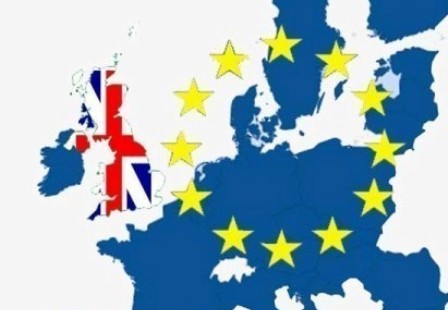
The EU’s strategic weight in the world will be reduced by the absence of the UK, as the EU is losing a relatively young, diverse and creative member state.
[John Bruton | Oped Column Syndication]
Make no mistake about it, the latest version of Brexit is a very hard Brexit. The UK Government has abandoned the legally binding commitment in the previous deal to align with EU regulatory standards to the greatest extent possible. That is now dropped in favour of a political aspiration.
The more the United Kingdom diverges from the European Union standards the greater is the likelihood that the EU will have to place tariff and other barriers in the way of UK imports to the EU, and now also to Northern Ireland. The problem will be particularly acute for agricultural goods.
The EU/UK trade negotiation has yet to begin, but I believe it will be both lengthy and difficult. This is a direct result of the “red lines” for Brexit chosen by the UK (no custom union membership, no single market membership and no European Court of Justice jurisdiction). This was a legitimate choice for the UK to make, but the costs of the choice are yet to be revealed and understood. When they are, it will be too late to change course.
Many in the UK say they just want to “get Brexit over with”. The impatience is understandable, but the truth is that agreeing the Withdrawal Treaty will not actually get Brexit “over with”. The additional bureaucracy will be permanent. If there is not to be a no deal crash out, the transition period will have to be much long than the end of 2020, because the trade negotiation will only be in its early stages by then.
The only way to get the agony of Brexit over with, would be to revoke Brexit. There is little popular support for that, so Brexit will drag on and preoccupy British politics for years.
By choosing a harder Brexit than Mrs May, and agreeing that the controls will be in the Irish sea, Boris Johnson has chosen to prioritize the interests of hardline Brexiteers in England over the interests of the DUP in Northern Ireland. Such a choice was inherent in Brexit, which is why it will remain a puzzle for historians to discern why the DUP chose to support Brexit with such enthusiasm in the first place.
THE WORLD AFTER BREXIT
I would like to turn now to the world after Brexit, and about the European Union, of which we will continue to be a member and in whose success we will now have a disproportionate interest.
The world has become a much more unpredictable place than it was 10 years ago.
The era of easy decisions may be over.
A European country, Ukraine, has been successfully invaded by it neighbour, Russia, breaking solemn undertakings that had been given. We have been reminded of the importance of defence.
There is widespread evidence of interference in elections and democratic processes by authoritarian regimes in other parts of the world. Voting software is being infected. Campaigns are being hacked. National rules on election spending can be circumvented via the social media.
The United States has created doubt around its defence commitments to Europe. It has walked away from its Kurdish allies in Syria, and Europe was not able to fill the gap, although the refugees from that conflict are more likely to end up in Europe than in America. In fact Europe is dependent on Turkey and North Africa to curb mass migration to the southern shores of the EU.
The EU has not developed a migration policy, which, if properly organised , could bring dynamism to our continent to compensate for the loss of dynamism that will inevitably flow from the ageing of the native European population.
The US is undermining the rules based international order in the field of trade. It is refusing to allow the appointment of replacement judges to the WTO’s appellate court, which will soon lead to that court ceasing to function. This is happening just at the time that our nearest neighbour may find itself relying on the WTO once its post Brexit transition period expires.
THE RISE OF CHINA
China is returning to the dominant position it held in the world economy in the two millennia up to 1800.
It is doing this on the strength of its human capital, not its physical capital. It is educating more engineers that the US and the EU combined.
It is doing it through its competitive and innovative firms, not through its monopolistic state enterprises. Chinese R and D spending will exceed US Rand D this year and far exceeds EU R and D.
It is ahead of everyone in 5G communications, at the time the world economy is becoming ever more digital.
Chinese firms own Volvo, Pirelli and recently bought the firms supplying robots to the German car industry. EU could not buy the equivalent Chinese firms.
Chinese military spending exceeds that of all EU states combined and is already half that of the US.
If the US thinks it can use trade policy to arrest Chinese development, it is probably making a mistake.
But the US is right to insist on fair competition. China must be treated in the WTO as a developed country, and not get concessions intended for much poorer countries.
In its response to the Chinese challenge, the EU should maintain its robust competition policy and should not try to pick industrial winners from Brussels.
THE RESPONSE OF EUROPE
Europe would be much better placed to defend its own interests, and to act as a balancing power in the world, if the euro functioned as a global reserve currency.
To achieve that, we need to create a Capital Markets Union and complete the Banking Union. This requires a harmonisation of company insolvency rules throughout the EU or the Eurozone.
The Eurozone must have a capacity to cope with localized shocks and to prevent contagion. We need viable proposals for a Eurozone wide reinsurance of bank deposits, and Eurozone wide reinsurance of the unemployment benefit systems of member states..
BREXIT IS A SETBACK FOR EUROPE……..STAGNATION MUST BE AVOIDED
There is no doubt but Brexit has been a setback for Europe.
True, the EU had maintained its unity and stability, in stark contrast to the way in which the UK system has been convulsed by the divorce. But that does not take away from the fact that we are losing a relatively young, diverse and creative member state.
The EU’s strategic weight in the world will be reduced by the absence of the UK.
The population of the remaining members of the EU are, in global terms, relatively elderly, pessimistic and risk averse. This could lead the EU to make big mistakes.
I give some examples of this.
Many member states refuse even to contemplate the amendment of the EU Treaties because of the risk of defeats in referenda. If that remains the attitude, the EU will simply stagnate. Every successful human organisation must have the capacity to change its rules if this is demonstrably necessary. The US is unable to amend its constitution and we can see the problems that has led to.
Unlike the US, the EU has been able to attract and accommodate new member states over the last 50 years. At last week’s Summit, France the Netherlands and Denmark blocked the opening of accession talks with North Macedonia even though that country has done everything the EU asked to qualify, even changing its name, which was a highly sensitive matter.
The fact that this rejectionism was led by President Macron, who makes great speeches about European integration, is particularly disquieting. I hope he changes his mind. Yes, we need tougher means of ensuring that the rule of law in respected in the most rigorous way but that could have been dealt with in the negotiations with North Macedonia, which would have gone on for years any way.
THE SINGLE MARKET
We must defend the integrity of the EU Single Market, at the borders of the European Union and throughout its territory.
Ireland must be seen to be, fully compliant with EU Single Market rules. Otherwise Ireland’s geographic position will be used against it by competitors for the investment.
The EU Single Market is not complete. There is much more to do.
An April 2019 Study “Mapping the Cost of non Europe” estimated that
- completing the classic single market would add 713 billion euros to the EU economy.
- completing Economic and Monetary Union would add a further 322 billion, and
- completing a digital single market a further 178 billion euros.
A more integrated energy market would save a further 231 billion and a more integrated EU approach to fighting organised crime would be worth 82 billion.
Cross border VAT fraud is costing 40 billion. This will be an area of special concern in regard to traffic between Britain and Northern Ireland.
These are some of the reasons why we must complete the Single Market.
Services account for three quarters of EU GDP.
But we have been very slow in creating a single EU market for services.
In the field of Services, only one legislative proposal had been adopted during the term of the outgoing Commission, a proportionality test for new regulations on professions.
All other proposals are blocked.
I think that a major obstacle is vested interests in national or regional governments, who do not want to give up power.
By completing the Single Market, the EU can show that it has much more to offer to the world than a post Brexit Britain.
To help complete the Single Market, Ireland should be open to qualified majority voting on energy and climate matters.
We should also be open to carefully defined individual amendments to the EU Treaties if they can be shown to the public to deliver real benefits.
A LEVEL PLAYING FIELD
The existing Withdrawal Agreement protects UK environmental, product and labour standards, in a way that a mere Trade Agreement will never do.
In any trade negotiation with a post Brexit Britain, maintaining a level competitive playing field will be vital.
No subsidies, no cartels, and no undercutting of EU standards must be insisted upon.
Likewise the UK must not be allowed to undercut the EU on worker protection, environmental and product quality standards. The UK will have to set up bureaucracies to devise and enforce UK standards. 200 EU environmental laws will have to be replaced by the UK. Westminster will be busy.
EU WIDE DEMOCRACY
It is over 40 years since the first European Parliament election.
While the EP elections are hotly contested, the contests are often really about national issues.
A genuine EU wide debate does not take place, because the elections are confined within in national constituencies. An EU “polis” or public opinion has not yet been created.
My own view is that the President of the Commission should be elected separately from the Parliament, using a system of proportional representation (PR).
We must have strong national democracy if we are to have a strong EU, and we must have strong national democracy if we are to have strong states.
There are remarkable differences in the level of confidence people in Europe feel in their own national democracy. According to a recent Pew Poll, 72% of Swedes have confidence in how their national democracy works. Within the Netherlands confidence in their system was 68%, in Poland it was 61% and in Germany 65%.
But , at the other end of the spectrum, only 31% of British, and 32% of Spaniards and Italians had confidence in their own democratic systems.
To build confidence in the EU, we also need to rebuild confidence in democracy itself, at every level of governance.
John Bruton is the former Prime Minister of the Republic of Ireland (1994-97) and the former European Union Ambassador to the United States (2004-09). He has held several important offices in Irish government, including Minister for Finance, Minister for Industry & Energy, and Minister for Trade, Commerce & Tourism.
 European Union Politics