Tag Archives: Greece

Europe Needs Common Long-Term Strategy for China

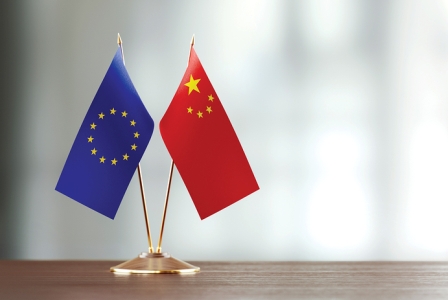
Addressing the challenges posed by Beijing requires European unity, as no member state alone has the resources and negotiating power necessary to deal with China on an equal footing.

[Lucrezia Poggetti | East Asia Forum]


China’s rise and its geopolitical ambitions have started to manifest more clearly inside Europe, making the need for a China strategy ever more compelling. European unity is key to effectively addressing the challenges posed by Beijing. After years of closer trade and investment ties, the European Union is realising that close economic relations with China have brought about political and security challenges it was not prepared for.

This newfound awareness is visible in the EU’s latest attempts to protect its strategic sectors and critical infrastructure. This includes the adoption of an EU framework for foreign investment screening and the issuing of guidelines for the security of Europe’s 5G networks.

The European Union has come to appreciate that it needs a strategy for China as, far from being solely an economic player, China is a rising political and security actor with geopolitical ambitions. This was evident in the European Commission’s ‘strategic outlook’ of March 2019, which informed EU leaders’ more assertive tone at the subsequent EU–China Summit in April 2019. Many observers have noticed Brussels’ unprecedented labelling of China as a ‘systemic rival’ and ‘economic competitor’. Less emphasis has been put on the European Union’s acknowledgment that China’s geopolitical goals ‘present security issues for the EU, already in a short- to mid-term perspective’. According to the strategic document, these are visible in China’s increasing military and technological advances and cross-sectoral hybrid threats such as information operations and large military exercises.

Addressing the challenges posed by Beijing requires European unity, as no member state alone has the resources and negotiating power necessary to deal with China on an equal footing. Paris and Berlin have demonstrated support for Brussels’ call for a ‘whole-of-EU’ approach vis-a-vis China, at least symbolically.

During Chinese President Xi Jinping’s state visit to France in March 2019, French President Emmanuel Macron invited European Commission President Jean-Claude Juncker and German Chancellor Angela Merkel to join his meeting with the Chinese leader. The German government also announced its intention to invite all member states to a 2020 EU–China Summit under its EU Presidency. This move raised eyebrows in Brussels, but Berlin hopes to encourage other members to pursue a common approach to China and refrain from Beijing-led ‘multi-bilateral’ talks.

However, governing elites in some European Union member states look at China through the prism of economic opportunity, downplaying the risks. They believe that close political ties with Beijing are key to unlocking greater economic opportunities, which cripples the EU’s efforts to devise a common strategy.

This approach is based on the naive assumption that politically cosying up to the Chinese leadership fosters a special relationship that translates into privileged economic treatment. Such an approach also assumes that a bilateral partnership on equal terms with China is possible. It disregards the fact that the Chinese government can retaliate any time, should it consider it necessary for its own agenda, regardless of whether memoranda, ‘strategic partnerships’ or any other agreements have been signed.

Lately, attempts to devise a coherent EU approach to China have not only hit a wall in Europe’s eastern flank — with the Chinese-led 16+1 grouping of Central and Eastern European countries expanding to 17+1 after welcoming Greece — but also at its core. In March 2019 Xi spent four days in Italy, where the country became the first EU founder and G7 state to officially endorse the Belt and Road Initiative (BRI). This is telling of a broader trend in which Europe criticises the growth of China’s global infrastructure scheme, and demands that the Initiative meet transparency and sustainability standards, while at the same time various European governments endorse the BRI.

Against this backdrop, how can the European Union ensure that its members look to China from a more long-term strategic perspective and act cohesively? An essential step is to close the knowledge and perception gaps across the continent. While it is up to national governments to increase their own countries’ expertise on China, the European Union can lead in driving debates about China’s rise and the implications for Europe. This would benefit those states where information about China is currently largely funded or driven by Beijing.

Democracies in China’s wider neighbourhood — like Australia, New Zealand and Taiwan — have been at the forefront of dealing with China’s systemic challenge. Exchanging notes with these partners would provide European countries with useful information on Chinese activities and response measures to adopt.

The recent 5G recommendations and the new investment screening mechanism show that a few concerted steps have been taken since 2016, when it became more visible that China’s influence was impacting European cohesion vis-a-vis Beijing. Allegedly, members of the China-led 16+1 grouping of Central and Eastern European countries also better coordinated their positions with Brussels in preparation for the latest Summit in Croatia.

The reshuffling of EU institutions that will result from the European Parliament elections raises questions over how Brussels will reshape current efforts into a more coherent and strategic approach towards China going forward. Beijing will likely try to use the opportunity offered by the upcoming changes in the EU administration to advance its interests. Securing European interests vis-a-vis China through a long-term common strategy is increasingly a necessity.

This article was originally published on East Asia Forum.


Lucrezia Poggetti is a Research Analyst at the Mercator Institute for China Studies (MERICS), Berlin.

Europe: Bizarre Policy and Economic Crisis

While there is massive immigration from other countries, many European countries’ domestic productive population that could help local economic growth is pushed out to immigration — a policy that is bizarre and does not help economic growth.

[Fotini Mastroianni | Oped Column Syndication]


The birth deficit concerns both demographers and economists. In many European countries, including Greece, the birth deficit is mainly treated with slogans and absurdities. In the process, a deeper analysis of the issue and its correlation with economic growth are ignored, despite the fact that the age structure of the population impacts the economy.

As the birth deficit is defined as the birth of fewer than 2.1 children per family, at least one of these children should be a girl in order to make up for the mother’s reproductive capacity.

Although many emphasize that birth deficit in Greece is particularly intense at the time of the economic crisis, this does not correspond to reality. As early as the 1950s, there was a downward trend in births (2.3 children per family), in 1981 it reached exactly the limits of reproduction (2.1 children per family). Since then, it has been declining with small growth periods due to the return of Greek immigrants and repatriates and the entrance of economic immigrants. Similar scenario exist in most of the other European countries.

An important factor for the birth deficit was internal migration from rural to urban areas and the transition of society from rural to post-industrial. In traditional rural societies, parents’ low status, lack of education, the closed social environment and the largest residential area (houses with a yard) — cause high levels of birth rates. In contrast, in post-industrial societies, the improvement of women’s position and educational level, women’s more frequent participation in social and economic activities, methods of contraception, income improvement, professional career accentuation (instead of family life) — reduce birth rates. In urban environments, the lack of living space (see apartments) has a negative effect on the creation of a family.

According to Schultz (1973), as parental income increases, the demand for more children decreases. At the same time, the transition to the post-industrial society is accompanied by a reduction in mortality and, thus, the aging of the population and the change in social trends. The acquisition of descendants for social recognition and self-esteem are no longer present, while the one-parent families and singles are increased and traditional families are reduced.

A key reason for the birth deficit in Greece (and in other European countries in crisis) is the minimal to non-existent support from the welfare state. Its complete collapse in the years of the crisis has aggravated the problem. Young people are not supported by the state to create a family, because there are no measures to help them combine their education or professional life with the family.

Greece was not an exception, but it coincided with the low birth rate of Western Europe. The high birth rate — according to relevant studies (Li & Zhang 2007, Li 2015) — has a negative impact on the economic development of a country, especially in the poor countries, compared to the rich. On the other hand, it is argued that when a country has a large part of its population in productive age, the highest degree of productivity will cause economic growth. If the population is elderly, then existing resources are used in a less productive way and, as a result, economic growth slows.

Different behavior of the age segments of the population is something that changes economic growth, i.e. young people invest more in education and fitness, while the elderly save and care for better healthcare. The population in productive age differs from the young and the elderly in the sense that they consume more than they produce (Bloom et al., 2001).

Based on the above, the lack of a birth increase strategy of the Greek governments and other Southern European countries is largely in line with the European Union’s requirements.

While there is a birth deficit and a shortage of a working-age population, the existing productive population is pushed tο immigration. Given the fact that this productive population is also highly educated, their immigration reinforces other economies such as the German economy and others. Massive masses of young immigrants (mainly males) are accepted in Southern European countries to fill the gap left of those who have emigrated.

This fact totally contradicts the economic theory of economic development. While there is massive immigration from other countries, the domestic productive population that could help local economic growth is pushed out to immigration. This policy is bizarre and certainly does not help economic growth of the European countries under crisis.


Fotini Mastroianni is an economist, MBA lecturer, writer, blogger from Athens, Greece. She had taught, among others, at the University of Wales & the University of Glyndwr.


Is Neo-Liberal Economic Model as Glorious as it is Portrayed?

Although neo-liberal economic model is proven to be a complete failure in the first country (the United States) of its full implementation, yet this model of complete misery is applied across the world, including Greece.

[Fotini Mastroianni | Oped Column Syndication]


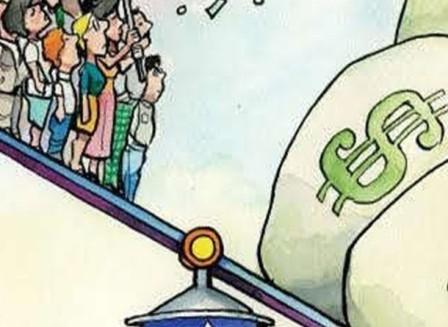
The neo-liberal economic model is being represented as more glorified in many countries. In Greece too, the permanent message of the mass media is the glorification of the neo-liberal economic model, which supports the idea that the concentration of wealth in the hands of the rich people will be spread to the lower classes and, thus, create wealth for the whole society.

Is that the case?

The United States (US) is a global superpower and has become the economic model for many countries. However, many are unaware of the consequences of the US’s economic power for its own population, particularly for the middle and working class.

In the US, the winners are the very rich, while the other social classes belong to the losers. In particular, between 1979 and 2006, the working-class income rose only 10% in 27 years and the income of the middle class increased by 21%.

This 21% is not as good as it may seem, taking into account the smallest number of people in American households (i.e. families with one kid compared to families with more kids in the past). Therefore, the income per person seems to be greater than it actually is.

In fact, the middle-class income rose by only 0.7% per year. It’s worth noting that the middle class is working much longer hours nowadays compared to the end of the 1970s. Without these extra hours, the increase in the US household income would be negligible. In contrast, the income of the rich for the same period has increased by 260%.

Regarding pensions, the middle class and working class are in a worse state. Employees are increasingly burdened with the cost of their retirement, and the state-guaranteed pension is only for a few.

Pensions are based on participation patterns like 401(K) plan, which is a retirement savings plan sponsored by an employer. This plan lets the employees save and invest a portion of their paycheck (pay cheque) before taxes are taken out. However, the scope of investment with this 401(K) plan is limited. One can invest money into mutual funds mostly composed of stocks, bonds and money market investments.

These schemes exposes the American employees to, for instance, the adverse affects of a fall of the stock market, such as in 2007 and 2008, as well as the one that is predicted for the near future. As a result, many Americans run the risk of having little or no income in their pensionable years.

Furthermore, medical costs have been squeezing the income of the middle class and the working class, as they have to bear the insurance cost. Employees spend too much on medical coverage ($ 7,290 per person in 2007 and 12,872 in 2018), while the state has less doctors, nurses and hospitals per individual than other wealthy countries. As a result, mortality – due to lack of early care in the US – is very high, and the ones who are over seventy-five years are at greater risk.

There’s the widespread believe of an American dream that one can be born poor, but s/he can become rich in the course and, thus, escape from the aforementioned problems.

However, the figures are disappointing. Only one in seven could rise to the high income class in the 1970s, whereas today the ratio is one in ten. Those who belonged to the high income category of 1% of the American population were in the same category in the 1970s as evidenced by the heredity of wealth. Hence, social mobility has been, and will be, more difficult for the lower classes due to the accumulation of wealth.

The neoliberal economic model is proven to be a complete failure in the first country of its full implementation i.e. the United States of America. Yet this model of complete misery for the middle and working class is applied throughout Europe and across the world, and Greece is no exception.


Fotini Mastroianni is an economist, MBA lecturer, writer, blogger from Athens, Greece. She had taught, among others, at the University of Wales & the University of Glyndwr.


Anarcho-Populism, A New Ideology?

Failure to understand the new ideological framework will be the cause of the collapse of many political parties and coalitions that exist today.

[Fotini Mastroianni | Oped Column Syndication ]


According to researchers, the ideology born in 2011 is a mix of cyber-anarchism, anti-globalization and populism like the one emerged in Russia and the US in the late 19th century.

We all know the Anonymous mask, a symbol of the new type of revolution (anarcho-populism), a symbol that we have seen in the streets of Cairo and elsewhere. The new ideology that has emerged is grounded in the anti-globalization movements that emerged in the 1990s and in 2000. Movements that rejected the power of the media and promoted the idea of ​​collectiveness through popular assemblies in each neighborhood. There is, however, a significant difference between the anti-globalization movements and the movements of the squares, such as those who have been resurrected in Greece, etc.

The anti-globalization movement was, of course, against global neo-liberalism and its main exponents, such as the International Monetary Fund, the World Trade Organization, etc., while the square movements, as we experienced with the Aganaktismenoi in Greece, were directed mainly against the domestic oligarchy of the political system. Ideological purity, simply, did not exist. Common people were involved in the movements of the squares, where they discussed publicly and shared their thoughts with others, and their goal was more justice and transparency from the political system.

The “contract” between rulers and the people has been broken due to the economic crisis. The creation of artificial economic crises by the neo-liberal elites, the so-called rescue programs that do not eventually save anyone, have led millions of people to poverty and impoverishment (Greece is a living example). Governments no longer guarantee prosperity, not even the viability of their citizens, and freedom is limited.

The new movements and the new ideology mainly use social media to spread messages to mobilize furious citizens and protect them from austerity measures (see anti-auction movement in Greece). The communication campaigns of these movements reveal the political and economic scandals, the middle-class poverty and the oppression of the government.

A two-pole system is created – common people against the elites. Common people who seek democracy and battle totalitarianism. The relationship with the Left is now competitive, therefore the Left fights these movements.

In the economy, the main axes are to provide social services and guarantee a minimum wage, while, contrary to the globalization movements that await the end of capitalism, the new ideology emphasizes the end of inequalities, mainly at national/local level.

The existing political system cannot match this new ideology and, in my opinion, it is wrong to consider this new ideology as populist in the sense of chauvinistic nationalism.

Failure to understand this new ideological framework will also be the cause of the collapse of many political parties and coalitions that exist today. In Greece, this collapse is seen through mass contestation and the creation of many small parties, which, however, do not quite understand these changes, but think in an old-fashioned political way.

World changes, a change so radical that causes unrest. The new reality has not yet been shaped, but it will, perhaps after very painful processes, be created hoping for better living terms for people.


Fotini Mastroianni is an economist, MBA lecturer, writer, blogger from Athens, Greece. She had taught, among others, at the University of Wales & University of Glyndwr.