Vladimir Putin tries to legitimize his disregard of the ‘rule of law’ by claiming that all former territories dating back to the Byzantine Era and native Russian speakers must be protected by “Mother Russia”. However, the reality is: these territories give Russia access to warm water ports necessary to ship its oil and weapons.
[Cynthia M. Lardner | Oped Column Syndication]
Russian Federation President Vladimir Putin’s approach to foreign relations and military engagement is opportunistic, aggressive and expansionist. These traits – the anti-thesis of multilateralism and cooperation – are driven by Putin’s mental schema that he has been called upon to defend everyone of Russian descent.
Putin’s actions over the last decade, especially in Ukraine, the Crimean Peninsula, Georgia, South Ossetia and Abkhazia, have cost him his G8 seat and open dialogue with NATO and other foreign powers, to the point where many consider this a resurgence of the Cold War. Since 2015 Russia has been slapped with an increasing number of Western sanctions. The Russian plutocracy remains largely unscathed due to their inter-relationship with the Russian government. Then there is Russia’s vast oil reserves upon which the European Union and other countries are heavily dependent.
Furthermore, more than $250 billion in goods and services exchanged annually between Russia and its largest trading partner, i.e. Western Europe. Russia is also non-discriminatory in its sale of weapons and military technology to foreign powers, including Iran and North Korea. It’s the Russian people, living under Putin’s authoritarian rule, who have, undoubtedly, been forced to endure the adverse economic impact caused by the rapid decline of the ruble.
Russia is one of the five permanent members of the United Nations Security Council, and each of these members has veto power, extending to the enforcement of all international tribunal decisions and, if necessary to dispatch peacekeeping missions. Thus, the Russian Federation is protected from international judicial civil accountability in the International Court of Justice or the Permanent Court of Arbitration, which hears cases between United Nations member nations.
As Russia is not a party to the Rome Statue, it is not subject to criminal liability before the International Criminal Court. By way of example, assuming, arguendo, that there was a viable enforcement mechanism, Russia could have been held responsible for the illegal annexation of Crimea under the Minsk II Agreement, and for its actions in Syria. In sum, Putin rules the Russia with impunity and without accountability.
Gorbachev and Kissinger Speak Out
Mikhail Gorbachev, the last General Secretary of the Communist Party of the Union of Soviet Socialist Republics (USSR), received a Nobel Peace Prize in 1990 for summits held with Presidents Ronald Reagan and George H.W. Bush resulting in the 1987 Intermediate-range Nuclear Forces (INF) Treaty. The summits were instrumental in bringing the post-World War II Cold War to its conclusion.
The goodwill generated by Gorbachev and his successor Boris Yeltsin, the first president of the newly created Russian Federation, dissipated when Yeltsin resigned as president, appointing Vladimir Putin the acting president until official elections were held in early 2000. He has been re-elected three consecutive times. Based on his interference with any contender posing an actual threat, Putin could hold the presidency indefinitely.
When the Cold War ended Russia expected to be accepted by the West. This never fully materialized. Putin views that Russia has been left disconnected from post-World War II Europe and threatened by the continuation of NATO.
Dialogue between the West and Russia has deteriorated to the point where it is once again in Cold War mode. Many, including NATO Secretary General, Jens Stoltenberg, and Gorbachev have warned that the continued isolation of Russia could lead to armed conflict on European soil.
Gorbachev warned:
“The situation hasn’t been this bad in a long time, and I am very disappointed in how world leaders are behaving themselves. We see evidence of an inability to use diplomatic mechanisms. International politics has turned into exchanges of accusations, sanctions, and even military strikes… I am sure no one wants war, but in the current febrile atmosphere could lead to great trouble, and ordinary people are not yet aware of the threat hanging over them…”
Legendary former US Secretary of State Henry Kissinger, who has been in contact with both US President Donald Trump and Russian President Vladimir Putin, and Gorbachev agree that, minimally, a détente [easing of hostility] is needed to ease the tensions between the two countries, which would simultaneously ease tensions around the world.
A logical starting place for dialogue would have been to discuss the mutual charges of violations have placed the INF Treaty in jeopardy and the renewal of the 2010 New Strategic Arms Reduction Treaty put bounds on the US-Russian nuclear competition, is due to expire in less than three years. These treaties provide desirable Mutual Assured Stability between the two countries. But the vision most of the world was left with was Putin tossing a soccer ball to Trump.
After the July Helsinki summit between Putin and Trump, Kissinger sadly concluded, “I think we are in a very, very grave period for the world.”
Chicken or the Egg: The Sanctions Conundrum
Since assuming power, Putin has proven himself to be an antagonist. There are several factors driving Putin’s aggressive, opportunistic and expansionist tactics.
Putin believes himself to be irrevocably tied to Europe dating all the way back to the Byzantine Era. Putin has justified his actions by repeatedly stating that it is his duty to protect all the people of Russian descent even if they reside outside of Russia.
While Russia was sanctioned for the Russo-Georgian War, those sanctions do not compare to the sanctions imposed innumerable times by the EU and the US since 2015. The first set of these sanctions were imposed for the 2014 illegal annexation of the Crimean Peninsula for Ukraine. Russia then lost its seat on the G8. It was the illegal annexation and continued occupation of Crimea that initially left Russia diplomatically out in the cold. While the Minsk Protocols were violated, the reality is that Russia is going to continue occupying Crimea in order to access the warm water port [in Sevastopol] in order to transport its oil [through Black Sea]. This creates a diplomatic conundrum for those wise enough to advocate that the current Cold War be transformed into a détente.
More recently, Russia has been sanctioned for tampering with the 2016 US Presidential election and for being found culpable for a chemical weapons attack in Great Britain on a former KGB agent and his daughter. In the eighteen months, Russia has seen diplomats expelled from several countries – most recently in Greece – for a variety of reasons.
Russian Foreign Minister Sergei Lavrov has alleged that Russia – despite the sanctions – has increased its economic and military capacities. The value of the ruble, however, tells a different story. After years of sanctions, the ruble has only slightly recovered.
Sanctions have not proven effective. In the case of the Crimean Peninsula, the sanctions will continue indefinitely despite their ineffectiveness in achieving anything other than increasing Russian ire [anger].
Crisis Group’s senior analyst for Russia, Anna Arutunyan, advocates for a more common sense approach to the imposition of future sanctions:
“Rather than creating incentives for changes in Russian policy or behaviour, such sanctions instead serve to reinforce the Kremlin’s narrative that the West will besiege Russia whatever it does. To work more effectively, any fresh Western sanctions should target specific actions – if necessary piece by piece – rather than conflating all of the Kremlin’s aggressive activities abroad. Western powers should lay out clearly what would need to happen for those sanctions to be lifted.”
Weakening Democratic Nations
Putin wants to see Western democratic nations weakened. Due to historical ties, that desire to disrupt is greater where the European Union is concerned.
The July summit with Trump made an international mockery of democracy and the ‘rule of law’, and further damaged the US’s relationships with traditional allies. The preceding G7 and NATO summits and meeting with British Prime Minister Theresa May were coups for Putin as they evidenced a weakening amongst Western allies.
A weakening of the ties between democratic nations generates confusion and diminishes the power of the strongest leaders, such as German Chancellor Angela Merkel and French President Emmanuel Macron. Insecurity is increased by the inconsistencies between Trump and senior US military officials.
What’s more, the threat perceived by the Baltics, the Scandinavia, the Balkans, Poland, Ukraine and Georgia has reached an unacceptable level.
Ukraine and Georgia
Along with the well-known ongoing armed conflict in Ukraine’s Donbas region (where Russian troops and mercenaries push for control of even more landmass), there was and is a similar – but lesser known – scenario playing itself out in Georgia.
The trigger was the 2008 NATO Summit, where Georgia and Ukraine were given a commitment that at a future date they would accede to the NATO member-state status. Putin is speculated to believe that his engaging aggressive and expansionist tactics in both Georgia and Ukraine would slow down or even halt the accession process.
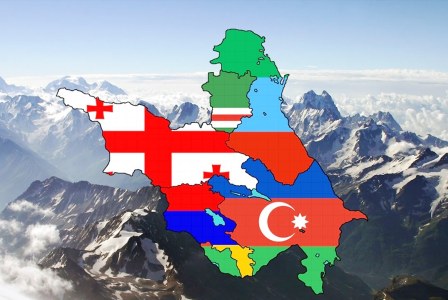
Georgia, once a part of the USSR, is wedged between the Middle East, Russia, Iran and Turkey and is an important corridor for oil pumped from the Caspian Sea. This month is the 10th anniversary of the start of the Russo-Georgian War in which Russia drove Georgian troops out of two breakaway provinces, South Ossetia and Abkhazia. To date, the Kremlin continues to illegally occupy these territories going so far as so construct nineteen military bases in South Ossetia alone.
Georgia is still being attacked by militants using covert tactics that, until recently, were ignored by the media. Pro-Russian militants are taking back Georgia hectare by hectare under cover of darkness, saving Russia from the burden of engaging in an all-out [direct] armed conflict with Georgia. There are times when Georgian farmers wake up only to discover warning signs, barbed wire and even surveillance cameras on what was only the day before part of their farms.
Based on his ill-conceived belief predating the USSR, Putin tries to legitimize his disregard of the ‘rule of law’ by claiming that all former territories dating back to the Byzantine Era and native Russian speakers must be protected by “Mother Russia”, including Georgia, especially South Ossetia, and the Crimean Peninsula. However, the reality is: these territories give Russia access to warm water ports necessary to ship its oil and, no doubt, weapons.
Admiral James Foggo, Commander of US Naval Forces Europe and Africa, stated that Russia is deploying more submarines to the Mediterranean, Black Sea and North Atlantic at the highest rate since the end Cold War.
At the 2018 NATO Summit, the alliance’s member-states reaffirmed their commitment to Georgia that it will accede to NATO member-state status. Putin responded with the expected threat that if NATO added Georgia on Russia’s southern flank, it would “respond appropriately to such aggressive steps which pose a direct threat to Russia.”
The Baltics, Poland and Scandinavia
Then there’s the threat to the EU’s north — specifically Poland, Latvia, Estonia and Lithuania.
The Soviet Union seized Lithuania in 1939. On March 11, 1990, Lithuania declared that it was an independent state, the first of the Soviet republics to do so. While Poland was not a Soviet satellite state, it was under Soviet and, then, Russian control until 1989.
At present, [Russia’s] neighboring countries, Finland and, to a lesser degree, Sweden and Norway have a heightened sense of fear of Putin’s tactics. The Lithuanian and Swedish governments have gone so far as to disseminate materials to their citizens about how to spot a Kremlin agent and what to do in the event of an attack.
Finland was under Russian control until 1917 and the two countries share an 833 mile border. For over 100 years, Finland has tread a fine between Europe and Russia. An EU member since 1995, Finland is not a NATO member. However, Finland participates in nearly all sub-areas of the Partnership for Peace programme and has provided peacekeeping forces to the NATO missions in Afghanistan and Kosovo.
But, it is Poland and Lithuania that face the biggest threat due to the strategic location of the Suwalki Gap, a narrow 64 mile piece of land connecting NATO member-states Poland and Lithuania. Occupation of the Suwalki Gap or bordering Lithuanian territory by Russia would cut off the three Baltic States from other NATO countries. The US Army Europe commander Lieutenant General Ben Hodges stated that the Suwalki Gap is a high potential Russian military target.
Analysts have compared Suwalki Gap to the Cold War era’s German Fulda Gap, where NATO planned and prepared for hypothetical USSR attacks.
NATO has enhanced its forward military presence in more than five regions.
NATO has also created new five cyber warfare centers in Finland, Estonia, Poland, Germany and France.
At a time when NATO needs to rely on Poland, it has boldly challenged adherence to the ‘rule of law’. In January, Poland passed a bill criminalizing any suggestion Poland was complicit in the Holocaust, resulting in sharp criticism by the EU and the US. In July, Poland pulled away from the EU when it changed its judicial system in violation of the rules set by the EU. These are odd tactics for a country that is fearful of Russia. It is questionable what impact Russian operatives supporting far-right nationalists have had on recent events in Poland.
There’s [Russian] Western Military Command for countering NATO. Headquartered in St. Petersburg, the Western Military Command covers 26 federal subjects (including Moscow and Kaliningrad), bordering Poland, the Baltic States, Finland and Norway. A May 2018 Rand Corp report described it as “Russia’s most-capable ground and air forces”.
“Strengthening Russia as an independent international player does not give rest to our NATO colleagues. They are trying in every possible way to prevent Russia from becoming a geopolitical competitor, all the more having allies,” stated Russian Defense Minister Sergei Shoigu.
“Not only have Russia’s actions and capabilities increased in alarming and confrontational ways, its national-security policy is aimed at challenging the US and its NATO allies and partners,” said Admiral Foggo.
Putin has heightened the threat level by engaging leaders from those European states which are either not part of the EU or were former USSR satellite states, and also by engaging voters who feel disenfranchised from the EU or the US. Additionally, Putin controls a vast propaganda machine and a host of cyber-warfare tactics that has interfered with numerous elections, most notably in the US, France, Austria and Germany, as well as inciting anti-democratic and even white supremacist protests.
Russia has used soft power to deter former Soviet republics and states to Russia’s west and south from joining NATO and the EU. Putin’s authoritarian leadership is admired by Czech Republic President Miloš Zeman, Hungary Prime Minister Viktor Orbán and Serbian Prime Minister Alexander Vucic.
Cynthia M. Lardner is an American journalist residing in the Netherlands and is a contributing editor to Tuck Magazine and the International Policy Digest. Ms. Lardner holds degrees in journalism, law, and counseling psychology.
 European Union Politics