Tag Archives: geopolitics

Amid Worsening Crisis with Russia, Georgia Conducts Military Exercises with USA

The USA gradually changed the orientation of the exercises it carried out in Georgia to reflect more what Georgia wanted: the ability to fight Russia.

[Joshua Kucera | Eurasianet]


About 1,500 American troops are in Georgia for joint military exercises, a show of support amid a festering crisis with Russia. The exercises, Agile Spirit 2019, are the seventh iteration of drills led by the USA and Georgia but which in recent years also have included other countries.

The drills are aimed at getting partner militaries acquainted with deploying to Georgia and operating alongside Georgian troops; a significant part of the exercises is in fact getting the USA equipment into Georgia.

Over the years the exercises have steadily grown in scale and ambition; this year’s version of Agile Spirit, which formally kicked off July 27, will reportedly be the largest yet, with 3,000 troops total from Georgia, the USA, and 12 other countries (all of them NATO members except Ukraine). The USA contingent is a bit larger than in last year’s exercises, when 1,400 Americans took part.

When they were first conceived in the 2000s, joint exercises with the USA were aimed at getting Georgian troops ready for deployments to USA-led missions to Iraq and Afghanistan, where the Georgians would patrol or guard facilities.

But the 2008 war over South Ossetia exposed the Georgian military’s “inability to push back the attacks of Russian tank and aviation,” said Irakli Aladashvili, a Georgian military expert, in an interview with the news website Caucasian Knot. Over the following years, the USA gradually changed the orientation of the exercises it carried out in Georgia to reflect more what Georgia wanted: the ability to fight Russia. “Recently the exercises are developed to precisely, for example, stop an attack of a tank unit of the likely enemy and to beat back air attacks of its aviation and artillery counterfire,” Aladashvili said.

The prospect of war with Russia, while still remote, has gained urgency this summer following anti-government and anti-Russia protests in Tbilisi that have drawn a harsh reaction from Moscow. Add to that the Kremlin’s dismay at what has happened in next-door Armenia, where the new government is not as enthusiastic about its relationship with Russia as Moscow would like. One prominent commentator even predicted that Russia could invade and occupy some part of Western Georgia to show Armenia a lesson – and that was before this crisis began.

Both Georgian and American officials have shied away from directly connecting these exercises with the current crisis or with Russia at all. When Georgian journalists asked Defense Minister Levan Izoria about the prospect that they might be received poorly in Moscow, Izoria responded only that Georgia would continue to “coolly and rationally” pursue its strategic goals.

Russian officials have been less reticent. The exercises “are intended as a demonstration of force and an attempt to show that NATO remains present at Russia’s western and southern borders. NATO’s desire is to set up bases along the entire border, all the way to the Pacific Ocean,” said Igor Morozov, a member of Russia’s Federation Council, in an interview with state-funded RT.

Other Russian commentators noted with some irony that the official rhetoric around the exercises included claims that they would be aimed at “maintaining [a] stable and secure environment over the Black Sea region.”

“In dangerous circumstances, [exercises with NATO countries in the region] could quickly lead to fighting,” Ruslan Balbek, a member of the Duma representing Crimea, told RT. “All these multinational democratic militaries led by the USA know this as well, and that they are irritating. However, the Americans need only tension. The main thing is that it doesn’t become a military conflict.”

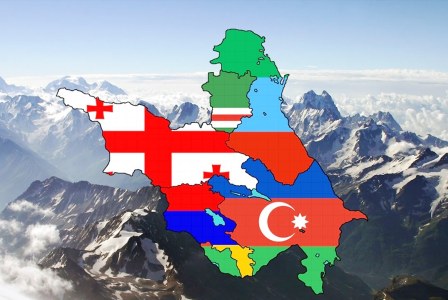
Of all Georgia’s neighbors, the only one participating in Agile Spirit 2019 is Turkey. Armenia and Azerbaijan, which have participated in previous USA-Georgia exercises, are both staying out this time. In Armenia that has caused some consternation among advocates of closer ties with the West and the USA in particular.

“The issue is not the military exercises per se,” said Arman Babajanyan, a member of parliament from the opposition Bright Armenia party, in a Facebook post. “Much more significant is that Russian pressure on Yerevan is growing and seems to have its first manifestations, even though the authorities are trying carefully to conceal this fact. One of the achievements of the Armenian Revolution was the abolition of the Armenia-Russia ‘vassal’ relations, the return of which could cast a shadow over the political significance of these historical events.”

This article was originally published on Eurasianet.


Joshua Kucera is the Turkey/Caucasus editor at Eurasianet, and author of The Bug Pit.

Europe Needs Common Long-Term Strategy for China

Addressing the challenges posed by Beijing requires European unity, as no member state alone has the resources and negotiating power necessary to deal with China on an equal footing.

[Lucrezia Poggetti | East Asia Forum]


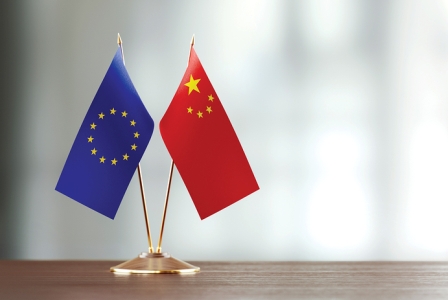
China’s rise and its geopolitical ambitions have started to manifest more clearly inside Europe, making the need for a China strategy ever more compelling. European unity is key to effectively addressing the challenges posed by Beijing. After years of closer trade and investment ties, the European Union is realising that close economic relations with China have brought about political and security challenges it was not prepared for.

This newfound awareness is visible in the EU’s latest attempts to protect its strategic sectors and critical infrastructure. This includes the adoption of an EU framework for foreign investment screening and the issuing of guidelines for the security of Europe’s 5G networks.

The European Union has come to appreciate that it needs a strategy for China as, far from being solely an economic player, China is a rising political and security actor with geopolitical ambitions. This was evident in the European Commission’s ‘strategic outlook’ of March 2019, which informed EU leaders’ more assertive tone at the subsequent EU–China Summit in April 2019. Many observers have noticed Brussels’ unprecedented labelling of China as a ‘systemic rival’ and ‘economic competitor’. Less emphasis has been put on the European Union’s acknowledgment that China’s geopolitical goals ‘present security issues for the EU, already in a short- to mid-term perspective’. According to the strategic document, these are visible in China’s increasing military and technological advances and cross-sectoral hybrid threats such as information operations and large military exercises.

Addressing the challenges posed by Beijing requires European unity, as no member state alone has the resources and negotiating power necessary to deal with China on an equal footing. Paris and Berlin have demonstrated support for Brussels’ call for a ‘whole-of-EU’ approach vis-a-vis China, at least symbolically.

During Chinese President Xi Jinping’s state visit to France in March 2019, French President Emmanuel Macron invited European Commission President Jean-Claude Juncker and German Chancellor Angela Merkel to join his meeting with the Chinese leader. The German government also announced its intention to invite all member states to a 2020 EU–China Summit under its EU Presidency. This move raised eyebrows in Brussels, but Berlin hopes to encourage other members to pursue a common approach to China and refrain from Beijing-led ‘multi-bilateral’ talks.

However, governing elites in some European Union member states look at China through the prism of economic opportunity, downplaying the risks. They believe that close political ties with Beijing are key to unlocking greater economic opportunities, which cripples the EU’s efforts to devise a common strategy.

This approach is based on the naive assumption that politically cosying up to the Chinese leadership fosters a special relationship that translates into privileged economic treatment. Such an approach also assumes that a bilateral partnership on equal terms with China is possible. It disregards the fact that the Chinese government can retaliate any time, should it consider it necessary for its own agenda, regardless of whether memoranda, ‘strategic partnerships’ or any other agreements have been signed.

Lately, attempts to devise a coherent EU approach to China have not only hit a wall in Europe’s eastern flank — with the Chinese-led 16+1 grouping of Central and Eastern European countries expanding to 17+1 after welcoming Greece — but also at its core. In March 2019 Xi spent four days in Italy, where the country became the first EU founder and G7 state to officially endorse the Belt and Road Initiative (BRI). This is telling of a broader trend in which Europe criticises the growth of China’s global infrastructure scheme, and demands that the Initiative meet transparency and sustainability standards, while at the same time various European governments endorse the BRI.

Against this backdrop, how can the European Union ensure that its members look to China from a more long-term strategic perspective and act cohesively? An essential step is to close the knowledge and perception gaps across the continent. While it is up to national governments to increase their own countries’ expertise on China, the European Union can lead in driving debates about China’s rise and the implications for Europe. This would benefit those states where information about China is currently largely funded or driven by Beijing.

Democracies in China’s wider neighbourhood — like Australia, New Zealand and Taiwan — have been at the forefront of dealing with China’s systemic challenge. Exchanging notes with these partners would provide European countries with useful information on Chinese activities and response measures to adopt.

The recent 5G recommendations and the new investment screening mechanism show that a few concerted steps have been taken since 2016, when it became more visible that China’s influence was impacting European cohesion vis-a-vis Beijing. Allegedly, members of the China-led 16+1 grouping of Central and Eastern European countries also better coordinated their positions with Brussels in preparation for the latest Summit in Croatia.

The reshuffling of EU institutions that will result from the European Parliament elections raises questions over how Brussels will reshape current efforts into a more coherent and strategic approach towards China going forward. Beijing will likely try to use the opportunity offered by the upcoming changes in the EU administration to advance its interests. Securing European interests vis-a-vis China through a long-term common strategy is increasingly a necessity.

This article was originally published on East Asia Forum.


Lucrezia Poggetti is a Research Analyst at the Mercator Institute for China Studies (MERICS), Berlin.


Time to Re-Examine the Atlantic Alliance

It’s time the NATO went the way of the Warsaw Pact and recognize that the old ways of thinking are not only outdated but also dangerous.

[Conn M. Hallinan | Oped Column Magazine]


The outcome of the July11-12 NATO meeting in Brussels got lost amid the media’s obsession with President Donald Trump’s bombast, but the “Summit Declaration” makes for sober reading. The media reported that the 28-page document “upgraded military readiness,” and was “harshly critical of Russia,” but there was not much detail beyond that.

But details matter, because that is where the Devil hides.

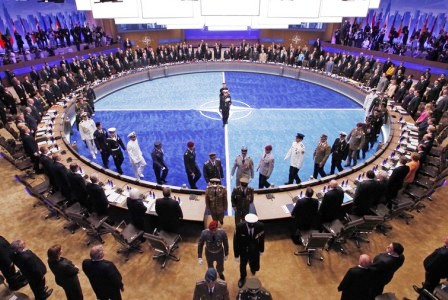
One such detail is NATO’s “Readiness Initiative” that will beef up naval, air and ground forces in “the eastern portion of the Alliance.” NATO is moving to base troops in Latvia, Estonia Lithuania, the Czech Republic and Poland. Since Georgia and Ukraine have been invited to join the Alliance, some of those forces could end up deployed on Moscow’s western and southern borders.

And that should give us pause.

A recent European Leadership’s Network’s (ELN) study titled “Envisioning a Russia-NATO Conflict” concludes, “The current Russia-NATO deterrence relationship is unstable and dangerously so.” The ELN is an independent think tank of military, diplomatic and political leaders that fosters “collaborative” solutions to defense and security issues.

High on the study’s list of dangers is “inadvertent conflict,” which ELN concludes “may be the most likely scenario for a breakout” of hostilities. “The close proximity of Russian and NATO forces” is a major concern, argues the study, “but also the fact that Russia and NATO have been adapting their military postures towards early reaction, thus making rapid escalation more likely to happen.”

With armed forces nose-to-nose, “a passage from crisis to conflict might be sparked by the actions of regional commanders or military commanders at local levels or come as a consequence of an unexpected incident or accident.” According to the European Leadership Council, there have been more than 60 such incidents in the last year.

The NATO document is, indeed, hard on Russia, which it blasts for the “illegal and illegitimate annexation of Crimea,” its “provocative military activities, including near NATO borders,” and its “significant investments in the modernization of its strategic (nuclear) forces.”

Unpacking all that requires a little history, not the media’s strong suit.

The story goes back more than three decades to the fall of the Berlin Wall and eventual re-unification of Germany. At the time, the Soviet Union had some 380,000 troops in what was then the German Democratic Republic [East Germany]. Those forces were there as part of the treaty ending World War II, and the Soviets were concerned that removing them could end up threatening the USSR’s borders. The Russians have been invaded — at terrible cost — three times in a little more than a century.

So West German Chancellor Helmet Kohl, U.S. Secretary of State James Baker, and Soviet Premier Mikhail Gorbachev cut a deal. The Soviets agreed to withdraw troops from Eastern Europe as long as NATO did not fill the vacuum, or recruit members of the Soviet-dominated Warsaw Pact. Baker promised Gorbachev that NATO would not move “one inch east.”

The agreement was never written down, but it was followed in practice. NATO stayed west of the Oder and Neisse rivers, and Soviet troops returned to Russia. The Warsaw Pact was dissolved in 1991.

But President Bill Clinton blew that all up in 1999 when the US and NATO intervened in the civil war between Serbs and Albanians over the Serbian province of Kosovo. Behind the new US doctrine of “responsibility to protect,” the NATO opened a massive 11-week bombing campaign against Serbia.

From Moscow’s point of view the war was unnecessary. The Serbs were willing to withdraw their troops and restore Kosovo’s autonomous status. But NATO demanded a large force that would be immune from Serbian law, something the nationalist-minded Serbs would never agree to. It was virtually the same provocative language the Austrian-Hungarian Empire had presented to the Serbs in 1914, language that set off World War I.

In the end, NATO lopped off part of Serbia to create Kosovo and re-drew the post World War II map of Europe, exactly what the Alliance charges that Russia has done with its seizure of the Crimea.

But NATO did not stop there. In 1999 the Alliance recruited former Warsaw Pact members Hungary, Poland and the Czech Republic, adding Bulgaria and Romania four years later. By the end of 2004, Moscow was confronted with NATO in Latvia, Lithuania and Estonia to the north, Poland to the west, and Bulgaria and Turkey to the south. Since then, the Alliance has added Slovakia, Slovenia, Albania, Croatia, and Montenegro. It has invited Georgia, Ukraine, Macedonia and Bosnia and Herzegovina to apply as well.

When the NATO document chastises Russia for “provocative” military activities near the NATO border, it is referring to maneuvers within its own border or one of its few allies, Belarus.

As author and foreign policy analyst Anatol Lieven points out, “Even a child” can look at a 1988 map of Europe and see “which side has advanced in which direction.”

NATO also accuses Russia of “continuing a military buildup in Crimea,” without a hint that those actions might be in response to what the Alliance document calls its “substantial increase in NATO’s presence and maritime activity in the Black Sea.” Russia’s largest naval port on the Black Sea is Sevastopol in the Crimea.

One does not expect even-handedness in such a document, but there are disconnects in this one that are worrisome.

Yes, the Russians are modernizing their nuclear forces, but the Obama administration was first out of that gate in 2009 with its $1.5 trillion program to upgrade the US’s nuclear weapons systems. Both programs are a bad idea.

Some of the document’s language about Russia is aimed at loosening purse strings at home. The NATO members agreed to cough up more money, but that decision preceded Trump’s Brussels tantrum on spending.

There is some wishful thinking on Afghanistan — “Our Resolute Support Mission is achieving success” — when in fact things have seldom been worse. There are vague references to the Middle East and North Africa, nothing specific, but a reminder that NATO is no longer confining its mission to what it was supposedly set up to do: Keep the US in, Russia out and Germany down.

The US is still in — one should take Trump’s threat of withdrawal with a boulder size piece of salt — there is no serious evidence the Russians ever planned to come in, and the Germans have been up since they joined the NATO in 1955. Indeed, it was the addition of Germany that sparked the formation of the Warsaw Pact.

While Moscow is depicted as an aggressive adversary, the NATO surrounds Russia on three sides, deployed anti-missile systems in Poland, Romania, Spain, Turkey, and the Black Sea, and has a 12 to 1 advantage in military spending. With opposing forces now toe-to-toe, it would not take much to set off a chain reaction that could end in a nuclear exchange.

Yet instead of inviting a dialogue, the document boasts that the Alliance has “suspended all practical civilian and military cooperation between NATO and Russia.”

The solution seems obvious. First, a return to the 1998 military deployment. While it is unlikely that former members of the Warsaw Pact would drop their NATO membership, a withdrawal of non-national troops from NATO members that border Russia would cool things off. Second, the removal of anti-missile systems that should never have been deployed in the first place. In turn, Russia could remove the middle range Iskander missiles the NATO is complaining about and [Russia] agree to talks aimed at reducing nuclear stockpiles.

But long range, it is finally time to re-think alliances. The NATO was a child of the Cold War, when the West believed that the Soviets were a threat. But Russia today is not the Soviet Union, and there is no way Moscow would be stupid enough to attack a superior military force. It is time the NATO went the way of the Warsaw Pact and recognize that the old ways of thinking are not only outdated but also dangerous.


Conn M. Hallinan is a California-based independent journalist. He is a regular columnist for the think tank Foreign Policy In Focus and holds a PhD in Anthropology from the University of California, Berkeley.