Tag Archives: European Union

EU Election Thoughts: Immigrants must be Seen as Potential Allies and the Future

Considering EU’s labour shortage and economic condition, it is important for the European left, right and center to see immigrants for what they are: potential allies and the future.

[Conn M. Hallinan | Oped Column Magazine]


As the campaigns for the European Parliament get underway, some of the traditional lines that formerly divided left, right and center are shifting, making it harder to easily categorize political parties.

In Italy, a right wing coalition calls for a guaranteed income, larger pensions and resistance to the heavy-handed austerity programs enforced by the European Union (EU). In France, some right wing groups champion the fight against climate change, decry exploitation of foreign workers and growing economic inequality.

In contrast, Europe’s political center seems paralyzed in the face of growing disillusionment with the economic policies of the EU. Even the social democratic center-left defends the doctrines that have alienated its former base among unions and working people, pushing such parties to the political margins.

If voters seem confused, one can hardly blame them — something that is not good news for the left and the center-left going into the May 23-26 elections. Polls show center-right and center-left parties — which have dominated the EU Parliament since it first convened in 1979 — will lose their majority. Parties that are increasingly skeptical of the EU may win as many as a third of the seats in the 705-seat body.

However, “Euro-skeptic,” like “populist,” is a term that obscures more than it reveals. In the polls, the two are lumped together in spite of profound differences. The Spanish left party, Podemos, is not likely to break bread with Italy’s right-wing League/ Five Star alliance, but both are considered “Euro-skeptic.” Podemos, along with Greece’s Syriza, Portugal’s three party center-left alliance, and La France Insoumise (“Unbowed”) are critical of the EU’s economic policies, but they do not share an agenda with xenophobic and racist parties like the League, France’s National Rally — formally, National Front — and the Alternative for Germany (AfG).

This doesn’t mean that the upcoming election doesn’t pose a serious threat, in part because the Right has adopted some of the Left’s longstanding issues.

In Italy, Mario Salvini, leader of the League, says the EU elections will be fought between a Europe “of the elites, of banks, of finance and immigration and precarious work,” and a “Europe of people and labour.” Take out “immigrants,” and the demagogy of the Right sounds a lot like something Karl Marx might write.

In France, young right-wingers put out a lively environmental magazine, Limite, which wars against climate change. Marion Marechal Le Pen — granddaughter of Jean Marie Le Pen, the rightwing, anti-Semitic founder of the old National Front — rails against individualism and the global economy that “enslaves” foreign labour and casts French workers on the scrap heap.

Of course, she also trashes immigrants and Islam, while advocating for a “traditional Christian community” that sounds like Dark Ages Europe.

During the 1990s, the center-left — the French, Spanish and Greek socialists, the German Social Democrats, and British Labour — adopted the “market friendly” economic philosophy of neo-liberalism: free trade and globalization, tax cuts for the wealthy, privatization of public resources, and “reforming” the labour market by making it easier to hire and fire employees. The result has been the weakening of trade unions and a shift from long-term stable contracts to short-term “gigs.” The latter tend to pay less and rarely include benefits.

Spain is a case in point.

On the one hand, Spain’s economy is recovering from the 2008 crash brought on by an enormous real estate bubble. Unemployment has dropped from over 27 percent to 14.5 percent, and the country’s growth rate is the highest in the EU. On the other hand, 90 percent of the jobs created in 2017 were temporary jobs, some lasting only a few days. Wages and benefits have not caught up to pre-crash levels and Spanish workers’ share of the national income fell from 63 percent in 2007 to 56 percent today, reflecting the loss in real wages.

Even in France — which still has a fairly robust network of social services — economic disparity is on the rise. From 1950 to 1982, most French workers saw their incomes increase at a rate of 4 percent a year, while the wealth of the elite went up by just 1 percent. But after 1983 — when neo-liberal economics first entered the continent — the income for most French workers rose by less than 1 percent a year, while the wealth of the elite increased 100 percent after taxes.

The “recovery” has come about through the systematic lowering of living standards, a sort of reverse globalization: rather than relying on cheap foreign labour in places where trade unions are absent or suppressed, the educated and efficient home grown labour force is forced to accept lower wages and fewer — if any — benefits.

The outcome is a growing impoverishment of what was formally considered “middle class” — a slippery term, but one that the International Labor Organization (ILO) defines as making an income of between 80 percent and 120 percent of a country’s medium income. By that definition, between 23 and 40 percent of EU households fall into it.

For young people, the “new economy” has been a catastrophe. More and more of them are forced to immigrate or live at home to make ends meet, putting off marriage and children for the indefinite future.

This income crunch is adding to a demographic crisis. In a modern industrial society, the required replacement rate of births to deaths is 2.1. The world’s replacement rate is 2.44. If economies fall under 2.1, they are in for long-term trouble. Eventually the work force will be insufficient to support health care, education, sanitation, and infrastructure repair.

The EU posts a replacement rate of only 1.57. Germany is one of the few EU countries that has shown a rise in the ratio—from 1.50 to 1.59—but that is almost completely due to the one million immigrants the country took in four years ago.

The three countries that are leading the crusade against immigrants — Hungary, Poland and Italy — are in particular trouble.

Hungary — where strongman Victor Orban has made immigration a central issue for his right-wing government — is struggling with a major labour shortage. Orban recently rammed through a law requiring Hungarians to work 400 overtime hours a year to fill the shortfall, and he has been berating Hungarian women to have more babies.

In Italy, the right-wing League/Five Star Movement rode anti-immigrant rhetoric to power in the last spring’s election, but with a replacement ratio of only 1.31 — the lowest in the EU — the country is losing the equivalent of the population of the city of Bologna every three years. All one has to do to see where this ends is to look at Japan, where an aging population has created such a crisis that the normally-xenophobic Japanese are importing health-care workers. China has similar demographic problems.

Playing on fears of a migrant “invasion” alarms people, but is it an assured vote getter? In recent German elections, the AfG ran strong anti-immigrant campaigns, but ended up losing badly to the Greens. The latter have a more welcoming posture vis-à-vis migrants than even the German Social Democrats.

If Germany does not address the problem, its population will decline from 81 million to 67 million by 2060, and the workforce will be reduced to 54 percent of the population, not nearly enough to keep the country’s current level of social spending.

Much was made of recent electoral gains by the anti-immigrant neo-fascist Vox Party in Spain’s southern province of Andalusia, but if Spain does shut down the flow of migrants it will be in serious difficulty. The country’s population has declined since 2012, and there are provinces where the ratio of deaths to births is three to one. More than 1500 small towns have been abandoned.

Polls indicate that immigration tops EU voters’ concerns. It is only a few percentage points ahead of the economy and youth unemployment.

The right — in particular Hungary’s Orban — has done a masterful job of tying “liberal” to the neo-liberal policies of the EU. Unfortunately, it is an easy argument to make. Most “liberals” in the west associate the term with freedom, democracy and open societies, but many people in the EU experience “liberal” as a philosophy of rapacious individualism that has dismantled social services, widened the gap between rich and poor and enforced a system of draconian austerity.

Of course Orban, Marine Le Pen, the League’s Matteo Salvini, and Germany’s AfG are interested in power, not the plight of the EU’s 500 million citizens. And for all its talk of resistance, the League/Five Star Movement government folded when the EU nixed an Italian budget that included a guaranteed income and higher pensions.

Global migration is on the rise as climate change drowns coastlines and river deltas and drought drives people out of arid climates in the Middle East, Africa, South Asia and Latin America. By 2060, as many as 3 billion people could be affected.

Therefore, the Left and center-left have a responsibility not only to resist the economic philosophy that currently dominates the EU, but also to see immigrants for what they are: potential allies and the future.

As for the Right, it is useful to recall some not-so-ancient history. In 1934, the Nazi Party’s German Labour Front struck a medal that read “Tag Der Arbeit” (“The Day of Labour”) and featured a Nazi eagle grasping a swastika, each wing tip embracing a hammer and a sickle — but the first victims of the Nazis were communists and trade unionists.


Conn M. Hallinan is a California-based independent journalist. He is a regular columnist for the think tank Foreign Policy In Focus and holds a PhD in Anthropology from the University of California, Berkeley.
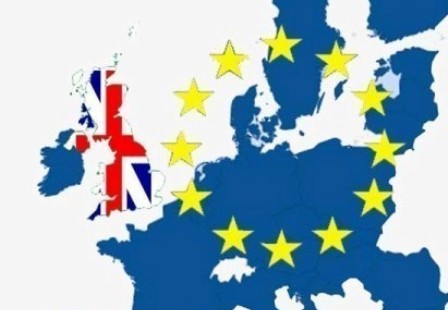
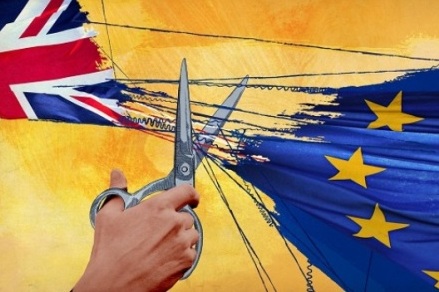
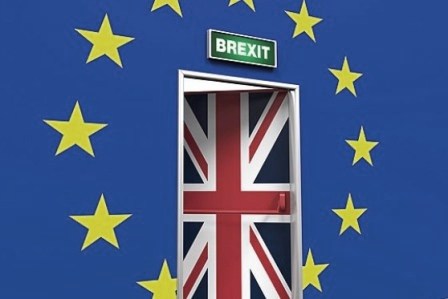
 

Brexit: If the Existing Deal is not Accepted!

How might a new way forward on Brexit be uncovered if the existing deal is not accepted?

[John Bruton | Oped Column Syndication]


Avoiding a No-Deal Brexit is going to require a radical change in the way the House of Commons makes decisions.

Now that the Withdrawal Agreement negotiated with the EU has been rejected twice by the House of Commons, MPs must now turn to discovering what alternative approach might find actually support. Only then can to UK engage meaningfully with the EU.

This process must be completed by 10 April, the date of  a possible special meeting of the European Council on Brexit.

Otherwise the UK will simply crash out of the EU with no deal on 12 April., with dire consequences for us all.

So how might the House of Commons organise itself to make the key decisions?

And will the May government facilitate, or deliberately hinder, the process?

There have been suggestions that the Prime Minister might call a General Election, if support is gathering for a solution that she does not like, or which might split the Conservative Party irrevocably.

The options for decision making in the House of Commons have been analysed in an excellent paper published last week by the  Constitution Unit of University College London.

One proposed way (e.g. by Kenneth Clarke and others) of organising the question is to offer preferential voting, a Proportional Representation system of choosing between options.

This method is already used for choosing the chairs of committees in the House . It would avoid the problems of the yes/no voting system, and encourage  more sincere voting.

But the choices to be made are complex, and contingent on other choices by other people. MPs may find themselves needing to know how other MPs will vote on other questions, before they feel they can decide how to vote on the question that is actually in front of them.

To address this problem, the Constitution Unit suggests that two separate ballots might be held.

The first ballot would ask MPs to rank preferences,(1,2,3) as between:

  • Moving straight to Brexit on the existing deal without a referendum
  • Accepting a Brexit deal, but on condition that it is put to the people for approval in a referendum
  • Ending the Brexit process and revoking Article 50 and stay in the EU on existing terms as a  full voting member( an option that still exists up to 12 April).

These options are incompatible with one another, so the result of the ballot would clarify matters. The option that got  the most support would then be the basis for a second ballot.

If MPs do not vote in the first ballot to revoke Article 50 and stay in the EU, a second ballot might then ask them to rank different options for a Brexit deal on a 1, 2, 3,4th preference basis.

They would have to say their order of preference between four options:

  • The Prime Minister’s current deal, including the backstop and proposed ‘customs arrangements’
  • The current Withdrawal Agreement, including the backstop, with significantly looser customs arrangements (the ‘Canada’ model) which in practice would make the backstop more likely to be brought into effect.
  • The current Withdrawal Agreement alongside significantly closer arrangements (the ‘Norway’ model or ‘Common Market 2.0’) which would in practice make use of the backstop unnecessary
  •  A ‘no deal’ Brexit.

The result of this ballot would establish the wishes of the House.

Obviously the process would have to be public so each MP’s ballot paper would have to be published. But the whole process could be completed in a day.

But it would be necessary to have a government in place that would intend to fulfil the preferences of the House in a sincere and constructive way. 650 MPs cannot negotiate with Michel Barnier. Only a government can do that.

Paving the way for a PR type ballot will be very difficult.

The UK Conservative Party  has a deep dislike of the whole idea of PR. But PR may be the only way out of  its present dilemma.

It is also important that the issue be decided on the basis of free votes, although it has to be recognised that an MP ,who is threatened with possible de selection by his/her constituency association, is not entirely free.

If the present Prime Minister refuses to allow some such system of discerning the will of Parliament, or if she declines to accept the result in a sincere spirit, the question would arise as to whether she should continue in office.

Ultimately, the House of Commons holds the power – and hence the threat – of removing the government from office.

Under the Fixed-term Parliaments Act, a vote of no-confidence does not immediately result in a general election, but triggers a 14-day period during which a new government can be formed.

There is no necessity that any new Prime Minister be one of the party leaders. Any MP could become Prime Minister.

Instead it would be crucial for any new Prime Minister to command the confidence of the House of Commons – beyond the confines of the Conservative Party – to deliver the next stage of the Brexit process.


John Bruton is the former Prime Minister of the Republic of Ireland  (1994-97) and the former European Union Ambassador to the United States (2004-09). He has held several important offices in Irish government, including Minister for Finance, Minister for Industry & Energy, and Minister for Trade, Commerce & Tourism.


UK’s Parliament Sovereignty under Test

Parliament, not the monarch, and not people by referendum, is sovereign — a principle not contained in a written constitution, but it is longstanding in the UK constitutional system.

[John Bruton | Oped Column Syndication]


The underlying organising principle of the UK constitutional system has been that Parliament, not the monarch, and not people by referendum, is sovereign.

This principle may not be contained in a written constitution, but it is longstanding.

It was established in the seventeenth century by the outcome of the Civil War 1646/9, where Parliament defeated the monarch (Charles I) and his ministers, and by the Revolution of 1688 whereby Parliament deposed the legitimate monarch (James II).

In contrast, in Ireland, the Houses of the Oireachtas are not sovereign, in the sense that, since 1937, it is only the people who, by referendum, can change the Irish constitution.

The developing clash this week between the government of the UK (the Queen’s Ministers to use 17th century terms) and the majority in Parliament, over the latter’s rejection of the Brexit Withdrawal Agreement, is creating a crisis in the UK constitution.

This crisis is derived from the fact that the UK government intentionally ran down the clock and delayed voting on the Withdrawal Agreement, so that it could use the Article 50 deadline, and the threat of a No Deal crash out, to force Parliament’s hand.

It is arguable that this level of pressure on Parliament by the executive is contrary to the UK constitution.The government of the UK should, in accordance with tradition, act as a servant of Parliament, not the other way around.

But, instead, the government is demanding that Parliament vote, over and over again, on the same question, citing the idea that it would be undemocratic to have a second Referendum on Brexit, and claiming that to respect the referendum result, PM May’s Withdrawal Agreement must be voted through by Parliament.

If Parliament is to be asked to change its mind, there is no logical reason for the people, in a referendum, should not also be allowed to do the same.

The UK may also need to revise its unwritten constitution, to define more clearly the respective roles of government and Parliament, in regard to international negotiations. This is a problem for the EU. The EU is going to have to negotiate with the UK, whether it wants to or not. We do not need to be going through this week’s drama over and over again in the discussion of the various trade and other agreements, that the UK is going to need to make with the EU over the coming years, if/when Brexit goes ahead. This is no mere academic issue.


John Bruton is the former Prime Minister of the Republic of Ireland  (1994-97) and the former European Union Ambassador to the United States (2004-09). He has held several important offices in Irish government, including Minister for Finance, Minister for Industry & Energy, and Minister for Trade, Commerce & Tourism.


Europe: Bizarre Policy and Economic Crisis

While there is massive immigration from other countries, many European countries’ domestic productive population that could help local economic growth is pushed out to immigration — a policy that is bizarre and does not help economic growth.

[Fotini Mastroianni | Oped Column Syndication]


The birth deficit concerns both demographers and economists. In many European countries, including Greece, the birth deficit is mainly treated with slogans and absurdities. In the process, a deeper analysis of the issue and its correlation with economic growth are ignored, despite the fact that the age structure of the population impacts the economy.

As the birth deficit is defined as the birth of fewer than 2.1 children per family, at least one of these children should be a girl in order to make up for the mother’s reproductive capacity.

Although many emphasize that birth deficit in Greece is particularly intense at the time of the economic crisis, this does not correspond to reality. As early as the 1950s, there was a downward trend in births (2.3 children per family), in 1981 it reached exactly the limits of reproduction (2.1 children per family). Since then, it has been declining with small growth periods due to the return of Greek immigrants and repatriates and the entrance of economic immigrants. Similar scenario exist in most of the other European countries.

An important factor for the birth deficit was internal migration from rural to urban areas and the transition of society from rural to post-industrial. In traditional rural societies, parents’ low status, lack of education, the closed social environment and the largest residential area (houses with a yard) — cause high levels of birth rates. In contrast, in post-industrial societies, the improvement of women’s position and educational level, women’s more frequent participation in social and economic activities, methods of contraception, income improvement, professional career accentuation (instead of family life) — reduce birth rates. In urban environments, the lack of living space (see apartments) has a negative effect on the creation of a family.

According to Schultz (1973), as parental income increases, the demand for more children decreases. At the same time, the transition to the post-industrial society is accompanied by a reduction in mortality and, thus, the aging of the population and the change in social trends. The acquisition of descendants for social recognition and self-esteem are no longer present, while the one-parent families and singles are increased and traditional families are reduced.

A key reason for the birth deficit in Greece (and in other European countries in crisis) is the minimal to non-existent support from the welfare state. Its complete collapse in the years of the crisis has aggravated the problem. Young people are not supported by the state to create a family, because there are no measures to help them combine their education or professional life with the family.

Greece was not an exception, but it coincided with the low birth rate of Western Europe. The high birth rate — according to relevant studies (Li & Zhang 2007, Li 2015) — has a negative impact on the economic development of a country, especially in the poor countries, compared to the rich. On the other hand, it is argued that when a country has a large part of its population in productive age, the highest degree of productivity will cause economic growth. If the population is elderly, then existing resources are used in a less productive way and, as a result, economic growth slows.

Different behavior of the age segments of the population is something that changes economic growth, i.e. young people invest more in education and fitness, while the elderly save and care for better healthcare. The population in productive age differs from the young and the elderly in the sense that they consume more than they produce (Bloom et al., 2001).

Based on the above, the lack of a birth increase strategy of the Greek governments and other Southern European countries is largely in line with the European Union’s requirements.

While there is a birth deficit and a shortage of a working-age population, the existing productive population is pushed tο immigration. Given the fact that this productive population is also highly educated, their immigration reinforces other economies such as the German economy and others. Massive masses of young immigrants (mainly males) are accepted in Southern European countries to fill the gap left of those who have emigrated.

This fact totally contradicts the economic theory of economic development. While there is massive immigration from other countries, the domestic productive population that could help local economic growth is pushed out to immigration. This policy is bizarre and certainly does not help economic growth of the European countries under crisis.


Fotini Mastroianni is an economist, MBA lecturer, writer, blogger from Athens, Greece. She had taught, among others, at the University of Wales & the University of Glyndwr.


Brexit is defeating itself

New barriers – including the fact that the UK will be (after Brexit) having different standards, trade arrangements and tariffs than the EU – will bring delays, extra bureaucracy, and eventually bankruptcies, in their wake.

[John Bruton | Oped Column Syndication]


Brexit, of its nature, means hard barriers between the United Kingdom (UK) and the European Union (EU).

This is because it means the UK having different standards, and, sooner or later, different trade arrangements and tariffs than the EU.

Whether these barriers are at the geographic boundary, or a few miles away, makes little difference.

These new barriers will bring delays, extra bureaucracy, and eventually bankruptcies, in their wake.

This is what Brexit means, and was always going to mean. Taking back control, by its nature, means more controls.

The UK Government says it wants to impose these controls for two reasons.

The first is to be able to control immigration to the UK from the EU.

The truth is that the bulk of the immigration to the UK is not from the EU, but from outside it. EU immigration to the UK will fall off anyway because the population of the EU countries, from whom immigrants have come to the UK, is set to decline.

The second is to be able to make its own trade deals with non EU countries.

This argument is unconvincing. On leaving the EU the UK will lose the trade agreements it ALREADY HAS with the EU, and through the EU, with other countries.

In fact, leaving the EU will mean the UK losing trade agreements with countries that account for 70% of all UK trade. It will need a lot of new agreement to make up for this sudden and dramatic loss!

The backstop would reduce the effect of this, but not remove it altogether, especially if the UK opts for a different VAT regime to the EU.

No Deal

If there is no deal, and no backstop, the European Commission, in a paper published in November, said: “Member States, including national authorities, will play a key role in implementing and enforcing EU law vis-à-vis the United Kingdom as a third country. This includes performing the necessary border checks and controls and processing the necessary authorisations and licences.”

The paper does not exempt any of the EU Member State from this requirement.

Indeed if the EU Customs Union and Single Market were to deliberately fail to control any of its borders, it would soon cease to exist, as a Customs Union and a Single Market.

This would not be in Ireland’s interest, to put it mildly.


John Bruton is the former Prime Minister of the Republic of Ireland  (1994-97) and the former European Union Ambassador to the United States (2004-09). He has held several important offices in Irish government, including Minister for Finance, Minister for Industry & Energy, and Minister for Trade, Commerce & Tourism.


Preparations for “No Deal“ Brexit

European Commission’s Paper sets out the preparations necessary for Brexit without a deal.

[John Bruton | Oped Column Syndication]


The European Commission has produced a paper setting out the preparations that will have to make for a “No Deal“ Brexit, and what would have to done to deal with it.

[Note: Author has extracted some of the interesting quotations from the paper. It is quite explicit in some respects, but those who say there will be no hard border in Ireland in any circumstances will need to seek further clarification from the Commission.]

Border checks

The Commission paper says “Member States, including national authorities, will play a key role in implementing and enforcing EU law viz-à-viz the United Kingdom as a third country. This includes performing the necessary border checks and controls and processing the necessary authorizations and licences.”

It adds “The Commission is working with Member States to coordinate the measures they adopt to ensure that contingency preparations are consistent within the European Union,” and says that “Member States should refrain from bilateral discussions and agreements with the United Kingdom, which would undermine EU unity”.

The Irish case

The Commission paper recognizes that Ireland has a particular problem with Brexit.

It says its stands ready to  explore pragmatic and efficient support solutions, in line with EU State aid law and that it “will support Ireland in finding solutions addressing the specific challenges of Irish businesses.”

But it does not say that Ireland would be exempt from applying the EU Customs controls on the border between Ireland and Northern Ireland.

This omission does not seem to tally with statements being made by some in Ireland.

It is unclear what sort of help the Commission will be able to give Irish businesses.

Seventy-eight detailed papers available

In order to assist stakeholders in their preparation for the withdrawal of the United Kingdom, the Commission has published 78 detailed sectoral information notices guiding individual industries on the steps to be taken.

It would be useful to scrutinize these papers as to their application to business between Ireland and Northern Ireland.

Contingency measures in the immediate aftermath of a No Deal Brexit will in general have to  be “temporary in nature, and should in principle not go beyond the end of 2019”.

Air transportation disruptions

In the area of air transport, the withdrawal of the United Kingdom, without any arrangement in place at the withdrawal date, and without operators concluding the necessary and possible alternative arrangements, will lead to abrupt interruptions of air traffic between the United Kingdom and the European Union, due to the absence of traffic rights and/or the invalidity of the operating licence or of aviation safety certificates.

Regarding traffic rights, the Commission says it will propose measures to ensure that air carriers from the United Kingdom are allowed to fly over the territory of the European Union, make technical stops (e.g. refueling without embarkation/disembarkation of passengers), as well as land in the European Union and fly back to the United Kingdom. This will create a really difficult situation for UK airlines

Road transport difficulties

Regarding road transport, in case of no deal scenario, as of the withdrawal date, UK hauliers will have market access rights limited to the permits offered under the European Conference of Ministers of Transport (ECMT) which would allow for considerably less traffic than what currently takes place between the Union and the United Kingdom.  This will have serious implications for Irish businesses using UK hauliers to get goods to the continent.

In the case of a no deal scenario, as of the withdrawal date, goods entering the European Union from the United Kingdom will be treated as imports and goods leaving the European Union to the United Kingdom will be treated as exports.

Collection of duties and taxes

The Commission says that all relevant EU legislation on imported goods and exported goods will apply, including the levy of certain duties and taxes (such as customs duties, value added tax and excise on importation), in accordance with the commitments of the European Union under the rules of the World Trade Organisation.

The need for customs declarations to be presented to customs authorities, and the possibility to control shipments will also apply.

The Commission paper does not say that the border in Ireland would be exempt from this. This will need to be clarified.

The Commission calls on Member States to take all necessary steps to be in a position to apply the Union Customs Code and the relevant rules regarding indirect taxation on 30 March 2019, in case of a no deal scenario, to all imports from and exports to the United Kingdom. Again there is no explicit, or implicit, exemption for the EU border in Ireland.

Customs authorities may issue authorizations for the use of facilitation measures provided for in the Union Customs Code, when economic operators request them, and subject to relevant requirements being met.

Ensuring a level-playing field and smooth trade flows will be particularly challenging in the areas with the densest goods traffic with the United Kingdom. The Commission is working with Member States to help find solutions in full respect of the current legal framework.

The paper also deals with financial services and with residency rights for UK citizens living in EU countries.

Animal and Plant health checks will be necessary

The Commission says that, in the event of a “No Deal” goods will have to undergo sanitary and phytosanitary controls by Member States authorities “at Border Inspection Posts, which is a matter of Member State responsibility”.

Ambiguity about how all this might apply on the Irish border does not help businesses with their contingency planning.


John Bruton is the former Prime Minister of the Republic of Ireland  (1994-97) and the former European Union Ambassador to the United States (2004-09). He has held several important offices in Irish government, including Minister for Finance, Minister for Industry & Energy, and Minister for Trade, Commerce & Tourism.


Harder the Brexit, Harder the Resolution of Irish Border Problem

The proposals the United Kingdom government is making for its future relationship with the European Union will run into a number of obstacles in coming days.

[John Bruton | Oped Column Syndication]


The harder the Brexit, the harder will be the resolution of the Irish border problem.

In a Joint Report of 8 December 2017, the United Kingdom (UK) agreed to respect Ireland’s place in the EU and that there would be no hard border in Ireland. This was to apply “in all circumstances, irrespective of any future agreement between the European Union (EU) and the UK”.

The further the UK negotiating demand goes from continued membership of the EU, the harder it will be for it to fulfill the commitments it has given on the Irish border in the Joint Report.

If the UK government had decided to leave the EU, but to stay in the Customs Union, the Irish border questions would have been minimized.  But the government decided to reject that, because it hoped to be able to make better trade deals with non EU countries, than the ones it has as an EU member.

If the UK government had decided to leave the EU, but  to join the European Economic Area (the Norway option),this would also have minimized the Irish border problems. The government rejected that because it would have meant continued free movement of people from the EU into the UK .

In each decision, maintaining its relations with Ireland was given a lower priority than the supposed benefits of trade agreements with faraway places, and being able to curb EU immigration.

The government got its priorities wrong.

Future trade agreements that may be made with countries outside the EU will be neither as immediate, nor as beneficial to the UK, as maintaining peace and good relations in the island of Ireland. The most they will do is replace the 70 or more trade agreements  with non EU countries that the UK already has as an EU member and will lose when it leaves.

EU immigration to the UK, if it ever was a problem, is a purely temporary and finite one.

Already the economies of central European EU countries are picking up, and, as time goes by, there will be fewer and fewer people from those countries wanting to emigrate to the UK(or anywhere else) to find work.  These countries have low birth rates and ageing populations, and thus a diminishing pool of potential emigrants.

Solving the supposed EU immigration “problem” is less important to the UK, in the long run, than peace and good relations in, and with, Ireland.

If, as is now suggested, the UK looks for a Canada or Ukraine style deal, the Irish border problem will be even worse. Mrs May has recognized this and this is why she rejects a Canada style deal..

A Canada style deal would mean the collection of heavy tariffs on food products, either on the Irish Sea, or on the Irish border. Collecting them on the long land border would be physically impracticable, so the only option would be to do it on the Irish Sea.

The all Ireland economy, to which the UK committed itself in the Joint Report, would be irrevocably damaged. The economic foundation of the Belfast Agreement would be destroyed.

It is time for the Conservative Party to return to being conservative, and conserve the peace it helped build in Ireland on the twin foundations of the Belfast Agreement and the EU Treaties.  Conservative Party members might remember that, without John Major’s negotiation of the Downing Street Declaration in 1993, there would have been no Belfast Agreement in 1998.

The proposals the UK government is making for its future relationship with the EU will run into a number of obstacles in coming days.

The first will be that of persuading the EU that the UK will stick to any deal it makes.

Two collectively responsible members of the UK Cabinet, Michael Gove and Liam Fox, have both suggested that the UK might agree to a Withdrawal Treaty on the basis of the Chequers formula, but later, once out to the EU, abandon it, and do whatever it liked. This would be negotiating with the EU in bad faith. Why should the EU make a permanent concession to the UK, if UK Cabinet members intend to treat the deal as temporary?

The second problem relates to the substance of the UK proposals.

They would require the EU to give control of its trade borders, and subcontract control to a non member, the UK. While the UK proposals envisage a common EU/UK rule book for the quality of goods circulating, via the UK, into the EU Single Market, the UK Parliament would still retain the option of not passing some of the relevant legislation to give effect to it. The UK would not be bound to accept the ECJ’s interpretation of what the common rules meant. Common interpretation of a common set of rules is what makes a common market, common.

Mrs May is not the only Prime Minister with domestic constraints.  Creating a precedent of allowing the UK to opt into some bits of the EU Single Market, but not all, would create immediate demands for exceptions from other EU members, and from Switzerland and Norway (who pay large annual fees for entry to the EU Single market). It would play straight into the hands of populists in the European Parliament elections, which take place just two months after the date the UK itself chose as the end of its Article 50 negotiation period.

It does not require much political imagination to see that aspects of the UK proposal, if incorporated in a final UK/EU trade deal in a few years time, would be a hard sell in the parliaments of some of the 27 countries. We must remember that all that would be needed for the deal to fail, would be for just one of them to say NO.

Remember how difficult it was to get the Canada and Ukraine deals through.

Article Source: Oped Column Syndication.


John Bruton is the former Prime Minister of the Republic of Ireland  (1994-97) and the former European Union Ambassador to the United States (2004-09). He has held several important offices in Irish government, including Minister for Finance, Minister for Industry & Energy, and Minister for Trade, Commerce & Tourism.


Inside Putin’s Head

Vladimir Putin tries to legitimize his disregard of the ‘rule of law’ by claiming that all former territories dating back to the Byzantine Era and native Russian speakers must be protected by “Mother Russia”. However, the reality is: these territories give Russia access to warm water ports necessary to ship its oil and weapons.

[Cynthia M. Lardner | Oped Column Syndication]


Russian Federation President Vladimir Putin’s approach to foreign relations and military engagement is opportunistic, aggressive and expansionist. These traits – the anti-thesis of multilateralism and cooperation – are driven by Putin’s mental schema that he has been called upon to defend everyone of Russian descent.

Putin’s actions over the last decade, especially in Ukraine, the Crimean Peninsula, Georgia, South Ossetia and Abkhazia, have cost him his G8 seat and open dialogue with NATO and other foreign powers, to the point where many consider this a resurgence of the Cold War. Since 2015 Russia has been slapped with an increasing number of Western sanctions. The Russian plutocracy remains largely unscathed due to their inter-relationship with the Russian government. Then there is Russia’s vast oil reserves upon which the European Union and other countries are heavily dependent.

Furthermore, more than $250 billion in goods and services exchanged annually between Russia and its largest trading partner, i.e. Western Europe. Russia is also non-discriminatory in its sale of weapons and military technology to foreign powers, including Iran and North Korea. It’s the Russian people, living under Putin’s authoritarian rule, who have, undoubtedly, been forced to endure the adverse economic impact caused by the rapid decline of the ruble.

Russia is one of the five permanent members of the United Nations Security Council, and each of these members has veto power, extending to the enforcement of all international tribunal decisions and, if necessary to dispatch peacekeeping missions. Thus, the Russian Federation is protected from international judicial civil accountability in the International Court of Justice or the Permanent Court of Arbitration, which hears cases between United Nations member nations.

As Russia is not a party to the Rome Statue, it is not subject to criminal liability before the International Criminal Court. By way of example, assuming, arguendo, that there was a viable enforcement mechanism, Russia could have been held responsible for the illegal annexation of Crimea under the Minsk II Agreement, and for its actions in Syria. In sum, Putin rules the Russia with impunity and without accountability.

Gorbachev and Kissinger Speak Out

Mikhail Gorbachev, the last General Secretary of the Communist Party of the Union of Soviet Socialist Republics (USSR), received a Nobel Peace Prize in 1990 for summits held with Presidents Ronald Reagan and George H.W. Bush resulting in the 1987 Intermediate-range Nuclear Forces (INF) Treaty. The summits were instrumental in bringing the post-World War II Cold War to its conclusion.

The goodwill generated by Gorbachev and his successor Boris Yeltsin, the first president of the newly created Russian Federation, dissipated when Yeltsin resigned as president, appointing Vladimir Putin the acting president until official elections were held in early 2000. He has been re-elected three consecutive times. Based on his interference with any contender posing an actual threat, Putin could hold the presidency indefinitely.

When the Cold War ended Russia expected to be accepted by the West. This never fully materialized. Putin views that Russia has been left disconnected from post-World War II Europe and threatened by the continuation of NATO.

Dialogue between the West and Russia has deteriorated to the point where it is once again in Cold War mode. Many, including NATO Secretary General, Jens Stoltenberg, and Gorbachev have warned that the continued isolation of Russia could lead to armed conflict on European soil.

Gorbachev warned:

The situation hasn’t been this bad in a long time, and I am very disappointed in how world leaders are behaving themselves. We see evidence of an inability to use diplomatic mechanisms. International politics has turned into exchanges of accusations, sanctions, and even military strikes… I am sure no one wants war, but in the current febrile atmosphere could lead to great trouble, and ordinary people are not yet aware of the threat hanging over them…

Legendary former US Secretary of State Henry Kissinger, who has been in contact with both US President Donald Trump and Russian President Vladimir Putin, and Gorbachev agree that, minimally, a détente [easing of hostility] is needed to ease the tensions between the two countries, which would simultaneously ease tensions around the world.

A logical starting place for dialogue would have been to discuss the mutual charges of violations have placed the INF Treaty in jeopardy and the renewal of the 2010 New Strategic Arms Reduction Treaty put bounds on the US-Russian nuclear competition, is due to expire in less than three years. These treaties provide desirable Mutual Assured Stability between the two countries. But the vision most of the world was left with was Putin tossing a soccer ball to Trump.

After the July Helsinki summit between Putin and Trump, Kissinger sadly concluded, “I think we are in a very, very grave period for the world.”

Chicken or the Egg: The Sanctions Conundrum

Since assuming power, Putin has proven himself to be an antagonist. There are several factors driving Putin’s aggressive, opportunistic and expansionist tactics.

Putin believes himself to be irrevocably tied to Europe dating all the way back to the Byzantine Era. Putin has justified his actions by repeatedly stating that it is his duty to protect all the people of Russian descent even if they reside outside of Russia.

While Russia was sanctioned for the Russo-Georgian War, those sanctions do not compare to the sanctions imposed innumerable times by the EU and the US since 2015. The first set of these sanctions were imposed for the 2014 illegal annexation of the Crimean Peninsula for Ukraine. Russia then lost its seat on the G8. It was the illegal annexation and continued occupation of Crimea that initially left Russia diplomatically out in the cold. While the Minsk Protocols were violated, the reality is that Russia is going to continue occupying Crimea in order to access the warm water port [in Sevastopol] in order to transport its oil [through Black Sea]. This creates a diplomatic conundrum for those wise enough to advocate that the current Cold War be transformed into a détente.

More recently, Russia has been sanctioned for tampering with the 2016 US Presidential election and for being found culpable for a chemical weapons attack in Great Britain on a former KGB agent and his daughter. In the eighteen months, Russia has seen diplomats expelled from several countries – most recently in Greece – for a variety of reasons.

Russian Foreign Minister Sergei Lavrov has alleged that Russia – despite the sanctions – has increased its economic and military capacities. The value of the ruble, however, tells a different story. After years of sanctions, the ruble has only slightly recovered.

Sanctions have not proven effective. In the case of the Crimean Peninsula, the sanctions will continue indefinitely despite their ineffectiveness in achieving anything other than increasing Russian ire [anger].

Crisis Group’s senior analyst for Russia, Anna Arutunyan, advocates for a more common sense approach to the imposition of future sanctions:

Rather than creating incentives for changes in Russian policy or behaviour, such sanctions instead serve to reinforce the Kremlin’s narrative that the West will besiege Russia whatever it does. To work more effectively, any fresh Western sanctions should target specific actions – if necessary piece by piece – rather than conflating all of the Kremlin’s aggressive activities abroad. Western powers should lay out clearly what would need to happen for those sanctions to be lifted.

Weakening Democratic Nations

Putin wants to see Western democratic nations weakened. Due to historical ties, that desire to disrupt is greater where the European Union is concerned.

The July summit with Trump made an international mockery of democracy and the ‘rule of law’, and further damaged the US’s relationships with traditional allies. The preceding G7 and NATO summits and meeting with British Prime Minister Theresa May were coups for Putin as they evidenced a weakening amongst Western allies.

A weakening of the ties between democratic nations generates confusion and diminishes the power of the strongest leaders, such as German Chancellor Angela Merkel and French President Emmanuel Macron. Insecurity is increased by the inconsistencies between Trump and senior US military officials.

What’s more, the threat perceived by the Baltics, the Scandinavia, the Balkans, Poland, Ukraine and Georgia has reached an unacceptable level.

Ukraine and Georgia

Along with the well-known ongoing armed conflict in Ukraine’s Donbas region (where Russian troops and mercenaries push for control of even more landmass), there was and is a similar – but lesser known – scenario playing itself out in Georgia.

The trigger was the 2008 NATO Summit, where Georgia and Ukraine were given a commitment that at a future date they would accede to the NATO member-state status. Putin is speculated to believe that his engaging aggressive and expansionist tactics in both Georgia and Ukraine would slow down or even halt the accession process.

Georgia, once a part of the USSR, is wedged between the Middle East, Russia, Iran and Turkey and is an important corridor for oil pumped from the Caspian Sea. This month is the 10th anniversary of the start of the Russo-Georgian War in which Russia drove Georgian troops out of two breakaway provinces, South Ossetia and Abkhazia. To date, the Kremlin continues to illegally occupy these territories going so far as so construct nineteen military bases in South Ossetia alone.

Georgia is still being attacked by militants using covert tactics that, until recently, were ignored by the media. Pro-Russian militants are taking back Georgia hectare by hectare under cover of darkness, saving Russia from the burden of engaging in an all-out [direct] armed conflict with Georgia. There are times when Georgian farmers wake up only to discover warning signs, barbed wire and even surveillance cameras on what was only the day before part of their farms.

Based on his ill-conceived belief predating the USSR, Putin tries to legitimize his disregard of the ‘rule of law’ by claiming that all former territories dating back to the Byzantine Era and native Russian speakers must be protected by “Mother Russia”, including Georgia, especially South Ossetia, and the Crimean Peninsula. However, the reality is: these territories give Russia access to warm water ports necessary to ship its oil and, no doubt, weapons.

Admiral James Foggo, Commander of US Naval Forces Europe and Africa, stated that Russia is deploying more submarines to the Mediterranean, Black Sea and North Atlantic at the highest rate since the end Cold War.

At the 2018 NATO Summit, the alliance’s member-states reaffirmed their commitment to Georgia that it will accede to NATO member-state status. Putin responded with the expected threat that if NATO added Georgia on Russia’s southern flank, it would “respond appropriately to such aggressive steps which pose a direct threat to Russia.”

The Baltics, Poland and Scandinavia

Then there’s the threat to the EU’s north — specifically Poland, Latvia, Estonia and Lithuania.

The Soviet Union seized Lithuania in 1939. On March 11, 1990, Lithuania declared that it was an independent state, the first of the Soviet republics to do so. While Poland was not a Soviet satellite state, it was under Soviet and, then, Russian control until 1989.

At present, [Russia’s] neighboring countries, Finland and, to a lesser degree, Sweden and Norway have a heightened sense of fear of Putin’s tactics. The Lithuanian and Swedish governments have gone so far as to disseminate materials to their citizens about how to spot a Kremlin agent and what to do in the event of an attack.

Finland was under Russian control until 1917 and the two countries share an 833 mile border. For over 100 years, Finland has tread a fine between Europe and Russia. An EU member since 1995, Finland is not a NATO member. However, Finland participates in nearly all sub-areas of the Partnership for Peace programme and has provided peacekeeping forces to the NATO missions in Afghanistan and Kosovo.

But, it is Poland and Lithuania that face the biggest threat due to the strategic location of the Suwalki Gap, a narrow 64 mile piece of land connecting NATO member-states Poland and Lithuania. Occupation of the Suwalki Gap or bordering Lithuanian territory by Russia would cut off the three Baltic States from other NATO countries. The US Army Europe commander Lieutenant General Ben Hodges stated that the Suwalki Gap is a high potential Russian military target.

Analysts have compared Suwalki Gap to the Cold War era’s German Fulda Gap, where NATO planned and prepared for hypothetical USSR attacks.

NATO has enhanced its forward military presence in more than five regions.

NATO has also created new five cyber warfare centers in Finland, Estonia, Poland, Germany and France.

At a time when NATO needs to rely on Poland, it has boldly challenged adherence to the ‘rule of law’. In January, Poland passed a bill criminalizing any suggestion Poland was complicit in the Holocaust, resulting in sharp criticism by the EU and the US. In July, Poland pulled away from the EU when it changed its judicial system in violation of the rules set by the EU. These are odd tactics for a country that is fearful of Russia. It is questionable what impact Russian operatives supporting far-right nationalists have had on recent events in Poland.

There’s [Russian] Western Military Command for countering NATO. Headquartered in St. Petersburg, the Western Military Command covers 26 federal subjects (including Moscow and Kaliningrad), bordering Poland, the Baltic States, Finland and Norway. A May 2018 Rand Corp report described it as “Russia’s most-capable ground and air forces”.

Strengthening Russia as an independent international player does not give rest to our NATO colleagues. They are trying in every possible way to prevent Russia from becoming a geopolitical competitor, all the more having allies,” stated Russian Defense Minister Sergei Shoigu.

Not only have Russia’s actions and capabilities increased in alarming and confrontational ways, its national-security policy is aimed at challenging the US and its NATO allies and partners,” said Admiral Foggo.

Putin has heightened the threat level by engaging leaders from those European states which are either not part of the EU or were former USSR satellite states, and also by engaging voters who feel disenfranchised from the EU or the US. Additionally, Putin controls a vast propaganda machine and a host of cyber-warfare tactics that has interfered with numerous elections, most notably in the US, France, Austria and Germany, as well as inciting anti-democratic and even white supremacist protests.

Russia has used soft power to deter former Soviet republics and states to Russia’s west and south from joining NATO and the EU. Putin’s authoritarian leadership is admired by Czech Republic President Miloš Zeman, Hungary Prime Minister Viktor Orbán and Serbian Prime Minister Alexander Vucic.


Cynthia M. Lardner is an American journalist residing in the Netherlands and is a contributing editor to Tuck Magazine and the International Policy Digest. Ms. Lardner holds degrees in journalism, law, and counseling psychology.


The Necessity of Multilateralism

It is not just multilateral relations between countries that are suffering, it is also the institutions created through multilateral treaties, especially those tied to the Rome Statue, that are failing their essential purpose. Even the stability of the EU has been threatened by nationalism, including Brexit.

[Cynthia M. Lardner| Oped Column Syndication]


Global stability and security depends upon multilateral relationships among countries and multinational entities. Multilaterism broadly encompasses agreements, treaties, trade agreements, security and intelligence sharing, etc. among three or more countries with one another or as members of multinational entities, such as the United Nations, the International Criminal Court, the G7, NATO, and the Organization for Security and Co-operation in Europe (OSCE).

The focus is on cooperation that is based on adherence to norms and the rule of law. In many respects multilateralism is the exercise of soft power by its members as it opens the door for leverage should other issues falling outside the defined relationship develop. Multilaterism is waxing and waning depending upon what country or entity one scrutinizes.

“What is new today is that the United States in particular, but also the UK, Russia, and others, often contrary to their own interests, are trying to go it alone more often—whether by pulling out of international agreements, leaving international organizations, or annexing territory in violation of international law. It is too early to say, however, that multilateralism is on the wane: that depends on how the rest of world responds to these moves,” said Ian Bond, Director of Foreign Policy at the Centre for European Reform.

Multilaterism at Work: The OSCE’s Asian Partners for Co-operation and NATO

There are a few excellent examples of multilateralism, including the OSCE’s Asian Partners for Co-operation and NATO. I had the privilege to speaking with Ambassador Clemens Koja, the Permanent Representative of Austria to the OSCE, which is based in Vienna, Austria and to Eirini Lemos from NATO’s Political Affairs and Security Policy Division in Vienna, which maintains a relationship with the OSCE’s Asian Partners for Co-operation.

Excellency, you recently spoke at the Austrian Embassy in The Hague about the OSCE Asian Partners for Co-Operation, along with the Ambassadors from four or the five participating Asian countries – Afghanistan, Thailand, South Korea and Australia. Why is the Asian Partners for Co-Operation an important outreach endeavour for the OSCE?

Ambassador Koja: In an increasingly interconnected world it is clear that security does not end or begin at Europe’s borders: issues such as cyber security, migration, human trafficking or non-proliferation to name but a few are transregional or global in their nature.

For that reason the partnership between the OSCE and a number of Asian countries helps both sides to advance on security matters. On the partner side the OSCE is often seen as an important contributor to peace and stability and sometimes also as a model for deepening regional cooperation. Partners also take great interest in resolving conflicts in the OSCE area, in particular in the crisis in and around Ukraine, and contribute substantially to the OSCE’s activities there.

What do see as the greatest challenge facing the Asian Partners for Co-Operation?

Ambassador Koja: However, it is undeniable that Partners are by their nature diverse: Afghanistan shares a long border with the OSCE and for this reason takes a natural interest in the numerous OSCE projects in Central Asia. Other more remote partners place their focus more on the common security issues and lessons learned from the OSCE as the world’s largest regional security organization.

Does the Asian Partners for Co-Operation discuss the issue of free trade and, conversely, trade wars?

Ambassador Koja: The OSCE increasingly discusses issues such as trade and environment, however does not duplicate EU or WTO activities. It therefore concentrates on the concept of economic connectivity as a means of enhancing trust and co-operation between partners and increasing political stability by increasing living standards.

Are there issues that fall outside of the ambit of the Asian Partners for Co-Operation?

Ambassador Koja: Obviously, the discussions with partners cover only issues within the OSCE’s ambit, i.e. the very wide and comprehensive security approach the OSCE stands for with its three dimensions.

Do you consider multilateral alliances and partnerships essential to creating a more peaceful and just world?

Ambassador Koja: In our perspective, it has become clear that the complexity of today’s challenges in several fields calls for multilateral approaches – at least for those aspiring to sustainable answers and solutions. More multilateralism also means more credibility and a stronger acceptance by the people.

The OSCE, as largest regional organization under Chapter VIII of the United Nations Charter, has always relied on the concept of comprehensive, indivisible security based on a cooperative method. In that vein, Austria has always advocated the promotion of effective multilateralism in order to ensure political stability, overall security, socio-economic progress as well as ecological sustainability.

The OSCE is comprised of 57 member nations. Has there been any objection by any OSCE member nation to the OSCE Asian Partners for Co-Operation or any other OSCE operation?

Ambassador Koja: With its 57 participating States, ranging from Vancouver to Vladivostok, the OSCE provides a vital platform for dialogue and and the sharing of norms, commitments and expertise. Yet, an outreach to our immediate neighbors is valuable, indeed indispensable, as our security is inseparably linked to theirs. This concerns both our partners in the Mediterranean and in Asia.

Nor is this approach questioned by the OSCE States. On the contrary, we are happy when third countries express their interest in the organization and seek an exchange. But it is clear that according to the basic principle of our organization – the consensus – all participating States must agree to a formalization of such a co-operation. As far as I am informed, China never applied for an official partner’s statute. However they were involved in the discussions on enhancing connectivity in the Eurasian area initiated by Germany’s OSCE Chairmanship 2016.

The OSCE’s Asian Partners for Co-Operation is supported by NATO. Ms. Lemos shed some light on the critical support NATO renders.

NATO established an office in Vienna for liaising with the OSCE Asian Partners for Co-operation. Why has NATO made this a priority?

Ms. Lemos: NATO has opened the liaison to the OSCE and other Vienna based organization, following a Warsaw decision to enhance the practical and political co-operation with the OSCE.  This reflects the long standing relationship, which dates back many years. As such the office doesn’t have any geographical focus, and is not specifically mandated to liaise with the OSCE Asian Partners for Co-operation.

The OSCE is an important organization for NATO (reflected very well at the Warsaw Summit declaration), not least for its role as a custodian of the rules based order and important European security agreement and CSBMs.

NATO is an excellent example of a working multilateral institution. Does NATO consider multilateral alliances and partnerships essential to creating a more peaceful and just world?

Ms. Lemos: NATO attributed great importance to multilateralism and relations with external partners and international organizations. This was very much enshrined also in our comprehensive approach policy, already in 2008, where we endeavored to include NATO’s efforts as part of an international strategies for sustainable piece efforts. Our experience in Afghanistan and in the Balkans demonstrated the need that security and development go hand in glove. Multilateralism complements bilateral relations, and allows a more comprehensive perspective of addressing challenges.

As you know, in the same spirit in 2010 we opened an office to UN.

So NATO’s outreach to its associated partners, be it in the MD or Asia will be through regular OSCE events and activities, whenever we are involved.

How is NATO working with the OSCE and its Asian Partners for Co-operation on the five established areas: new security threats and a new security paradigm; search for conflict prevention in the new security circumstances; confidence- and security-building measures in Northeast Asia; comprehensive security in Central Asia, the human dimension of security, and human trafficking? Is the relationship “generic” or of a general consultative nature?

Ms. Lemos: NATO has developed its own partnership agreements with a number of countries in the Asia-Pacific region, namely Japan, the Republic of Korea, Australia and New Zealand. These are not related to NATO’s cooperation with the OSCE. You can find more on these partnerships on the NATO website.

Failed Multilaterism

It is not just multilateral relations between countries that are suffering, it is also the institutions created through multilateral treaties, especially those tied to the Rome Statue, that are failing their essential purpose, such as the United Nations Security Council, and the International Criminal Court, which has lost members in the last two years. Even the stability of the European Union has been threatened by nationalism, including Brexit, which can be roughly translated into a fear of the influx of refugees.

The Trump Administration

Sadly multilateralism is on the decline, in part, due to the Trump Administration’s isolationist and bilateral policies, Brexit, and to China’s expansionist and bilateral foreign policies. The United States (U.S.) is losing allies as fast as China is gaining partners.

It started immediately after Donald Trump’s inauguration when he abandoned the Transpacific Trade Partnership, and has continued with the Trump Administration backing out of the Paris Climate Agreement, the Iran nuclear deal, the threats to abandon NAFTA, combined with threats to impose stiff tariffs on imported steel and aluminum on the European Union, China and Canada, and the obscene failure of President Trump to work with the U.S. key allies at the G7 Summit or, as some are calling it, the G6 + 1.

Currently, the U.S. currently has 20 bilateral trade relationships, which came under harsh criticism by Singaporean Prime Minister Lee Hsien Loong, who stated that because the U.S. is “…bigger than any other partner that comes along… many partners will [not] be keen to deal with you bilaterally.”

Meanwhile China has been scooping up countries left standing out in the cold by the White House creating innumerable partnerships with America’s former allies. At the 2018 World Economic Forum President Xi Jinping commented that, “The global market system is the ocean we all swim in and cannot escape from. Any attempt to… channel the waters in the ocean back into isolated lakes and creeks is simply not possible.”

An excellent case in point in Japan as explained in a December article that appeared in The Diplomat:

[In November 2017] Japan finalized a free-trade agreement (FTA) with the European Union (EU) that will encompass some 600 million people and roughly 30 percent of gross world product: it creates what the Financial Times calls “the world’s largest open economic zone.” When Washington withdrew from negotiations over the Trans-Pacific Partnership (TPP) at the beginning of last year, the 11 remaining countries that had been participating in deliberations pressed forward, with Tokyo taking the lead. They agreed on the core elements of a revised deal this past November — the so-called Comprehensive and Progressive Trans-Pacific Partnership (CPTPP) — and are hoping to ratify it early this year. Japan is simultaneously contending with China to shape the contours of the Regional Comprehensive Economic Partnership, an FTA that covers approximately half of the world’s population and a third of its output and, notably, excludes the U.S. Most recently, Tokyo has agreed to help finance Beijing’s ambitious Belt and Road Initiative.

The United Nations Security Council

The United Nations Security Council (UNSC) is comprised of five permanent member nations, and ten rotating member nations elected by the five permanent members to staggered two-year terms. At the time of its creation, the world’s five greatest superpowers were afforded the privilege of serving as permanent UNSC members: the U.S., the United Kingdom, France, the Russia and China (P5). There is no provision in the U.N. Charter requiring that designation as a UNSC permanent member ever be reviewed or revisited.

The P5 have de facto control over the UNSC by virtue of their exclusive veto power over exercised when any permanent member casts a “negative” vote on not only “substantive” draft resolutions but as to what constitutes a substantive issue. The most recent abuse of the veto power was by the U.S. in resolution as to its highly inflammatory decision to move the Israeli Embassy to Jerusalem, which it singularly recognized as the capital of Israel. China did not even participate in the Permanent Court of Arbitration’s case concerning its violating the Exclusive Economic Zone in the South China Sea as it knew it could veto any UNSC action to enforce the adverse decision. For the same reason Russia fears no UNSC action as to the illegal annexation of Crimea. There will never be a resolution as to Syria as Russia and likely China would cast their veto.

The P5 has been criticized for failing to deliver justice, provide security, and adhere to Rule of Law, including its responsibility to protect (R2P) by former statespersons, such as Kofi Annan, the seventh U.N. Secretary-General and Nobel Laureate, former U.S. Secretary of State Madeleine Albright, and former Canadian Foreign Minister Dr. Lloyd Axworthy, calling into question whether the U.N. Charter needs to be amended. Very few statespersons still in office are willing to criticize the P5 fearing retribution with two exceptions being New Zealand’s Prime Minister Helen Clark and Turkey’s President Recep Tayyip Erdoğan have boldly joined the chorus.


A portion of this article first appeared in the Security and Human Rights Monitor.


Cynthia M. Lardner is an American journalist residing in the Netherlands and is a contributing editor to Tuck Magazine and the International Policy Digest. Ms. Lardner holds degrees in journalism, law, and counseling psychology.


The Spanish Labyrinth

Newly minted Prime Minister Pedro Sanchez faces at least two daunting tasks: cleaning up the wreckage wrought by enforced austerity and resolving the Catalan crisis after last fall’s independence referendum.

[Conn M. HallinanOped Column Magazine]


As the socialist-led government takes over in Spain, newly minted Prime Minister Pedro Sanchez faces at least two daunting tasks: cleaning up the wreckage wrought by years of European Union (EU) enforced austerity and resolving the Catalan crisis exacerbated by Madrid’s violent reaction to last fall’s independence referendum. Unfortunately, his Party’s track record is not exactly sterling on either issue.

Sanchez, leader of the Socialist Workers Party (PSOE), patched together parties in Catalonia and the Basque region, plus the leftist Podemos Party, to oust long-time Prime Minister Mariano Rajoy of the People’s Party (PP). But is the telegenic former economics professor up to the job, and will his Party challenge the economic program of the EU’s powerful “troika”—the International Monetary Fund, the European Central Bank and the European Commission?

The answers to those questions are hardly clear, and in many ways the cross currents and rip tides of Spanish politics still resemble Gerald Brenan’s classic study of the Civil War, The Spanish Labyrinth.

While the issue that brought Rajoy down was corruption—a massive kickback scheme that enriched scores of high-ranking PP members— his Party was already weakened by the 2015 election, and he has been forced to rely on the conservative Ciudadanos Party based in Catalonia to stay in power. In short, it was only a matter of time before he fell.

Sanchez promises to address the “pressing social needs” of Spaniards, although he has been vague about what that actually means. But Spain is hurting. While economic growth returned in 2013, unemployment is still at 16.1, and youth joblessness is 35 percent. Rajoy took credit for the economy’s rebound from the massive financial meltdown in 2008, but there is little evidence that budget cuts and austerity did the trick. The two main engines for growth were cheap oil and a weak currency.

The job growth has mainly been in short-term and temporary jobs, with lower pay and fewer benefits. That is not specific to Spain, however. Of the 5.2 million jobs created in the EU between 2013 and 2016, some 2.1 million of them have been short term, “mini” jobs that have been particularly hard on young people. Many continue to live at home with their aging parents, and 400,000 have emigrated to other European countries.

Education, health care, and infrastructure have all deteriorated under a blizzard of budget cuts, and Sanchez will have to address those problems. His party’s record on the economy, however, has been more centrist than social democratic, and the PSOE basically accepts the neo-liberal mantra of tax cuts, deregulation and privatization. It was PSOE Prime Minister Jose Zapatero who sliced more than $17 billion from the budget in 2010, froze pensions, cut child care funds and home care for the elderly, and passed legislation making it easier to lay off workers.

It was anger at the Socialists over rising unemployment that swept Rajoy and the PP into power in 2011. The PSOE has never recovered from that debacle, dropping from 44 percent of the vote to 24.9 percent today. It has only 84 deputies in the Parliament, just 14 more than Podemos.

When Podemos leader Pablo Iglesias proposed forming a government of the left. Sanchez rejected it and instead appointed all PSOE people to the cabinet. However, he will have to rely on support from the left to stay in power, and there is no guarantee that it will be there unless the Socialists step away from their centrism and begin rolling back the austerity measures.

Sanchez has a mixed record on leftism vs. centrism. He was ousted from the Party’s leadership last year by the PSOE’s rightwing when he considered forming a united front of the left. It was the Party’s rank and file, angered at the rightwing Socialists that allowed Rajoy to form a minority government that put him back in power. So far, Sanchez has been unwilling to consider the kind of alliance of left parties that has been so successful in Portugal.

The new government will also need the support of the two Catalan parties, and that will likely be an uphill slog. The Catalans just elected a government that supports independence, although its President, Quim Torra has called for “talks.”

The current Catalonia crisis was ignited when Rajoy torpedoed a 2006 agreement between the Spanish government and the Catalan government that would have given the province greater local control over its finances and recognized the Catalan’s unique culture. Under the prodding of the PP, the Constitutional Court overturned the agreement and shifted the dispute from the political realm to a legal issue.

At the time, the idea of independence was marginal in Catalonia, but the refusal of Rajoy to even discuss the issue shifted it to the mainstream. “Independentism, which until 2010 was a decidedly minority option in Catalonia, has grown immensely,” according to Thomas Harrington, a Professor of Hispanic Studies at Trinity College, CT.

The Catalans began pressing for a referendum on independence—nearly 80 percent supported holding one—although it was initially seen as non-binding. Even though Podemos did not support the idea of independence, it backed the basic democratic right of the Catalans to vote on the issue. The PSOE, however, was as hard-nosed on the issue as Rajoy and the PP. Not only did the Socialists not support the right of the Catalans to vote, they backed Rajoy’s crackdown on the province, although they decried the violence unleashed on citizens trying to vote during last October’s referendum.

Some 2.3 million Catalans out of the 5.3 million registered voters went to the polls and overwhelmingly endorsed independence in spite of the fact that Rajoy sent some 10,000 National Police and Guardia Civil into the province to seize ballot, beat voters and injure more than 850 people. Legal procedures have been filed against over 700 mayors and elected officials, and the Catalan leadership is either in jail or on the run. While Sanchez said the crackdown was “a sad day for our democracy,” he will have a lot of explaining to do to the Catalan government.

Unlike Rajoy, Sanchez says he wants a dialogue with the Catalans, although he also says he intends to uphold the Spanish constitution, which does not permit secession.

Catalan society is deeply split. The big cities tend to be opposed to independence, as are many trade unions. The left is divided on the issue, but many young people support it. As the Financial Times’ Tobias Buck points out, “The younger generation, who have been schooled in Catalan and have less contact with the rest of Spain than their parents, are among the most enthusiastic backers of independence.”

It is also clear that the brutality of Rajoy’s assault has moved people in that direction, although polls show independence still does not have a majority. But in a sense, that is irrelevant. When almost half the population wants something that “something” has to be addressed, and if Buck is right about the demographics, time is running out for Madrid.

There are other serious constitutional issues that need to be addressed as well. Rural areas are greatly favored over cities. While it takes 125,000 voters in Madrid to elect a representative, in some rural areas it takes as few as 38,000. There is also a need to address Rajoy’s draconian laws against free speech and assembly.

Just how stable Sanchez’s government will be is unclear. He must keep the Basques and the Catalans on board and do enough on the economy to maintain the support of Podemos.

The PP is badly wounded, and the rightwing Ciudadanos Party—the only one that voted against the no confidence resolution—will be looking to fill that vacuum. Ciudadanos calls itself the “center,” but its economic policies are the same as those of the PP, and it is rabidly opposed to separatism. It performed poorly in the last election and in regional elections in Galicia and the Basque region. It did well in the recent Catalan elections, but that is because the Popular Party collapsed and its voters shifted to Ciudadanos.

Sanchez must recognize that the Catalan issue is political, not legal, and that force is not an option. As Napoleon Bonaparte’s Foreign Minister Talleyrand once remarked, “You can do anything you like with bayonets, except sit on them,” summing up the truism that repression does not work in the long run.


Conn M. Hallinan is a California-based independent journalist. He is a regular columnist for the think tank Foreign Policy In Focus and holds a PhD in Anthropology from the University of California, Berkeley.