Tag Archives: Europe

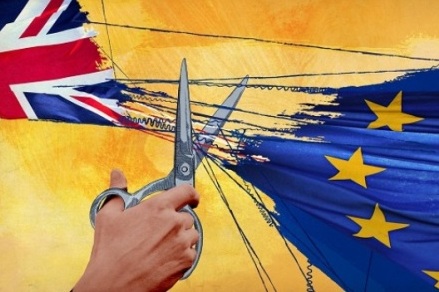
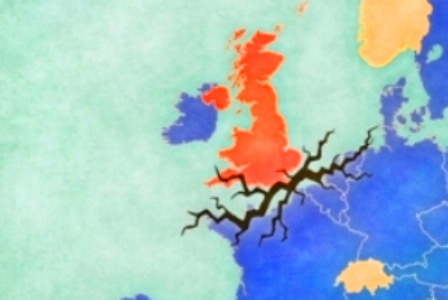
Brexit: Irish Border and Britain’s Fantasy of Taking Back Control

The burden of history is weighing heavily on Britain as it battles with its fantasies of “taking back control.”

[Lyndall Stein| Fair Observer]


The Republic of Ireland has been an enthusiastic member of the European Union since 1973, having both gained and given so much from being part of the EU. In the toxic mayhem of Brexit Britain, one question is perhaps more confounding than most, namely how did the Irish backstop issue emerge as a surprising problem? How could Ireland, with a population of just 4.8 million, have the power to impede the mighty British plan to cut the cord to the EU — a union that the Brexiters have reimagined as a cruel oppressive colonizer?

British rule has cast a long shadow over Ireland. Now 27 EU countries, large and small, are defending the Irish Republic’s right to maintain a frictionless and open border with Northern Ireland, as mandated by the historic Good Friday Agreement. Why did no one seem to see the issue of the Irish border spoiling all the little Englander plans for their new small-island world? How did it come to be a surprise, with 800 years of painful history to muse on?

SEA OF BLOOD

The problem is that in looking back to a supposedly glorious past in “taking back control,” the British are looking back at a legacy that was built on a sea of blood and injustice. It is a history of cruelty, exploitation and neglect. During the 16th and 17th centuries, the wholesale colonization of Ireland accelerated as land was stolen from the Irish people, who were punished for using their own language, forbidden to own land and denied any political rights. Catholics experienced discrimination in every aspect of their lives. A system of vassalage reduced the rural poor to tiny plots of barren land, obliged to pay extortionate rents to local and absentee landlords in England.

To this day, the population of Ireland has not recovered from the human destruction of the great famine of 1845-49 when the potato harvest failed. Potatoes constituted the main diet of the impoverished rural communities, and while butter, cheese and wheat continued to be exported, and a wide range of food was available, the rural poor were left to die in terrible circumstances. The landlords showed no mercy for the starving population, the famine largely ignored by the British ruling class. A million died and a million emigrated, with the population falling by 25% within a decade. The pain and horror of this disaster for the people of Ireland was a powerful driver for their determination to fight for independence and still resonates today.

Over many years after the famine, successive waves of resistance and struggle for independence continued, culminating in the 1916 Easter Rising, during which a republic was proclaimed by the leaders of the rebellion against colonial rule. In the British reprisals that followed, the rebel leaders were court-martialed and executed, and hundreds were killed. The severity of the backlash heightened the Irish people’s determination to free themselves and increased support for the republican Sinn Féin party, which won decisively in the general election of 1918, gaining 73 out of a 105 seats reserved for Ireland in for the House of Commons. Sinn Fein were not prepared to take their seats in Westminster — and refuse to this day — and set up an alternative government in Ireland, the first Dail Eireann.

The British government, however, refused to honor the results of the election, and the unionists in the north of Ireland threatened violence. The War of Independence started in 1919, lasting until 1921, when a truce was called. The result was the partitioning of Ireland and the creation of the Irish Free State, which had control of 26 of the island’s 32 counties. In 1948 it was renamed the Republic of Ireland, though this was contended by those who believed the republic should include the whole of Ireland. The six counties of the north  became Northern Ireland. A border with no historical or geographical relevance was created to maintain a unionist majority in the six counties of the wealthier industrialized north, which then continued to be ruled by Britain as Northern Ireland and as part of the United Kingdom.

The unionists then maintained power through the next eight decades by gerrymandering, discrimination in housing, in the workplace and at the ballot box. The most basic principles of democracy and enfranchisement were absent. This was subsequently challenged by the civil rights protests of the late 1960s. The violent response to these peaceful protests, including the murder of innocent civilians in the Bloody Sunday massacre in Derry, Northern Ireland, in 1972, escalated into a decades-long armed conflict between the British government and the Irish Republican Army, the IRA. The Good Friday Agreement was signed in 1998 with immense effort across the whole of Ireland and the United Kingdom, with international mediation. It is founded on key principles including an open border with the republic — which is now threatened by Brexit.

ARBITRARY BORDERS

The policy of imposing arbitrary borders, created to solve the problems caused by colonial rule, was a model the British followed with disastrous results, leaving a legacy of pain and conflict to this day — in places like India, Pakistan, Palestine and Nigeria. Nearly a quarter of the world was once under the extractive and rapacious rule of the British Empire, at its height before the Second World War. The gentle pink of the maps did not show what was stolen, how many died — how culture, history and heritage were denied.

Ireland’s place in the world, its success as an exporter of its rich culture — music, art, literature, technology and expertise — have all been given the opportunity to flower within the EU’s diverse trading block, built on the free movement of people and goods. Dublin has become an international, vibrant and dynamic city, with a lively and youthful culture that challenges the reactionary forces that have dominated Irish politics for so long. A modern, truly European and sophisticated country has emerged from the crushing impact of its past oppression. It has thrown off the shackles of the Catholic Church in recent years, voting for gay marriage and to end the country’s cruel anti-abortion law — the 8th Amendment that prevented all recourse to safe termination even if the price was the death of the mother.

These issues continue to divide neighboring Northern Ireland, with the Democratic Unionist Party (DUP), which currently gives the Conservative government its parliamentary majority in Westminster, still clinging to fundamentalist attitudes toward women and the LGBTQ community. Northern Ireland voted overwhelmingly to remain in the European Union, but the DUP is committed to leaving the EU and remaining in the bitter past. It has been embroiled in corruption scandals like the “cash for ash” debacle that led to the collapse of the power-sharing agreement in Stormont, leaving Northern Ireland without a functioning government for over two years and counting.

Earlier this month, in the absence of a governing body, MPs in Westminster voted to extend rights to abortion and gay marriage to Northern Ireland.

The billions that were promised by Teresa May’s Conservatives to DUP leader Arlene Foster was a hopeless attempt at vote-buying in order to secure a working majority in the UK Parliament. The DUP’s attachment to its failing powers becomes narrow and blinkered in the context of the electoral successes of Sinn Féin across the whole of Ireland and the increasingly progressive changes that have transformed life in the republic.

TAKING, NOT GIVING

The British have a long history of wanting to continue to take from their erstwhile colonies but not being prepared to give back. They benefited, after the destruction of the Second World War, from the Caribbean immigrants who were encouraged to come here to provide desperately needed skills, only to cruelly reject these children of the Windrush generation who drove our buses, nursed our patients and helped rebuild our country. Despite the scandal, the National Health Service is once again recruiting Jamaican nurses to make for the shortfall in staff following the EU referendum vote.

Yes, curry may be Britain’s most popular national dish, but discrimination and the toxic impact of the UK Home Office’s policies have created a “hostile environment” fostered in the six years of Theresa May as secretary of state have continued under Amber Rudd and now Sajid Javid. We have seen so many cases of injustice and abuse, most recently with the withholding of visas to academics from Africa visiting the UK for vital work on issues such as the Ebola epidemic.

The initial stages of the attempt by the Home Office to manage the question of EU residents’ status post Brexit have been marked by incompetence, confusion and uncertainty, bearing the hallmarks of another episode of discrimination and hostility. The building of new barriers, a cornerstone of Brexit, will impoverish the United Kingdom and sow disunity and disorder, unpicking the fabric of our society built on a free movement for all — both for those who have brought their skills and talents from other countries in Europe and for British citizens who have chosen to retire in sunnier places or work in other countries on the continent.

Those of Irish heritage in the UK have flooded their embassy with requests for an Irish passport, allowing holders to continue to travel and work across Europe as free citizens. The rest of us will be in the slow queue, going backward.

The burden of history is weighing heavily on Britain as it battles with its fantasies of taking back control and the bizarre idea that a trading bloc is actually a cruel colonizing power. So many myths have taken hold, with Brexiters embracing victimhood. The real politics and history of the border between the republic and Northern Ireland, created by the colonial past, have somehow been forgotten along with the fragility of a hard-earned peace.

The idea that an Ireland it once totally controlled and exploited having any power over the mighty British bulldog seems an unreasonable reversal of fortunes, feeding the fantasy that Britain can return to its “glorious past” when it ruled the world, building its wealth and strength on the misery of others in countries both nearby and far away.

This article was originally published on Fair Observer.


Lyndall Stein is a leading authority in campaigning, fundraising and communications. She has the experience of working with Reprieve, New Economics Foundation, Care International UK, Concern Worldwide, BOND, Resource Alliance, ActionAid, Terrence Higgins Trust, African National Congress, Care International, The Big Issue, Practical Action, VSO, African Women’s Development Trust, SOS Children’s Villages, and Institute of Fundraising.

 

Irish Border Backstop until Reaching an Agreement on Alternatives

If the British alternatives to backstop are all that good, why can they not live with the backstop until the alternatives are agreed?

[John Bruton | Oped Column Syndication]


Boris Johnson recently said that there is an “abundance” of technical alternatives to the Irish Backstop. He added that “do or die” he would take the UK out of the EU by 31 October.

He seems to believe that he can, between now and the end of October, persuade the EU to have such confidence in these unspecified alternatives that they will not insist on keeping the backstop. This is unrealistic, to put it mildly.

First, he has not put forward any detailed alternative to the backstop.

Secondly, there is no way anything meaningful can be negotiated between the time Mr Johnson would become Prime Minister and the end of October. After its experience with the failure of the UK side to ratify proposals it had previously agreed, there is no disposition on the EU side to take things “on trust” from the UK. There is nothing necessarily personal about this. It is just common prudence.

All sides are agreed that the backstop is only a fall back provision to be used only if an alternative agreed solution cannot be found.

If Boris Johnson was as confident, as appears to be that abundant alternatives exist, he would accept the backstop as an interim step, until his replacement alternatives have been worked upon and agreed.

The fact that he is not prepared to do that makes one suspect that there are no ready or acceptable alternatives that would maintain open borders, and close North/South cooperation based on compatible regulations. The European Commission recently published a document outlining all the areas of life, from health care to transport, where acceptance of common EU standards enables the private and public sectors to cooperate on a cross border basis. Brexit, without a backstop, would tear all this up.

A 216 page document was published recently by Prosperity UK, setting out a possible alternative structure that might replace the backstop. They envisage that their proposal would be added as a protocol to the Withdrawal Agreement. This would require EU consent.

Its authors also admitted that more work was needed on their proposal. It is hardly likely to be ready, and agreed by the EU 27, before 31 October. So it does not solve the immediate problem and, in a sense, Boris Johnson’s recent commitment to leave, come what may, on 31 October means that Prosperity UK’s proposal could only be pursued if Jeremy Hunt becomes Prime Minister.

Prosperity UK proposes to have border related controls — not at the border itself, but on farms and in factories and warehouses instead.

But avoiding physical infrastructure on the border is only part of the Brexit problem.

The other problem is the extra costs, delays and bureaucracy that will be imposed by Brexit on all exchanges across the border within Ireland. These would actually be worse under Prosperity UK proposals, and smuggling will be even more likely than if the controls were on the border itself. And smuggling can be used to finance subversive activities, as we know.

To avoid checks on the border of the compliance with EU standards of food crossing from Northern Ireland, Prosperity UK proposes that, for food standards purposes, Ireland would leave the EU and join a Britain and Northern Ireland food standards union instead!

This idea has zero possibility of being accepted. It is naive. Irish agricultural policy would then be dictated by British interests, something Ireland escaped from when it joined the EU in 1973.

That said, the Prosperity UK report does acknowledge the “supremacy” of the Good Friday Agreement and the peace process. This is a good rhetorical starting point.

But no new thinking is offered as to how this supremacy would be reflected in future British policy in a post Brexit world.

One would have thought that those who do not like the backstop would come forward with new and interesting proposals to deepen North/South cooperation, and East/West cooperation, to compensate for the disruption that will inevitably flow from Brexit. That is where British negotiators should be putting the emphasis now. The idea that the Belfast Agreement structures can be frozen, by a refusal by the Democratic Unionist Party and/or Sinn Fein to work together, is not acceptable.

But at a deeper level, it seems that there is still no consensus in Britain as to the sort of relationship it wants with the EU, and what trade offs it is prepared to make to negotiate such a relationship. It seems that public opinion in the UK has not yet absorbed what leaving the EU means.

It wants the freedom but not to accept the costs.


John Bruton is the former Prime Minister of the Republic of Ireland  (1994-97) and the former European Union Ambassador to the United States (2004-09). He has held several important offices in Irish government, including Minister for Finance, Minister for Industry & Energy, and Minister for Trade, Commerce & Tourism.


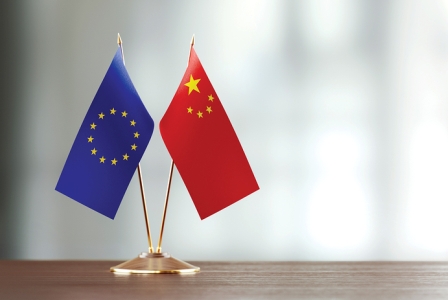
Europe Needs Common Long-Term Strategy for China

Addressing the challenges posed by Beijing requires European unity, as no member state alone has the resources and negotiating power necessary to deal with China on an equal footing.

[Lucrezia Poggetti | East Asia Forum]


China’s rise and its geopolitical ambitions have started to manifest more clearly inside Europe, making the need for a China strategy ever more compelling. European unity is key to effectively addressing the challenges posed by Beijing. After years of closer trade and investment ties, the European Union is realising that close economic relations with China have brought about political and security challenges it was not prepared for.

This newfound awareness is visible in the EU’s latest attempts to protect its strategic sectors and critical infrastructure. This includes the adoption of an EU framework for foreign investment screening and the issuing of guidelines for the security of Europe’s 5G networks.

The European Union has come to appreciate that it needs a strategy for China as, far from being solely an economic player, China is a rising political and security actor with geopolitical ambitions. This was evident in the European Commission’s ‘strategic outlook’ of March 2019, which informed EU leaders’ more assertive tone at the subsequent EU–China Summit in April 2019. Many observers have noticed Brussels’ unprecedented labelling of China as a ‘systemic rival’ and ‘economic competitor’. Less emphasis has been put on the European Union’s acknowledgment that China’s geopolitical goals ‘present security issues for the EU, already in a short- to mid-term perspective’. According to the strategic document, these are visible in China’s increasing military and technological advances and cross-sectoral hybrid threats such as information operations and large military exercises.

Addressing the challenges posed by Beijing requires European unity, as no member state alone has the resources and negotiating power necessary to deal with China on an equal footing. Paris and Berlin have demonstrated support for Brussels’ call for a ‘whole-of-EU’ approach vis-a-vis China, at least symbolically.

During Chinese President Xi Jinping’s state visit to France in March 2019, French President Emmanuel Macron invited European Commission President Jean-Claude Juncker and German Chancellor Angela Merkel to join his meeting with the Chinese leader. The German government also announced its intention to invite all member states to a 2020 EU–China Summit under its EU Presidency. This move raised eyebrows in Brussels, but Berlin hopes to encourage other members to pursue a common approach to China and refrain from Beijing-led ‘multi-bilateral’ talks.

However, governing elites in some European Union member states look at China through the prism of economic opportunity, downplaying the risks. They believe that close political ties with Beijing are key to unlocking greater economic opportunities, which cripples the EU’s efforts to devise a common strategy.

This approach is based on the naive assumption that politically cosying up to the Chinese leadership fosters a special relationship that translates into privileged economic treatment. Such an approach also assumes that a bilateral partnership on equal terms with China is possible. It disregards the fact that the Chinese government can retaliate any time, should it consider it necessary for its own agenda, regardless of whether memoranda, ‘strategic partnerships’ or any other agreements have been signed.

Lately, attempts to devise a coherent EU approach to China have not only hit a wall in Europe’s eastern flank — with the Chinese-led 16+1 grouping of Central and Eastern European countries expanding to 17+1 after welcoming Greece — but also at its core. In March 2019 Xi spent four days in Italy, where the country became the first EU founder and G7 state to officially endorse the Belt and Road Initiative (BRI). This is telling of a broader trend in which Europe criticises the growth of China’s global infrastructure scheme, and demands that the Initiative meet transparency and sustainability standards, while at the same time various European governments endorse the BRI.

Against this backdrop, how can the European Union ensure that its members look to China from a more long-term strategic perspective and act cohesively? An essential step is to close the knowledge and perception gaps across the continent. While it is up to national governments to increase their own countries’ expertise on China, the European Union can lead in driving debates about China’s rise and the implications for Europe. This would benefit those states where information about China is currently largely funded or driven by Beijing.

Democracies in China’s wider neighbourhood — like Australia, New Zealand and Taiwan — have been at the forefront of dealing with China’s systemic challenge. Exchanging notes with these partners would provide European countries with useful information on Chinese activities and response measures to adopt.

The recent 5G recommendations and the new investment screening mechanism show that a few concerted steps have been taken since 2016, when it became more visible that China’s influence was impacting European cohesion vis-a-vis Beijing. Allegedly, members of the China-led 16+1 grouping of Central and Eastern European countries also better coordinated their positions with Brussels in preparation for the latest Summit in Croatia.

The reshuffling of EU institutions that will result from the European Parliament elections raises questions over how Brussels will reshape current efforts into a more coherent and strategic approach towards China going forward. Beijing will likely try to use the opportunity offered by the upcoming changes in the EU administration to advance its interests. Securing European interests vis-a-vis China through a long-term common strategy is increasingly a necessity.

This article was originally published on East Asia Forum.


Lucrezia Poggetti is a Research Analyst at the Mercator Institute for China Studies (MERICS), Berlin.


Frozen Peaks of High Moutains may Vanish

High mountain ice is vital to millions. As the world warms, the glaciers’ global melt could see the frozen peaks vanish.

[Tim Radford | Climate News Network]


Many of the planet’s most scenic – and most valued – high-altitude landscapes are likely to look quite different within the next 80 years: the glaciers’ global melt will have left just bare rock.

By the century’s end, Europe’s famous Alps – the chain of snow- and ice-covered peaks that have become a playground of the wealthy and a source of income and pleasure for generations – will have lost more than nine-tenths of all its glacier ice.

And in the last 50 years, the world’s glaciers – in Asia, the Americas, Europe, Africa and the sub-Arctic mountains – have lost more than nine trillion tonnes of ice as global temperatures creep ever upwards in response to profligate combustion of fossil fuels.

And as meltwater has trickled down the mountains, the seas have risen by 27mm, thanks entirely to glacial retreat.

In two separate studies, Swiss scientists have tried to audit a profit and loss account for the world’s frozen high-altitude rivers, and found a steady downhill trend.

Glacial ice is a source of security and even wealth: in the poorest regions the annual summer melt of winter snow and ice banked at altitude can guarantee both energy as hydropower and water for crops in the valleys and floodplains.

In wealthy regions, the white peaks and slopes become sources of income as tourist attractions and centres for winter sport – as well as reliable sources of power and water.

Swiss focus

In the journal The Cryosphere, a team from the Swiss Federal Institute of Technology, almost always known simply as ETH Zurich, looked into the future of the nation’s own landscape, and beyond.

They made computer models of the annual flow of ice and its melting patterns and took 2017 as the reference year: a year when the Alpine glaciers bore 100 cubic kilometres of ice. And then they started simulating the future.

If humankind kept the promise made by 195 nations in Paris in 2015, to drastically reduce fossil fuel use, lower emissions of carbon dioxide, restore the forests and keep global warming to no more than 2°C above historic levels, then the stores of high ice would be reduced by more than a third over the next eight decades. If humankind went on expanding its use of fossil fuels at the present rates, then half of all the ice would be lost by 2050 and 95% by 2100.

Time lag

But there will be losses in all scenarios: warming so far has seen to that. Ice reflects radiation and keeps itself cold, so change lags behind atmospheric temperature.

“The future evolution of glaciers will strongly depend on how the climate will evolve,” said Harry Zekollari, once of ETH and now at Delft University of Technology in the Netherlands, who led the research. “In the case of a more limited warming, a far more substantial part of the glaciers could be saved.”

The Alpine glaciers were made world-famous first by Romantic painters and poets of the 19th century, among them JMW Turner and Lord Byron. But their contribution to rising sea levels is, in a global context, negligible.

When Swiss researchers and their Russian, Canadian and European partners looked at the big picture, they found that the mass loss of ice from the mountains of Alaska,  Canada, parts of Asia and the Andes matched the increasing flow of water from the melting Greenland ice cap, and exceeded the flow of melting water from the Antarctic continent.

Europe’s modest melt

They report in Nature that glaciers separate from the Greenland and Antarctic sheets covered 706,000 square kilometres of the planet, with a total volume of 170,000 cubic kilometres, or 40 centimetres of potential sea level rise.

And in the five decades from 1961 to 2016, according to careful study of satellite imagery and historic observations, the seas have already risen by 27mm as a consequence of increasing rates of glacial retreat. This is already between 25% and 30% of observed sea level rise so far.

Europe did not figure much in the reckoning. “Globally, we lose three times the ice volume stored in the entirety of the European Alps – every single year,” said Michael Zemp, a glaciologist at the University of Zurich.

He and his colleagues warn: “Present mass-loss rates indicate that glaciers could almost disappear in some mountain ranges in this century, while heavily glacierised regions will continue to contribute to sea level rise beyond 2100.”

This article was originally published on Climate News Network.


Tim Radford, who has been covering climate change for over three decades since 1988, is one of the founding editors of Climate News Network and had worked for the top British newspaper, the Guardian, for 32 years.


Europe, a new security actor in Indo-Pacific

The increasingly apparent fragility of the rules-based order, as well as a lively debate on security and defence, are stepping up European interest in the Indo-Pacific.

[Dr Eva Pejsova | Policy Forum]


French President Emmanuel Macron’s call for the creation of a “real European army” last November revived a lively debate both outside and inside Europe. Is it the end of the transatlantic romance? How will it impact NATO? Who is supposed to be the enemy? What does it mean for the global strategic chessboard? And is it even feasible?

While the dream of a European ‘army’, in a traditional sense, is probably not likely to materialise overnight, the European Union’s (EU) ambition to boost its strategic autonomy is real and shaping up.

Over the last two years, European security and defence integration have taken a great leap forward. The ‘awakening’ of the Permanent Structured Cooperation (PESCO) – boosting its military readiness; a push for an integrated defence industrial policy through the European Defence Fund – bolstering competitiveness and freedom of operational action; or the recent creation of the French-driven European Intervention Initiative (EI2) are some of the concrete steps undertaken since 2017, signaling a change from its status as a civilian power.

What’s behind this change are multiple external and internal factors. First, there has been the realisation that Europe can no longer simply rely on its transatlantic ally to face its many regional and global security challenges.

It is also an effort to take on greater responsibility as a global security provider. The US disengagement from the Iran deal, the Intermediate-Range Nuclear Forces (INF) Treaty, and climate change commitments have revealed the fragility of the global rules-based order and values that Europe wants to champion.

Internally, boosting defence cooperation has finally become a useful element of convergence among often-divided member states, many of whom are facing pressure from rising nationalism, populist movements, and the lasting migration crisis.

As a colleague recently wrote, depending on its scale, the ‘army’ can be understood as a step towards greater responsibility over Europe’s security, hedging against strategic uncertainties, or as an act of emancipation.

Either way, a more strategically autonomous Europe should be better equipped to protect its foreign policy interests.

But what does it all mean for the Indo-Pacific, and what are these interests?

For the longest time, Europe’s efforts to play a role in Asia’s security have been systematically downplayed by traditional regional actors. For Beijing, Europe was merely considered to be echoing US interests. For Washington, it was seen as too opportunistic and not critical enough of China. For both and most other countries in between, the EU was simply a large trading block without any military capacity and with absolutely no say nor added value to regional security.

But times have changed and Europe has never been more concerned and interested in Asian affairs.

One reason for this is China. The multiplication of activities along the Belt and Road Initiative (BRI) brought many of the region’s problems to Europe’s doorstep. Debt-traps, non-transparent investments, and interference in domestic politics have started to pose a direct threat to the EU’s unity and security.

As the world’s largest trading power, Europe’s prosperity is vitally dependent on Asia’s stability and is sensitive to disruptions, especially in the maritime domain – something it tries to act on through its growing security engagements in and with its Asian partners.

Europe has also become more realistic. The 2016 EU Global Strategy, which provides the guiding principles of its new foreign and security policy, urges for a stronger Europe to address current challenges under the concept of “principled pragmatism” – with international law and its underlying norms as a benchmark.

Subsequent strategies on specific countries and sub-regions, such as the China and India Strategy, echo these principles, and so does its latest Strategy on connecting Asia and Europe, which is of the greatest interest to the Indo-Pacific theatre.

Contrary to some speculations, this strategy does not pretend to counterpoise or compete with the BRI. Rather, it should be read as ‘terms of reference’ for the EU’s vision of connectivity – which should be sustainable, comprehensive, rules-based, and transparent. To achieve that, it encourages cooperation with all stakeholders, including China.

The emergence of the ‘Indo-Pacific’ as a concept has been closely watched in Brussels. With its geographical scope, focus on connectivity and maritime security, as well as the values of freedom and openness it promotes, it is well aligned to its own interests and ambitions in the region.

The involvement of some EU member states provides an additional incentive. Indeed, Macron’s call for a stronger, more responsible Europe serves France’s own strategic interests well. In a post-Brexit world, France would be the only European country with an effective military presence in the Indo-Pacific. Additionally, France is a close strategic partner of Japan, Australia, and India, and a key driver of European engagement in regional security.

The EU can serve as an amplifier to member states’ foreign policies where interests align, and the Indo-Pacific is certainly one of them. But stability in the region cannot be sustained without taking into account all players, existing institutions and security structures.

A year ago, I pointed out some of the potential dangers with the concept: an escalating rivalry between ‘the Quad’ and China; smaller countries left with a binary choice; and neglect of existing regional cooperative platforms and multilateral governance. These are all still potential dangers today.

With its unique experience, economic weight, and extensive diplomatic network, Europe can provide a much needed normative underpinning as well as greater legitimacy to the new geopolitical construct. The promotion of rule of law, economic integration, cooperative security, multilateralism, good governance, and economic, social and environmental sustainability stand at the core of Europe’s approach to international security, which can be its best contribution to peace and stability in Asia, including some of its greatest security hotspots.

The EU is clearly a different type of a security actor in the Indo-Pacific. In many ways, it can be seen as that odd friend that is too complicated to understand and not very charismatic, but one that shares the same vision and can be trusted to stand up for values that are crucial for making the new regional order sustainable.

The question now is whether this newly found strategic autonomy will translate into an equally ambitious foreign policy. As we gear up for the next European elections in May 2019, populist movements are in the ascendency. The risk is that domestic problems that currently shake European capitals – from the gilets jaunes to rising identity politics, anti-immigration and nationalist tendencies – will distract from maintaining a coherent foreign policy course.

The second, equally important question, is whether traditional Indo-Pacific powers – Australia, India, Japan, and the US at the forefront – will be willing to acknowledge its added value and ready to accept a new, and somewhat odd, player entering the game.

This article was originally published on Policy Forum.


Dr Eva Pejsova is a Senior Analyst at the EU Institute for Security Studies (EUISS) dealing with East Asia, maritime security and EU – Asia relations.


Turkey’s Local Elections: Erdogan, Opposition Parties and Kurds

If there is a phrase that sums up the local elections results, it might be “revenge of the Kurds.”

[Conn M. Hallinan | Oped Column Magazine]


Turkish President Recep Tayyip Erdogan, whose political power had remained unchallenged for last 18 years, is suddenly facing several domestic and foreign crises, with no obvious way out.

It is unfamiliar ground for a master politician like Erdogan, who has moved nimbly from the margins of power to the undisputed leader of the largest economy in the Middle East.

The problems that Erdogan has been facing lately are largely of his own making: an economy built on a deeply corrupt construction industry, a disastrous intervention in Syria and a declaration of war on Turkey’s Kurdish population. All of these policies have backfired badly.

Erdogan’s conservative Justice and Development Party, also known as the AK Party, had lost control of all of Turkey’s major cities, including the country’s political center, Ankara, and the nation’s economic engine, Istanbul in the local elections of March 31, 2019. Worth noting that Istanbul contributes more than 30 percent of Turkey’s GNP.

That is not to say that the man is down and out. The AK Party is demanding a re-run of the Istanbul election and is preventing the progressive mayors of several Kurdish cities in Turkey’s southeast from assuming office.

Erdogan is not a man who is shy of using brute force and intimidation to get his way. Close to 10,000 of his political opponents are in prison, hundreds of thousands of others have been dismissed from their jobs, and opposition media is largely crushed. The final outcome of the election is by no means settled.

Erdogan’s problems will only be exacerbated if he continues to use force.

The Kurds are a case in point. When the leftist Kurdish-based People’s Democratic Party (HDP) made a major electoral breakthrough in 2015 – winning 81 seats in the Parliament and denying the AK Party a majority – Erdogan responded by ending peace talks with the Kurds and occupying Kurdish towns and cities.

However, instead of cowing the Kurds, it sowed the wind, and the AK Party reaped the hurricane in the March election.

An analysis of the Istanbul mayor’s race shows that the AK Party and its right-wing National Movement Party alliance won about the same percentage of votes it had in last year’s presidential election. The same was true for the AK Party’s opposition — the secular Republican People’s Party (CHP) and its ally, the right-wing Good Party.

The difference was that the HDP did not field a candidate, and its imprisoned leader, Selahattin Demiratas, urged the Kurds and their supporters to vote against Erdogan’s candidate. They did so in droves and tipped the balance to the CHP’s candidate. That pattern pretty much held for the rest of the country and accounts for the AK Party’s loss of other cities, like Izmar, Antalya, Mersin and Adana.

When the Turkish state waged a war against the Kurds in the 1980s and ’90s, many fled rural areas to take up life in the cities. Istanbul is now about 11 percent Kurdish. Indeed, it is the largest grouping of urban Kurds in the world. So if there is a phrase that sums up the election, it might be “revenge of the Kurds.”

But the AK Party’s loss of the major urban centers is more than a political setback. Cities are the motors for the Turkish economy and for the past 18 years Erdogan has doled out huge construction projects to AK Party-friendly firms, which, in turn, kick money back to the Party. The President has delivered growth over the years, but it was growth built on the three “Cs”: credit, corruption and cronyism.

Those chickens have finally come home to roost. Foreign currency reserves are low, Turkey’s lira has plummeted in value, debts are out of hand, and unemployment – particularly among the young and well educated – is rising.

In a rare case of political tone deafness, Erdogan focused the recent campaign around the issues of terrorism and the Kurds, ignoring polls that showed most Turks were far more worried about high prices and joblessness.

Where Erdogan goes from here is not clear.

Turkey is holding talks with the International Monetary Fund (IMF) about a possible bailout, but Erdogan knows that this means increased taxes and austerity, not exactly the kind of program that delivers votes.

There will be no elections until the 2023 presidential contest, so there is time to try to turn things around, but how? Foreign investors are wary of Turkey’s political volatility, and the Europeans and Americans are unhappy with Erdogan’s erratic foreign policy.

The latest dust-up is fallout from Turkey’s disastrous 2011 decision to support the overthrow of President Bashar Assad of Syria. Assad has survived – largely because of Russian and Iranian support – and now Turkey is hosting millions of refugees and bleeding out billions of dollars occupying parts of northern Syria.

Turkey initially tried to get NATO to challenge Moscow in Syria – even shooting down a Russian warplane – but NATO wanted no part of it. So Erdogan shifted and cut a deal with Moscow, part of which involved buying the Russians new S-400 anti-missile and aircraft system for $2.5 billion.

Backing the extremists trying to overthrow Assad was never a good hand, but Erdogan has played it rather badly.

The S-400 deal made NATO unhappy, as the NATO doesn’t want high-tech Russian military technology potentially eavesdropping on a NATO member country, particularly on American warplanes based in Turkey’s Incirlik Air Base.

The US Congress is threatening to block Turkey’s purchase of the F-35 fifth generation fighter plane, even though Turkey is an investor in the project. The Trump administration has also warned Ankara that it will apply the 2017 Countering America’s Adversaries Through Sanctions Act if Turkey buys Russian military equipment. Sanctions could damage Ankara’s already troubled economy, given that Turkey is officially in a recession.

The Americans are so upset about this S-400 business, that the Senate recently proposed lifting an arms embargo on Cyprus and signing energy agreements with Greece and Egypt — two of Turkey’s major regional rivals.

Blocking Turkey’s purchase of the F-35 may end up being a plus for Ankara. The plane is an over-priced lemon. Some of Erdogan’s advisers argue that Ankara could always turn to Russia for a fifth generation warplane (and one that might actually work).

There is some talk about throwing Turkey out of NATO, but that is mostly bluff. The simple fact is that NATO needs Turkey more than Turkey needs NATO. Ankara controls access to the Black Sea, where NATO has deployed several missile-firing surface ships. Russia’s largest naval base is on the Crimean Peninsula and relations between Moscow and NATO are tense.

strategic turn toward Moscow seems unlikely. The Russians oppose Turkey’s hostility toward the Kurds in Syria, don’t share Erdogan’s antagonism toward Egypt, Israel and Saudi Arabia, and have differences with Ankara over Cyprus and the Caucasus.

And for all the talk about increasing trade between Russia and Turkey, the Russian economy is not all that much larger than Turkey’s and is currently straining under NATO-applied sanctions.

On the one hand, Ankara is angry with Washington for its refusal to extradite Fethullah Gulen, a Muslim leader that Erdogan claims was behind the failed 2016 coup. On the other hand, the Turkish President also knows that the US pretty much controls the IMF and he will need American support if he goes for a bailout.

How Erdogan will handle his domestic problems and foreign entanglements is anyone’s guess.

Erdogan the ‘politician‘ made peace with the Kurds, established a good neighbor policy regionally and lifted tens of millions of Turks out of poverty. But Erdogan the ‘autocrat‘ pulled his country into a senseless war with the Kurds and Syria, distorted the economy to build an election juggernaut, jailed political opponents and turned Turkish democracy into one-man rule.

If the local elections were a sobering lesson for Erdogan, they should also be a wakeup call for the mainstream Turkish opposition. The only reason the CHP now runs Turkey’s major cities is because the Kurdish HDP took a deep breath and voted for the Party’s candidates. That must not have been easy. The CHP was largely silent when Erdogan launched his war on the Kurds in 2015 and voted with the AKP to remove parliamentary immunity for HDP members. That allowed the Turkish President to imprison 16 HDP parliamentarians, remove HDP mayors, and smash up Kurdish cities.

The Kurds demonstrated enormous political sophistication in the recent Turkish balloting, but they will not be patient forever. Erdogan can be challenged, but – as the election demonstrated – only by a united front of center-left and left parties. That will require the CHP alliance to find a political solution to the demands of the Kurds for rights and autonomy.


Conn M. Hallinan is a California-based independent journalist. He is a regular columnist for the think tank Foreign Policy In Focus and holds a PhD in Anthropology from the University of California, Berkeley.


EU Election Thoughts: Immigrants must be Seen as Potential Allies and the Future

Considering EU’s labour shortage and economic condition, it is important for the European left, right and center to see immigrants for what they are: potential allies and the future.

[Conn M. Hallinan | Oped Column Magazine]


As the campaigns for the European Parliament get underway, some of the traditional lines that formerly divided left, right and center are shifting, making it harder to easily categorize political parties.

In Italy, a right wing coalition calls for a guaranteed income, larger pensions and resistance to the heavy-handed austerity programs enforced by the European Union (EU). In France, some right wing groups champion the fight against climate change, decry exploitation of foreign workers and growing economic inequality.

In contrast, Europe’s political center seems paralyzed in the face of growing disillusionment with the economic policies of the EU. Even the social democratic center-left defends the doctrines that have alienated its former base among unions and working people, pushing such parties to the political margins.

If voters seem confused, one can hardly blame them — something that is not good news for the left and the center-left going into the May 23-26 elections. Polls show center-right and center-left parties — which have dominated the EU Parliament since it first convened in 1979 — will lose their majority. Parties that are increasingly skeptical of the EU may win as many as a third of the seats in the 705-seat body.

However, “Euro-skeptic,” like “populist,” is a term that obscures more than it reveals. In the polls, the two are lumped together in spite of profound differences. The Spanish left party, Podemos, is not likely to break bread with Italy’s right-wing League/ Five Star alliance, but both are considered “Euro-skeptic.” Podemos, along with Greece’s Syriza, Portugal’s three party center-left alliance, and La France Insoumise (“Unbowed”) are critical of the EU’s economic policies, but they do not share an agenda with xenophobic and racist parties like the League, France’s National Rally — formally, National Front — and the Alternative for Germany (AfG).

This doesn’t mean that the upcoming election doesn’t pose a serious threat, in part because the Right has adopted some of the Left’s longstanding issues.

In Italy, Mario Salvini, leader of the League, says the EU elections will be fought between a Europe “of the elites, of banks, of finance and immigration and precarious work,” and a “Europe of people and labour.” Take out “immigrants,” and the demagogy of the Right sounds a lot like something Karl Marx might write.

In France, young right-wingers put out a lively environmental magazine, Limite, which wars against climate change. Marion Marechal Le Pen — granddaughter of Jean Marie Le Pen, the rightwing, anti-Semitic founder of the old National Front — rails against individualism and the global economy that “enslaves” foreign labour and casts French workers on the scrap heap.

Of course, she also trashes immigrants and Islam, while advocating for a “traditional Christian community” that sounds like Dark Ages Europe.

During the 1990s, the center-left — the French, Spanish and Greek socialists, the German Social Democrats, and British Labour — adopted the “market friendly” economic philosophy of neo-liberalism: free trade and globalization, tax cuts for the wealthy, privatization of public resources, and “reforming” the labour market by making it easier to hire and fire employees. The result has been the weakening of trade unions and a shift from long-term stable contracts to short-term “gigs.” The latter tend to pay less and rarely include benefits.

Spain is a case in point.

On the one hand, Spain’s economy is recovering from the 2008 crash brought on by an enormous real estate bubble. Unemployment has dropped from over 27 percent to 14.5 percent, and the country’s growth rate is the highest in the EU. On the other hand, 90 percent of the jobs created in 2017 were temporary jobs, some lasting only a few days. Wages and benefits have not caught up to pre-crash levels and Spanish workers’ share of the national income fell from 63 percent in 2007 to 56 percent today, reflecting the loss in real wages.

Even in France — which still has a fairly robust network of social services — economic disparity is on the rise. From 1950 to 1982, most French workers saw their incomes increase at a rate of 4 percent a year, while the wealth of the elite went up by just 1 percent. But after 1983 — when neo-liberal economics first entered the continent — the income for most French workers rose by less than 1 percent a year, while the wealth of the elite increased 100 percent after taxes.

The “recovery” has come about through the systematic lowering of living standards, a sort of reverse globalization: rather than relying on cheap foreign labour in places where trade unions are absent or suppressed, the educated and efficient home grown labour force is forced to accept lower wages and fewer — if any — benefits.

The outcome is a growing impoverishment of what was formally considered “middle class” — a slippery term, but one that the International Labor Organization (ILO) defines as making an income of between 80 percent and 120 percent of a country’s medium income. By that definition, between 23 and 40 percent of EU households fall into it.

For young people, the “new economy” has been a catastrophe. More and more of them are forced to immigrate or live at home to make ends meet, putting off marriage and children for the indefinite future.

This income crunch is adding to a demographic crisis. In a modern industrial society, the required replacement rate of births to deaths is 2.1. The world’s replacement rate is 2.44. If economies fall under 2.1, they are in for long-term trouble. Eventually the work force will be insufficient to support health care, education, sanitation, and infrastructure repair.

The EU posts a replacement rate of only 1.57. Germany is one of the few EU countries that has shown a rise in the ratio—from 1.50 to 1.59—but that is almost completely due to the one million immigrants the country took in four years ago.

The three countries that are leading the crusade against immigrants — Hungary, Poland and Italy — are in particular trouble.

Hungary — where strongman Victor Orban has made immigration a central issue for his right-wing government — is struggling with a major labour shortage. Orban recently rammed through a law requiring Hungarians to work 400 overtime hours a year to fill the shortfall, and he has been berating Hungarian women to have more babies.

In Italy, the right-wing League/Five Star Movement rode anti-immigrant rhetoric to power in the last spring’s election, but with a replacement ratio of only 1.31 — the lowest in the EU — the country is losing the equivalent of the population of the city of Bologna every three years. All one has to do to see where this ends is to look at Japan, where an aging population has created such a crisis that the normally-xenophobic Japanese are importing health-care workers. China has similar demographic problems.

Playing on fears of a migrant “invasion” alarms people, but is it an assured vote getter? In recent German elections, the AfG ran strong anti-immigrant campaigns, but ended up losing badly to the Greens. The latter have a more welcoming posture vis-à-vis migrants than even the German Social Democrats.

If Germany does not address the problem, its population will decline from 81 million to 67 million by 2060, and the workforce will be reduced to 54 percent of the population, not nearly enough to keep the country’s current level of social spending.

Much was made of recent electoral gains by the anti-immigrant neo-fascist Vox Party in Spain’s southern province of Andalusia, but if Spain does shut down the flow of migrants it will be in serious difficulty. The country’s population has declined since 2012, and there are provinces where the ratio of deaths to births is three to one. More than 1500 small towns have been abandoned.

Polls indicate that immigration tops EU voters’ concerns. It is only a few percentage points ahead of the economy and youth unemployment.

The right — in particular Hungary’s Orban — has done a masterful job of tying “liberal” to the neo-liberal policies of the EU. Unfortunately, it is an easy argument to make. Most “liberals” in the west associate the term with freedom, democracy and open societies, but many people in the EU experience “liberal” as a philosophy of rapacious individualism that has dismantled social services, widened the gap between rich and poor and enforced a system of draconian austerity.

Of course Orban, Marine Le Pen, the League’s Matteo Salvini, and Germany’s AfG are interested in power, not the plight of the EU’s 500 million citizens. And for all its talk of resistance, the League/Five Star Movement government folded when the EU nixed an Italian budget that included a guaranteed income and higher pensions.

Global migration is on the rise as climate change drowns coastlines and river deltas and drought drives people out of arid climates in the Middle East, Africa, South Asia and Latin America. By 2060, as many as 3 billion people could be affected.

Therefore, the Left and center-left have a responsibility not only to resist the economic philosophy that currently dominates the EU, but also to see immigrants for what they are: potential allies and the future.

As for the Right, it is useful to recall some not-so-ancient history. In 1934, the Nazi Party’s German Labour Front struck a medal that read “Tag Der Arbeit” (“The Day of Labour”) and featured a Nazi eagle grasping a swastika, each wing tip embracing a hammer and a sickle — but the first victims of the Nazis were communists and trade unionists.


Conn M. Hallinan is a California-based independent journalist. He is a regular columnist for the think tank Foreign Policy In Focus and holds a PhD in Anthropology from the University of California, Berkeley.


Brexit: If the Existing Deal is not Accepted!

How might a new way forward on Brexit be uncovered if the existing deal is not accepted?

[John Bruton | Oped Column Syndication]


Avoiding a No-Deal Brexit is going to require a radical change in the way the House of Commons makes decisions.

Now that the Withdrawal Agreement negotiated with the EU has been rejected twice by the House of Commons, MPs must now turn to discovering what alternative approach might find actually support. Only then can to UK engage meaningfully with the EU.

This process must be completed by 10 April, the date of  a possible special meeting of the European Council on Brexit.

Otherwise the UK will simply crash out of the EU with no deal on 12 April., with dire consequences for us all.

So how might the House of Commons organise itself to make the key decisions?

And will the May government facilitate, or deliberately hinder, the process?

There have been suggestions that the Prime Minister might call a General Election, if support is gathering for a solution that she does not like, or which might split the Conservative Party irrevocably.

The options for decision making in the House of Commons have been analysed in an excellent paper published last week by the  Constitution Unit of University College London.

One proposed way (e.g. by Kenneth Clarke and others) of organising the question is to offer preferential voting, a Proportional Representation system of choosing between options.

This method is already used for choosing the chairs of committees in the House . It would avoid the problems of the yes/no voting system, and encourage  more sincere voting.

But the choices to be made are complex, and contingent on other choices by other people. MPs may find themselves needing to know how other MPs will vote on other questions, before they feel they can decide how to vote on the question that is actually in front of them.

To address this problem, the Constitution Unit suggests that two separate ballots might be held.

The first ballot would ask MPs to rank preferences,(1,2,3) as between:

  • Moving straight to Brexit on the existing deal without a referendum
  • Accepting a Brexit deal, but on condition that it is put to the people for approval in a referendum
  • Ending the Brexit process and revoking Article 50 and stay in the EU on existing terms as a  full voting member( an option that still exists up to 12 April).

These options are incompatible with one another, so the result of the ballot would clarify matters. The option that got  the most support would then be the basis for a second ballot.

If MPs do not vote in the first ballot to revoke Article 50 and stay in the EU, a second ballot might then ask them to rank different options for a Brexit deal on a 1, 2, 3,4th preference basis.

They would have to say their order of preference between four options:

  • The Prime Minister’s current deal, including the backstop and proposed ‘customs arrangements’
  • The current Withdrawal Agreement, including the backstop, with significantly looser customs arrangements (the ‘Canada’ model) which in practice would make the backstop more likely to be brought into effect.
  • The current Withdrawal Agreement alongside significantly closer arrangements (the ‘Norway’ model or ‘Common Market 2.0’) which would in practice make use of the backstop unnecessary
  •  A ‘no deal’ Brexit.

The result of this ballot would establish the wishes of the House.

Obviously the process would have to be public so each MP’s ballot paper would have to be published. But the whole process could be completed in a day.

But it would be necessary to have a government in place that would intend to fulfil the preferences of the House in a sincere and constructive way. 650 MPs cannot negotiate with Michel Barnier. Only a government can do that.

Paving the way for a PR type ballot will be very difficult.

The UK Conservative Party  has a deep dislike of the whole idea of PR. But PR may be the only way out of  its present dilemma.

It is also important that the issue be decided on the basis of free votes, although it has to be recognised that an MP ,who is threatened with possible de selection by his/her constituency association, is not entirely free.

If the present Prime Minister refuses to allow some such system of discerning the will of Parliament, or if she declines to accept the result in a sincere spirit, the question would arise as to whether she should continue in office.

Ultimately, the House of Commons holds the power – and hence the threat – of removing the government from office.

Under the Fixed-term Parliaments Act, a vote of no-confidence does not immediately result in a general election, but triggers a 14-day period during which a new government can be formed.

There is no necessity that any new Prime Minister be one of the party leaders. Any MP could become Prime Minister.

Instead it would be crucial for any new Prime Minister to command the confidence of the House of Commons – beyond the confines of the Conservative Party – to deliver the next stage of the Brexit process.


John Bruton is the former Prime Minister of the Republic of Ireland  (1994-97) and the former European Union Ambassador to the United States (2004-09). He has held several important offices in Irish government, including Minister for Finance, Minister for Industry & Energy, and Minister for Trade, Commerce & Tourism.


UK’s Parliament Sovereignty under Test

Parliament, not the monarch, and not people by referendum, is sovereign — a principle not contained in a written constitution, but it is longstanding in the UK constitutional system.

[John Bruton | Oped Column Syndication]


The underlying organising principle of the UK constitutional system has been that Parliament, not the monarch, and not people by referendum, is sovereign.

This principle may not be contained in a written constitution, but it is longstanding.

It was established in the seventeenth century by the outcome of the Civil War 1646/9, where Parliament defeated the monarch (Charles I) and his ministers, and by the Revolution of 1688 whereby Parliament deposed the legitimate monarch (James II).

In contrast, in Ireland, the Houses of the Oireachtas are not sovereign, in the sense that, since 1937, it is only the people who, by referendum, can change the Irish constitution.

The developing clash this week between the government of the UK (the Queen’s Ministers to use 17th century terms) and the majority in Parliament, over the latter’s rejection of the Brexit Withdrawal Agreement, is creating a crisis in the UK constitution.

This crisis is derived from the fact that the UK government intentionally ran down the clock and delayed voting on the Withdrawal Agreement, so that it could use the Article 50 deadline, and the threat of a No Deal crash out, to force Parliament’s hand.

It is arguable that this level of pressure on Parliament by the executive is contrary to the UK constitution.The government of the UK should, in accordance with tradition, act as a servant of Parliament, not the other way around.

But, instead, the government is demanding that Parliament vote, over and over again, on the same question, citing the idea that it would be undemocratic to have a second Referendum on Brexit, and claiming that to respect the referendum result, PM May’s Withdrawal Agreement must be voted through by Parliament.

If Parliament is to be asked to change its mind, there is no logical reason for the people, in a referendum, should not also be allowed to do the same.

The UK may also need to revise its unwritten constitution, to define more clearly the respective roles of government and Parliament, in regard to international negotiations. This is a problem for the EU. The EU is going to have to negotiate with the UK, whether it wants to or not. We do not need to be going through this week’s drama over and over again in the discussion of the various trade and other agreements, that the UK is going to need to make with the EU over the coming years, if/when Brexit goes ahead. This is no mere academic issue.


John Bruton is the former Prime Minister of the Republic of Ireland  (1994-97) and the former European Union Ambassador to the United States (2004-09). He has held several important offices in Irish government, including Minister for Finance, Minister for Industry & Energy, and Minister for Trade, Commerce & Tourism.


Europe: Bizarre Policy and Economic Crisis

While there is massive immigration from other countries, many European countries’ domestic productive population that could help local economic growth is pushed out to immigration — a policy that is bizarre and does not help economic growth.

[Fotini Mastroianni | Oped Column Syndication]


The birth deficit concerns both demographers and economists. In many European countries, including Greece, the birth deficit is mainly treated with slogans and absurdities. In the process, a deeper analysis of the issue and its correlation with economic growth are ignored, despite the fact that the age structure of the population impacts the economy.

As the birth deficit is defined as the birth of fewer than 2.1 children per family, at least one of these children should be a girl in order to make up for the mother’s reproductive capacity.

Although many emphasize that birth deficit in Greece is particularly intense at the time of the economic crisis, this does not correspond to reality. As early as the 1950s, there was a downward trend in births (2.3 children per family), in 1981 it reached exactly the limits of reproduction (2.1 children per family). Since then, it has been declining with small growth periods due to the return of Greek immigrants and repatriates and the entrance of economic immigrants. Similar scenario exist in most of the other European countries.

An important factor for the birth deficit was internal migration from rural to urban areas and the transition of society from rural to post-industrial. In traditional rural societies, parents’ low status, lack of education, the closed social environment and the largest residential area (houses with a yard) — cause high levels of birth rates. In contrast, in post-industrial societies, the improvement of women’s position and educational level, women’s more frequent participation in social and economic activities, methods of contraception, income improvement, professional career accentuation (instead of family life) — reduce birth rates. In urban environments, the lack of living space (see apartments) has a negative effect on the creation of a family.

According to Schultz (1973), as parental income increases, the demand for more children decreases. At the same time, the transition to the post-industrial society is accompanied by a reduction in mortality and, thus, the aging of the population and the change in social trends. The acquisition of descendants for social recognition and self-esteem are no longer present, while the one-parent families and singles are increased and traditional families are reduced.

A key reason for the birth deficit in Greece (and in other European countries in crisis) is the minimal to non-existent support from the welfare state. Its complete collapse in the years of the crisis has aggravated the problem. Young people are not supported by the state to create a family, because there are no measures to help them combine their education or professional life with the family.

Greece was not an exception, but it coincided with the low birth rate of Western Europe. The high birth rate — according to relevant studies (Li & Zhang 2007, Li 2015) — has a negative impact on the economic development of a country, especially in the poor countries, compared to the rich. On the other hand, it is argued that when a country has a large part of its population in productive age, the highest degree of productivity will cause economic growth. If the population is elderly, then existing resources are used in a less productive way and, as a result, economic growth slows.

Different behavior of the age segments of the population is something that changes economic growth, i.e. young people invest more in education and fitness, while the elderly save and care for better healthcare. The population in productive age differs from the young and the elderly in the sense that they consume more than they produce (Bloom et al., 2001).

Based on the above, the lack of a birth increase strategy of the Greek governments and other Southern European countries is largely in line with the European Union’s requirements.

While there is a birth deficit and a shortage of a working-age population, the existing productive population is pushed tο immigration. Given the fact that this productive population is also highly educated, their immigration reinforces other economies such as the German economy and others. Massive masses of young immigrants (mainly males) are accepted in Southern European countries to fill the gap left of those who have emigrated.

This fact totally contradicts the economic theory of economic development. While there is massive immigration from other countries, the domestic productive population that could help local economic growth is pushed out to immigration. This policy is bizarre and certainly does not help economic growth of the European countries under crisis.


Fotini Mastroianni is an economist, MBA lecturer, writer, blogger from Athens, Greece. She had taught, among others, at the University of Wales & the University of Glyndwr.