Tag Archives: Eurasia

UN Chief’s Recent Engagement with Putin: Ethical Blunder or Diplomatic Necessity?


By Daniel Raynolds


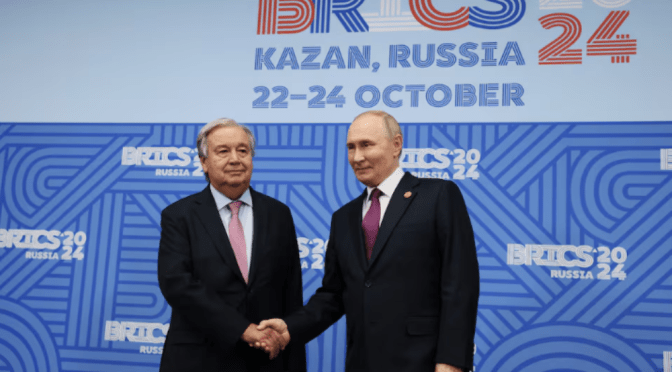
The debate surrounding UN Secretary-General Antonio Guterres’s 22-24 October attendance at the 2024 BRICS summit—that took place in Kazan, Russia—reveals deep fractures in how international diplomacy is understood and practiced in an increasingly polarised world. On one side, critics argue that Guterres’s cordial engagement with Vladimir Putin is tantamount to endorsing his actions. They assert that such diplomacy undermines the moral authority of the UN, especially in light of ongoing conflicts such as the war in Ukraine.

Alexander J. Motyl, a professor of political science at Rutgers University-Newark, in his article published on The Hill criticizes the Secretary-General for meeting a “war criminal” at the summit. He argues that while Guterres has a duty to engage with world leaders, it is morally wrong for him to appear cordial with dictators like Putin. These actions endorse Putin’s war and diminish the UN’s credibility, particularly at a time when tensions are escalating due to North Korean troops arriving in Russia to support the war in Ukraine.

Should leaders in times of escalating conflict take clear stances that reflect their commitment to justice and accountability? Bahauddin Foizee frames Guterres’s approach as a necessary engagement for peace. His role is not merely to condemn aggression but to foster dialogue among all nations, even those accused of serious crimes.

Sidelining Russia, says Foizee, could jeopardise the UN’s broader mission and limit opportunities for conflict resolution. His perspective highlights the complexity of international relations, where rigid moral absolutism can hinder the nuanced diplomacy required to achieve lasting peace. Foizee also defends Guterres’s absence from Ukraine’s peace summit in Switzerland in June on accord of the need for balance; attending would have necessitated alignment with Western proposals, potentially alienating Russia.

Ihor Petrenko, a Ukraine-based journalist who works as a fixer for foreign media, has been vocal in criticizing Guterres for his meet and greet with Putin. Petrenko argues that Guterres’s decision to meet with Putin, despite the Russian leader being an International Criminal Court fugitive, undermines the credibility of the UN and weakens Ukraine’s position in its struggle for sovereignty. Guterres’s calls for a “just peace” in Ukraine, framed within the principles of the UN Charter, are seen by Petrenko and many in Ukraine as hollow and ineffective, especially given the lack of concrete action from the UN to hold Russia accountable for its aggression.

Petrenko highlights the absurdity of Putin dismissing the war as a “family quarrel” during the summit, a remark that Guterres failed to adequately challenge. Furthermore, like Motyl and Foizee, Petrenko too has drawn a comparison between Guterres’s absence from the Switzerland summit and his acceptance of Putin’s invitation to Kazan, pointing out a troubling bias that harms the UN’s reputation. The Ukraine-based journalist criticizes Guterres for aligning with the very powers that perpetuate the war, arguing, like Motyl, that his actions not only diminish the UN’s moral authority but also contribute to the prolongation of the conflict.

Lithuanian leaders, taking a similar view to Motyl and contrasting to that of Foizee, have sharply criticized Guterres for his meeting with Putin and Belarusian leader Alexander Lukashenko at the summit. Lithuania’s Prime Minister Ingrida Šimonytė and Foreign Minister Gabrielius Landsbergis argue that Guterres’s actions undermine his credibility as an impartial mediator, and,going further, accuse him of moral inconsistency, highlighting his failure to attend a peace summit in Switzerland while choosing to engage with Putin. This, they contend, casts doubt on Guterres’s integrity and role as a genuine advocate for peace, leading Lithuania to call for him to take responsibility for his conduct and, if necessary, step down. The Lithuanian critique reflects growing frustration with Guterres’ perceived lack of principled leadership amid the ongoing war in Ukraine.

These contrasting views underscore a pivotal tension in contemporary global politics: the balance between moral leadership and pragmatic diplomacy. Critics of Guterres fear that engaging with dictators could normalise their actions and erode the UN’s credibility. However, proponents assert that without dialogue, the potential for de-escalation and understanding diminishes.

This dilemma raises critical questions about the role of international organisations in addressing conflict: Is the UN a moral arbiter, or should it prioritise dialogue, even with those who perpetrate violence?

It appears that Guterres’s actions will continue to be scrutinised, reflecting broader anxieties about how the international community navigates the turbulent waters of diplomacy in a world rife with injustice. As the war in Ukraine continues and other global tensions simmer, the challenge for Guterres and his successors will be to find pathways to peace without compromising their moral principles. The effectiveness of the UN, and indeed of global diplomacy itself, may hinge on this delicate balance.

This article was first published on Australian Outlook, a publication of the Australian Institute of International Affairs (AIIA) under a Creative Commons Licence and may be republished with attribution.


Daniel Raynolds writes opinions and reviews about various topics, including human rights violations across the world. He has been published, among others, on The New Federalist, Foreign Policy News, Eurasia Review, International Policy Digest, GAC European Union Politics, Washington Politics Blog, OnLine Opinion (Australia).

John Bruton: A Statesman of Substance

When news broke in February 2024 of John Bruton’s passing, the tributes were swift and sincere. Politicians from across Ireland and Europe spoke not just of a former Taoiseach, but of a statesman — a man who believed that public service was about humility, dialogue and getting things done. For many, it was a reminder of a different kind of politics — and a different kind of politician.

Bruton’s career began early. Elected to Dáil Éireann in 1969 at the age of 22, he quickly stood out — not for grandstanding, but for his discipline, intelligence and quiet ambition. A Fine Gael TD from Meath, Bruton was shaped by conservative values, yet he consistently showed a willingness to adapt and evolve with the country he served. He took on a series of senior roles throughout the 1980s, including Minister for Finance, where he managed public finances during one of Ireland’s most difficult economic periods.

But it was his time as Taoiseach, from 1994 to 1997, that would define his public legacy. Leading a rare “Rainbow Coalition” of Fine Gael, Labour and Democratic Left, Bruton defied expectations. The government, initially seen as a temporary arrangement, instead brought a period of real stability and progress. During his tenure, Ireland’s economy surged, setting the stage for the Celtic Tiger years that followed. Growth hit double digits. Investment flowed in. Unemployment dropped. And though the boom had multiple architects, Bruton’s steady stewardship helped lay the foundation.

He was also willing to take political risks on matters of principle. In 1995, his government led the way on a divisive but historic referendum that ended Ireland’s constitutional ban on divorce. The campaign was bitter and deeply emotional, but Bruton never wavered in his support. The measure passed by the narrowest of margins, marking a turning point in Ireland’s slow but steady shift toward a more socially liberal society.

Beyond the economy and social reform, Bruton’s quiet diplomacy played a crucial role in Northern Ireland. Working alongside British Prime Minister John Major, he helped launch the 1995 Anglo-Irish Framework Document — an effort to lay down principles for peace and political cooperation. While he would not be in office by the time the Good Friday Agreement was signed in 1998, many credited Bruton with creating conditions that made it possible. He insisted on engagement, on dialogue, on recognizing the legitimacy of both unionist and nationalist perspectives — a rare and necessary balance.

After his time as Taoiseach, Bruton continued to serve on the international stage. In 2004, he was appointed as the European Union’s ambassador to the United States. During a period of strained transatlantic relations, he became a persuasive advocate for European values, making the case for cooperation over confrontation. Bruton brought his usual clarity and calm to the role, earning respect across Washington’s political divide.

Even after stepping away from public office, he remained an active thinker and writer. His blog—thoughtful, wide-ranging and occasionally pointed—offered reflections on everything from history and governance to climate change and European integration. It became something of a hidden gem among Irish political observers, not because it was flashy, but because it felt honest.

When he died at the age of 76, the reaction was heartfelt. President Michael D. Higgins called him “a man of deep integrity and enduring commitment to the values of public service.” Former British Prime Minister John Major praised his “calm but determined” contribution to peace. Across political lines, there was agreement: John Bruton had been a steady hand at key moments in Irish history, a leader who avoided the drama but delivered the results.

In many ways, Bruton’s legacy is the kind that’s easy to overlook in an age dominated by noise and spectacle. He didn’t command attention, he earned it. He wasn’t out to change everything, just to improve what he could, when he could. That kind of leadership doesn’t always make headlines, but in Ireland’s story, it matters deeply. And in John Bruton’s case, it endures.

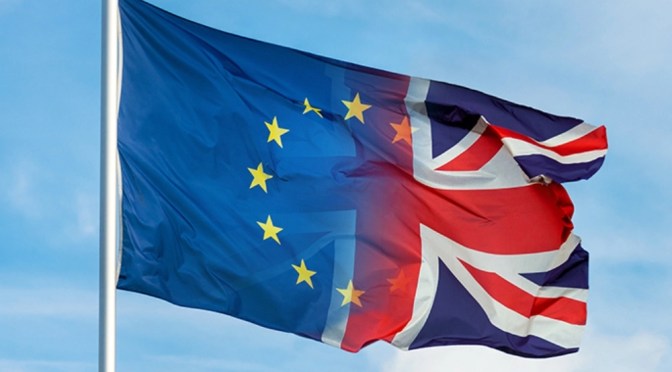
EU Must Not Allow UK to Ditch Provisions of Northern Ireland Protocol


By John Bruton


The UK government is unilaterally signalling its intent to ditch  the provisions of the Northern Ireland Protocol that are designed to protect the integrity of the EU Single Market. The integrity of the Single Market rests on their being a single set of rules, uniformly enforced and consistently applied, across the 27 EU States.  

Under the Protocol, goods produced in [Northern Ireland] would enjoy full access to the Single Market without any checks at the EU border in Ireland or anywhere else. The Protocol also affirms that [Northern Ireland] retains full access to the UK market. This is a win/win situation for [Northern Ireland] business.

The new UK legislation announced this week would instead create a control free zone in Ireland, which would radically weaken Irelands   position as a member of the EU. By doing away with the controls at the ports in [Northern Ireland], envisaged in in the Protocol, it would create a situation whereby good and foods, not meeting EU standards, could be brought into the EU market via Ireland.

We should not forget that the Withdrawal Agreement, of which the Protocol was a central part, was a key element in the winning Conservative Party General Election Manifesto of 2019.

Now the joint author of the Protocol, Boris Johnson , wants eviscerate it by means of unilateral UK legislation.

A unilateral breach of a Treaty by domestic legislation  on an internationally sensitive matter Is clearly a breach of international law.  

International commerce, in which the UK was once a major champion, rests on scrupulous respect for treaties and contracts.

“My word  is my bond” was once a watchword in British international dealings. No more, it seems.

The UK are now claiming that an international Treaty can be breached on the basis of “necessity”.

This is a hard claim to justify in this case. Fifty-two of the 90 members of Northern Ireland Assembly have indicated support for the Protocol, so there is no democratic “necessity“ to scrap the Protocol.

It is true that the DUP has said it will not sit in the [Northern Ireland] Executive unless it’s seven demands for changes are met. These demands are vaguely phrased and symbolic  and do not provide a solid basis for legal resolution. It is not clear when or if the DUP would take up their seats in the [Northern Ireland] Executive. So one  minority political party , in  small part of the UK , cannot be allowed to determine what is a “necessity” for a large and diverse state like the UK .

The fact that the UK government, Parliament, and electorate , all endorsed the Protocol as recently as 2019, with their eyes wide open, makes it very hard to plead “necessity” as a ground for undoing their own work.

An objective court would decide that they could and should have anticipated what would happen in their own jurisdiction.

The situation we are in today is a sign that debate within the ruling Tory party is taking place within a bubble, within which the needs of others outside the bubble are not heard.

Following the debate on the Protocol in Tory supporting press in Britain is like watching the reaction of the Republican base to the hearings about the invasion of the Capitol. They hear what they want to hear , and nothing else.

One Brexiteer recently described the [Northern Ireland] Protocol as “a punishment the EU inflicted on the UK for Brexit”. This is despite the fact that in 2019, Boris Johnson, who negotiated the Protocol himself, claimed that ,in the Protocol , he had swiftly negotiated  what he called a “great new deal”!

He, unlike his predecessor, had got Brexit done, he boasted.

The  same Brexiteer writer said the Protocol was “an attempted power grab” by the EU over the [Northern Ireland] economy “on behalf of its allies in Dublin”. The writer ignores the fact, under rules written while the UK was still an EU member, the Single Market of the EU has to have border controls, and these controls have to be more or less the same at all EU Borders.

Any precedent the EU might cede to the UK will be demanded by other non EU states with land borders with the EU.

The UK demands to be trusted when they say that nothing that fails to meet EU standards will cross the border into the EU .

They seem to have forgotten the long tradition of smuggling on and around the [Northern Ireland] border, some of which which helped finance paramilitary activity in the past, activity which costs thousand of Irish (and British) lives, and  could do so again.

Trust has to be earned, it cannot be commanded. If the EU cannot trust the UK government to keep its word, it will be even harder for it trust the private sector “trusted traders”, the same government appoints to protect the EU from the smuggling of sub standard goods and foods across the border into the Republic.

WHAT WILL HAPPEN NOW?

The EU has made clear the terms of the Agreed Protocol will not be changed. It has also made clear that without the Protocol there could have been no Withdrawal Agreement, and without that, there could have been no Trade and Cooperation Agreement (TCA).

Without the TCA, the Common External Tariff of the EU would have to be applied to British goods coming into Ireland and every other EU state. This would be deeply destructive , but it is the logical outcome , when one tries to unravel complex inter related  international agreements unilaterally. The whole thing comes apart.

As an EU member, Ireland would then have to apply the Common External Tariff on its own land and sea borders, a task of daunting proportions politically and practically. The effect on stability in [Northern Ireland], and the sense of isolation of Northern nationalists, would be intense. The disruption of the food industry in The whole of Ireland would be disastrous.

One hopes that it will not come to that. But pretending that this could never happen is not wise.

The best approach for the EU will be to gradually turn up the heat on the UK so as to give them time to learn that actions have consequences, and the price could be very high. The European Commission has much experience in trade disputes and know how and where to target it’s actions. Meanwhile the political climate in the UK could change. The UK opposition parties need to assert themselves for the sake of the reputation of their country.

This article was originally published on Oped Column Syndication.


John Bruton was the Prime Minister of the Republic of Ireland (1994-97) and the European Union’s Ambassador to the United States (2004-09). He had held several important offices in Irish government, including Minister for Finance, Minister for Industry & Energy, and Minister for Trade, Commerce & Tourism.


Putin’s Plan Failing in Ukraine


By Nicholas Lovric


The biggest war in Europe since the World War Two (WWII) was launched by the Russian President Vladimir Putin with the excuse that Ukraine was leaning too much towards the West so much so that it became a constant threat for Russia to feel safe, develop and exist. With this war on the Ukrainians, Putin created the biggest post-WWII security crisis in the continent.

During the launch of invasion of Ukraine in late February, Putin declared he had several goals; one being to “demilitarize and de-Nazify Ukraine”. However, an opinion piece published on Ria Novosti, a Russian state-run news agency, made clear that “de-nazification is inevitably also de-Ukrainization”, meaning the aim was to erase the modern Ukrainian state.

Putin’s another self-declared goal of the invasion was to protect civilians in Ukraine’s eastern regions, areas which have borders with Russia and which are home to Russia-backed separatist groups. He said he wanted to protect the people who were subjected to what he called eight years of bullying and genocide by Ukraine’s government, though there was no evidence they were under any threat. Instead, it is Russia that is now accused by the international community of carrying out war crimes and some countries even called Russia’s actions in Ukraine a genocide.

Putin’s another self-declared goal of the invasion was to ensure Ukraine’s neutral status. He wanted to capture Kyiv, kill the Ukrainian government officials and install a pro-Russian government headed by a pro-Russian puppet until the appropriate environment is created for annexing Ukraine with Russia. Indeed, Volodymyr Zelensky, Ukraine’s democratically elected president, said that Russia had designated him as the number one target and his family as target number two. There were accusations that Russian troops made two attempts to storm the presidential compound.

Putin had done all these so that Ukraine and other European neighbours of Russia abandon their desire to join the Western defensive alliance NATO and the multilateral European Union. However, faced with fierce resistance from the Ukrainian military and the civilian-turned-militias, Putin abandoned his bid to capture the capital Kyiv and turned his ambitions to Ukraine’s east and south.

Indeed the weakening morale of the Russian troops inside Ukraine as well as the defeats and stalemates pushed Russia to pull back from Kyiv a month after launch of invasion and declared its main goal was the “liberation of Donbas”, broadly referring to Ukraine’s eastern regions of Luhansk and Donetsk. More than a third of this area was already seized by Russian proxy forces in a war that began in 2014, now Russia wants to conquer all of it.

The Kremlin claimed that the invasion’s first phase had been accomplished by reducing Ukraine’s combat potential. But the reality is that Ukraine’s resistance coupled with pressure of international sanctions and isolation had forced Putin to scale back his ambitions.

With this invasion, Putin’s initial plan was to send a message across Russia’s European neighbourhood that Russia’s neighbours should neither join NATO nor the European Union; otherwise they would face similar fate to that of Ukraine’s, which Putin initially thought would be the fall of Kyiv and gradual disintegration of the country followed by accession to Russia.

However, The Russian troops’ pull back from Kyiv sent a contrary message to Russia’s neighbour that if Putin faces harsh resistance from the enemy, he would decide to settle for less. Indeed, he had settled for endeavoring to take Luhansk and Donetsk, dropping the decision to take the entire Ukraine including the capital Kyiv.

This whole drama was sharply noticed in the capitals of Finland and Sweden, two of Russia’s neighbours, and both capitals perhaps had understood that ‘things did not go Putin’s way’ because Putin fumbled due to harsh resistance. Hence, these two countries have started looking closely at joining NATO, an alliance that now seems as unified as ever.

At the NATO Youth Summit 2022, the NATO Secretary General Jens Stoltenberg said that Finland’s and Sweden’s change of mind regarding joining NATO demonstrates to Putin that he got exactly the opposite of what he wanted; that he wanted less NATO at Russia’s borders but he now got more of it. Jens Stoltenberg blamed Russia’s aggressive actions and threatening rhetoric for driving many nations in Europe to opt for NATO membership.

Indeed, Putin triggered the opposite effect of what he wanted out of the Ukraine invasion. He wanted to weaken NATO; instead he unintentionally helped NATO to become much stronger now. What an unintended consequence of war!

This article was originally published on Oped Column Syndication.


Nicholas Lovric is a researcher and consultant specializing in Russian and Eastern European affairs. His work typically involves analyzing political, economic and social trends in the region. His expertise spans subjects such as international relations, geopolitical dynamics, security issues and regional development.


EU Cuts Eurozone Growth Forecast

Swift spread of Omicron, rising inflation and persistent supply-chain disruptions have chilled Europe’s economy this winter.

AFP, Brussels


The eurozone economy will grow less than expected this year, the European Commission said on Thursday, as energy prices and supply chain problems jack up inflation and delay a more sustained recovery from the pandemic.

The EU executive said GDP in the single currency bloc would grow by 4.0 per cent this year, instead of the 4.3 per cent forecast only three months ago.

Inflation would increase to a much stronger than expected 3.5 per cent in 2022.

“Multiple headwinds have chilled Europe’s economy this winter: the swift spread of Omicron, a further rise in inflation driven by soaring energy prices and persistent supply-chain disruptions,” said EU economy commissioner Paolo Gentiloni.

The high prices “are likely to remain strong until the summer, after which inflation is projected to decline as growth in energy prices moderates and supply bottlenecks ease,” he added. However, the former Italian prime minister underlined that “uncertainty and risks remain high” with the EU warning that “geopolitical tensions” in eastern Europe had “markedly aggravated” potential threats to the economy.

This was in reference to the more than 100,000 Russian troops that are deployed on the border with Ukraine, raising Western fears of a possible attack.

The crisis has brought major uncertainty over the supply of energy from Russia, which accounts for roughly 40 per cent of the gas that heats homes and powers factories in the 27-member EU. “Apparently Russia has no interest in increasing supplies right now, despite peak prices,” European Commission President Ursula von der Leyen said in a video address to a business conference in Brussels.


EU to Make $21m Climate-Smart Investment in South Asia

The five-year programme (2021-2026) could help spur investments in energy, water, waste management, transport, logistics, and green buildings to benefit people and businesses in six South Asian countries.

The European Union is set to allocate a fund of $21.5 million to help accelerate climate-smart and inclusive infrastructure investments in Bangladesh and five other South Asian countries.

The five other countries are India, Bhutan, the Maldives, Nepal, and Sri Lanka, according to a press release of the International Finance Corporation (IFC), the largest global development institution, yesterday.

The IFC will implement the project under the programme, “Accelerating Climate-Smart and Inclusive Infrastructure in South Asia (ACSIIS)”.

The ACSIIS is a five-year programme (2021-2026) to help spur investments in energy, water, waste management, transport, logistics, and green buildings to benefit people and businesses in Bangladesh, Bhutan, India, the Maldives, Nepal, and Sri Lanka. It would leverage $850 million of private sector investments in the region.

The impact of Covid-19 on investments in infrastructure has been widespread and severe. Investment commitments in infrastructure with private participation in 2020 dropped by an unprecedented 52 per cent from 2019 levels, said the IFC in the press release.

The IFC estimates that South Asian countries can unlock more than $3 trillion of climate-smart investment opportunities by fully meeting the national targets under the Paris Agreement by 2030.

“Attracting private capital for climate-smart infrastructure in a sustainable and inclusive manner will be critical for post-Covid-19 recovery in South Asia,” said Hector Gomez Ang, regional director for South Asia at the IFC.

“The EU’s support for the programme could not come at a better time as it is vital to act now to unblock obstacles to spurring sustainable infrastructure projects. This programme will leverage IFC’s experience and expertise in supporting climate-smart infrastructure development in the region,” he added.

The programme will also support the development of climate-smart investments in agriculture, manufacturing, tourism, health, and education while focusing on key themes such as cities, gender, and green finance.

The latest initiative builds on the IFC’s previous partnership with the EU to support the Eco-Cities Programme in India and other programmes in the region.


Amid Worsening Crisis with Russia, Georgia Conducts Military Exercises with USA

The USA gradually changed the orientation of the exercises it carried out in Georgia to reflect more what Georgia wanted: the ability to fight Russia.

[Joshua Kucera | Eurasianet]


About 1,500 American troops are in Georgia for joint military exercises, a show of support amid a festering crisis with Russia. The exercises, Agile Spirit 2019, are the seventh iteration of drills led by the USA and Georgia but which in recent years also have included other countries.

The drills are aimed at getting partner militaries acquainted with deploying to Georgia and operating alongside Georgian troops; a significant part of the exercises is in fact getting the USA equipment into Georgia.

Over the years the exercises have steadily grown in scale and ambition; this year’s version of Agile Spirit, which formally kicked off July 27, will reportedly be the largest yet, with 3,000 troops total from Georgia, the USA, and 12 other countries (all of them NATO members except Ukraine). The USA contingent is a bit larger than in last year’s exercises, when 1,400 Americans took part.

When they were first conceived in the 2000s, joint exercises with the USA were aimed at getting Georgian troops ready for deployments to USA-led missions to Iraq and Afghanistan, where the Georgians would patrol or guard facilities.

But the 2008 war over South Ossetia exposed the Georgian military’s “inability to push back the attacks of Russian tank and aviation,” said Irakli Aladashvili, a Georgian military expert, in an interview with the news website Caucasian Knot. Over the following years, the USA gradually changed the orientation of the exercises it carried out in Georgia to reflect more what Georgia wanted: the ability to fight Russia. “Recently the exercises are developed to precisely, for example, stop an attack of a tank unit of the likely enemy and to beat back air attacks of its aviation and artillery counterfire,” Aladashvili said.

The prospect of war with Russia, while still remote, has gained urgency this summer following anti-government and anti-Russia protests in Tbilisi that have drawn a harsh reaction from Moscow. Add to that the Kremlin’s dismay at what has happened in next-door Armenia, where the new government is not as enthusiastic about its relationship with Russia as Moscow would like. One prominent commentator even predicted that Russia could invade and occupy some part of Western Georgia to show Armenia a lesson – and that was before this crisis began.

Both Georgian and American officials have shied away from directly connecting these exercises with the current crisis or with Russia at all. When Georgian journalists asked Defense Minister Levan Izoria about the prospect that they might be received poorly in Moscow, Izoria responded only that Georgia would continue to “coolly and rationally” pursue its strategic goals.

Russian officials have been less reticent. The exercises “are intended as a demonstration of force and an attempt to show that NATO remains present at Russia’s western and southern borders. NATO’s desire is to set up bases along the entire border, all the way to the Pacific Ocean,” said Igor Morozov, a member of Russia’s Federation Council, in an interview with state-funded RT.

Other Russian commentators noted with some irony that the official rhetoric around the exercises included claims that they would be aimed at “maintaining [a] stable and secure environment over the Black Sea region.”

“In dangerous circumstances, [exercises with NATO countries in the region] could quickly lead to fighting,” Ruslan Balbek, a member of the Duma representing Crimea, told RT. “All these multinational democratic militaries led by the USA know this as well, and that they are irritating. However, the Americans need only tension. The main thing is that it doesn’t become a military conflict.”

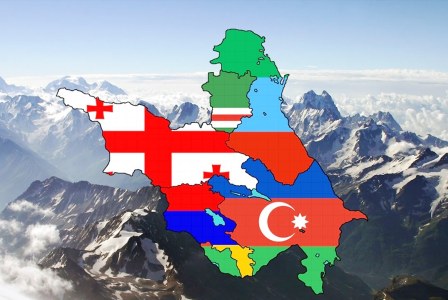
Of all Georgia’s neighbors, the only one participating in Agile Spirit 2019 is Turkey. Armenia and Azerbaijan, which have participated in previous USA-Georgia exercises, are both staying out this time. In Armenia that has caused some consternation among advocates of closer ties with the West and the USA in particular.

“The issue is not the military exercises per se,” said Arman Babajanyan, a member of parliament from the opposition Bright Armenia party, in a Facebook post. “Much more significant is that Russian pressure on Yerevan is growing and seems to have its first manifestations, even though the authorities are trying carefully to conceal this fact. One of the achievements of the Armenian Revolution was the abolition of the Armenia-Russia ‘vassal’ relations, the return of which could cast a shadow over the political significance of these historical events.”

This article was originally published on Eurasianet.


Joshua Kucera is the Turkey/Caucasus editor at Eurasianet, and author of The Bug Pit.


Europe Needs Common Long-Term Strategy for China

Addressing the challenges posed by Beijing requires European unity, as no member state alone has the resources and negotiating power necessary to deal with China on an equal footing.

[Lucrezia Poggetti | East Asia Forum]


China’s rise and its geopolitical ambitions have started to manifest more clearly inside Europe, making the need for a China strategy ever more compelling. European unity is key to effectively addressing the challenges posed by Beijing. After years of closer trade and investment ties, the European Union is realising that close economic relations with China have brought about political and security challenges it was not prepared for.

This newfound awareness is visible in the EU’s latest attempts to protect its strategic sectors and critical infrastructure. This includes the adoption of an EU framework for foreign investment screening and the issuing of guidelines for the security of Europe’s 5G networks.

The European Union has come to appreciate that it needs a strategy for China as, far from being solely an economic player, China is a rising political and security actor with geopolitical ambitions. This was evident in the European Commission’s ‘strategic outlook’ of March 2019, which informed EU leaders’ more assertive tone at the subsequent EU–China Summit in April 2019. Many observers have noticed Brussels’ unprecedented labelling of China as a ‘systemic rival’ and ‘economic competitor’. Less emphasis has been put on the European Union’s acknowledgment that China’s geopolitical goals ‘present security issues for the EU, already in a short- to mid-term perspective’. According to the strategic document, these are visible in China’s increasing military and technological advances and cross-sectoral hybrid threats such as information operations and large military exercises.

Addressing the challenges posed by Beijing requires European unity, as no member state alone has the resources and negotiating power necessary to deal with China on an equal footing. Paris and Berlin have demonstrated support for Brussels’ call for a ‘whole-of-EU’ approach vis-a-vis China, at least symbolically.

During Chinese President Xi Jinping’s state visit to France in March 2019, French President Emmanuel Macron invited European Commission President Jean-Claude Juncker and German Chancellor Angela Merkel to join his meeting with the Chinese leader. The German government also announced its intention to invite all member states to a 2020 EU–China Summit under its EU Presidency. This move raised eyebrows in Brussels, but Berlin hopes to encourage other members to pursue a common approach to China and refrain from Beijing-led ‘multi-bilateral’ talks.

However, governing elites in some European Union member states look at China through the prism of economic opportunity, downplaying the risks. They believe that close political ties with Beijing are key to unlocking greater economic opportunities, which cripples the EU’s efforts to devise a common strategy.

This approach is based on the naive assumption that politically cosying up to the Chinese leadership fosters a special relationship that translates into privileged economic treatment. Such an approach also assumes that a bilateral partnership on equal terms with China is possible. It disregards the fact that the Chinese government can retaliate any time, should it consider it necessary for its own agenda, regardless of whether memoranda, ‘strategic partnerships’ or any other agreements have been signed.

Lately, attempts to devise a coherent EU approach to China have not only hit a wall in Europe’s eastern flank — with the Chinese-led 16+1 grouping of Central and Eastern European countries expanding to 17+1 after welcoming Greece — but also at its core. In March 2019 Xi spent four days in Italy, where the country became the first EU founder and G7 state to officially endorse the Belt and Road Initiative (BRI). This is telling of a broader trend in which Europe criticises the growth of China’s global infrastructure scheme, and demands that the Initiative meet transparency and sustainability standards, while at the same time various European governments endorse the BRI.

Against this backdrop, how can the European Union ensure that its members look to China from a more long-term strategic perspective and act cohesively? An essential step is to close the knowledge and perception gaps across the continent. While it is up to national governments to increase their own countries’ expertise on China, the European Union can lead in driving debates about China’s rise and the implications for Europe. This would benefit those states where information about China is currently largely funded or driven by Beijing.

Democracies in China’s wider neighbourhood — like Australia, New Zealand and Taiwan — have been at the forefront of dealing with China’s systemic challenge. Exchanging notes with these partners would provide European countries with useful information on Chinese activities and response measures to adopt.

The recent 5G recommendations and the new investment screening mechanism show that a few concerted steps have been taken since 2016, when it became more visible that China’s influence was impacting European cohesion vis-a-vis Beijing. Allegedly, members of the China-led 16+1 grouping of Central and Eastern European countries also better coordinated their positions with Brussels in preparation for the latest Summit in Croatia.

The reshuffling of EU institutions that will result from the European Parliament elections raises questions over how Brussels will reshape current efforts into a more coherent and strategic approach towards China going forward. Beijing will likely try to use the opportunity offered by the upcoming changes in the EU administration to advance its interests. Securing European interests vis-a-vis China through a long-term common strategy is increasingly a necessity.

This article was originally published on East Asia Forum.


Lucrezia Poggetti is a Research Analyst at the Mercator Institute for China Studies (MERICS), Berlin.


Frozen Peaks of High Moutains may Vanish

High mountain ice is vital to millions. As the world warms, the glaciers’ global melt could see the frozen peaks vanish.

[Tim Radford | Climate News Network]


Many of the planet’s most scenic – and most valued – high-altitude landscapes are likely to look quite different within the next 80 years: the glaciers’ global melt will have left just bare rock.

By the century’s end, Europe’s famous Alps – the chain of snow- and ice-covered peaks that have become a playground of the wealthy and a source of income and pleasure for generations – will have lost more than nine-tenths of all its glacier ice.

And in the last 50 years, the world’s glaciers – in Asia, the Americas, Europe, Africa and the sub-Arctic mountains – have lost more than nine trillion tonnes of ice as global temperatures creep ever upwards in response to profligate combustion of fossil fuels.

And as meltwater has trickled down the mountains, the seas have risen by 27mm, thanks entirely to glacial retreat.

In two separate studies, Swiss scientists have tried to audit a profit and loss account for the world’s frozen high-altitude rivers, and found a steady downhill trend.

Glacial ice is a source of security and even wealth: in the poorest regions the annual summer melt of winter snow and ice banked at altitude can guarantee both energy as hydropower and water for crops in the valleys and floodplains.

In wealthy regions, the white peaks and slopes become sources of income as tourist attractions and centres for winter sport – as well as reliable sources of power and water.

Swiss focus

In the journal The Cryosphere, a team from the Swiss Federal Institute of Technology, almost always known simply as ETH Zurich, looked into the future of the nation’s own landscape, and beyond.

They made computer models of the annual flow of ice and its melting patterns and took 2017 as the reference year: a year when the Alpine glaciers bore 100 cubic kilometres of ice. And then they started simulating the future.

If humankind kept the promise made by 195 nations in Paris in 2015, to drastically reduce fossil fuel use, lower emissions of carbon dioxide, restore the forests and keep global warming to no more than 2°C above historic levels, then the stores of high ice would be reduced by more than a third over the next eight decades. If humankind went on expanding its use of fossil fuels at the present rates, then half of all the ice would be lost by 2050 and 95% by 2100.

Time lag

But there will be losses in all scenarios: warming so far has seen to that. Ice reflects radiation and keeps itself cold, so change lags behind atmospheric temperature.

“The future evolution of glaciers will strongly depend on how the climate will evolve,” said Harry Zekollari, once of ETH and now at Delft University of Technology in the Netherlands, who led the research. “In the case of a more limited warming, a far more substantial part of the glaciers could be saved.”

The Alpine glaciers were made world-famous first by Romantic painters and poets of the 19th century, among them JMW Turner and Lord Byron. But their contribution to rising sea levels is, in a global context, negligible.

When Swiss researchers and their Russian, Canadian and European partners looked at the big picture, they found that the mass loss of ice from the mountains of Alaska,  Canada, parts of Asia and the Andes matched the increasing flow of water from the melting Greenland ice cap, and exceeded the flow of melting water from the Antarctic continent.

Europe’s modest melt

They report in Nature that glaciers separate from the Greenland and Antarctic sheets covered 706,000 square kilometres of the planet, with a total volume of 170,000 cubic kilometres, or 40 centimetres of potential sea level rise.

And in the five decades from 1961 to 2016, according to careful study of satellite imagery and historic observations, the seas have already risen by 27mm as a consequence of increasing rates of glacial retreat. This is already between 25% and 30% of observed sea level rise so far.

Europe did not figure much in the reckoning. “Globally, we lose three times the ice volume stored in the entirety of the European Alps – every single year,” said Michael Zemp, a glaciologist at the University of Zurich.

He and his colleagues warn: “Present mass-loss rates indicate that glaciers could almost disappear in some mountain ranges in this century, while heavily glacierised regions will continue to contribute to sea level rise beyond 2100.”

This article was originally published on Climate News Network.


Tim Radford, who has been covering climate change for over three decades since 1988, is one of the founding editors of Climate News Network and had worked for the top British newspaper, the Guardian, for 32 years.


Europe, a new security actor in Indo-Pacific

The increasingly apparent fragility of the rules-based order, as well as a lively debate on security and defence, are stepping up European interest in the Indo-Pacific.

[Dr Eva Pejsova | Policy Forum]


French President Emmanuel Macron’s call for the creation of a “real European army” last November revived a lively debate both outside and inside Europe. Is it the end of the transatlantic romance? How will it impact NATO? Who is supposed to be the enemy? What does it mean for the global strategic chessboard? And is it even feasible?

While the dream of a European ‘army’, in a traditional sense, is probably not likely to materialise overnight, the European Union’s (EU) ambition to boost its strategic autonomy is real and shaping up.

Over the last two years, European security and defence integration have taken a great leap forward. The ‘awakening’ of the Permanent Structured Cooperation (PESCO) – boosting its military readiness; a push for an integrated defence industrial policy through the European Defence Fund – bolstering competitiveness and freedom of operational action; or the recent creation of the French-driven European Intervention Initiative (EI2) are some of the concrete steps undertaken since 2017, signaling a change from its status as a civilian power.

What’s behind this change are multiple external and internal factors. First, there has been the realisation that Europe can no longer simply rely on its transatlantic ally to face its many regional and global security challenges.

It is also an effort to take on greater responsibility as a global security provider. The US disengagement from the Iran deal, the Intermediate-Range Nuclear Forces (INF) Treaty, and climate change commitments have revealed the fragility of the global rules-based order and values that Europe wants to champion.

Internally, boosting defence cooperation has finally become a useful element of convergence among often-divided member states, many of whom are facing pressure from rising nationalism, populist movements, and the lasting migration crisis.

As a colleague recently wrote, depending on its scale, the ‘army’ can be understood as a step towards greater responsibility over Europe’s security, hedging against strategic uncertainties, or as an act of emancipation.

Either way, a more strategically autonomous Europe should be better equipped to protect its foreign policy interests.

But what does it all mean for the Indo-Pacific, and what are these interests?

For the longest time, Europe’s efforts to play a role in Asia’s security have been systematically downplayed by traditional regional actors. For Beijing, Europe was merely considered to be echoing US interests. For Washington, it was seen as too opportunistic and not critical enough of China. For both and most other countries in between, the EU was simply a large trading block without any military capacity and with absolutely no say nor added value to regional security.

But times have changed and Europe has never been more concerned and interested in Asian affairs.

One reason for this is China. The multiplication of activities along the Belt and Road Initiative (BRI) brought many of the region’s problems to Europe’s doorstep. Debt-traps, non-transparent investments, and interference in domestic politics have started to pose a direct threat to the EU’s unity and security.

As the world’s largest trading power, Europe’s prosperity is vitally dependent on Asia’s stability and is sensitive to disruptions, especially in the maritime domain – something it tries to act on through its growing security engagements in and with its Asian partners.

Europe has also become more realistic. The 2016 EU Global Strategy, which provides the guiding principles of its new foreign and security policy, urges for a stronger Europe to address current challenges under the concept of “principled pragmatism” – with international law and its underlying norms as a benchmark.

Subsequent strategies on specific countries and sub-regions, such as the China and India Strategy, echo these principles, and so does its latest Strategy on connecting Asia and Europe, which is of the greatest interest to the Indo-Pacific theatre.

Contrary to some speculations, this strategy does not pretend to counterpoise or compete with the BRI. Rather, it should be read as ‘terms of reference’ for the EU’s vision of connectivity – which should be sustainable, comprehensive, rules-based, and transparent. To achieve that, it encourages cooperation with all stakeholders, including China.

The emergence of the ‘Indo-Pacific’ as a concept has been closely watched in Brussels. With its geographical scope, focus on connectivity and maritime security, as well as the values of freedom and openness it promotes, it is well aligned to its own interests and ambitions in the region.

The involvement of some EU member states provides an additional incentive. Indeed, Macron’s call for a stronger, more responsible Europe serves France’s own strategic interests well. In a post-Brexit world, France would be the only European country with an effective military presence in the Indo-Pacific. Additionally, France is a close strategic partner of Japan, Australia, and India, and a key driver of European engagement in regional security.

The EU can serve as an amplifier to member states’ foreign policies where interests align, and the Indo-Pacific is certainly one of them. But stability in the region cannot be sustained without taking into account all players, existing institutions and security structures.

A year ago, I pointed out some of the potential dangers with the concept: an escalating rivalry between ‘the Quad’ and China; smaller countries left with a binary choice; and neglect of existing regional cooperative platforms and multilateral governance. These are all still potential dangers today.

With its unique experience, economic weight, and extensive diplomatic network, Europe can provide a much needed normative underpinning as well as greater legitimacy to the new geopolitical construct. The promotion of rule of law, economic integration, cooperative security, multilateralism, good governance, and economic, social and environmental sustainability stand at the core of Europe’s approach to international security, which can be its best contribution to peace and stability in Asia, including some of its greatest security hotspots.

The EU is clearly a different type of a security actor in the Indo-Pacific. In many ways, it can be seen as that odd friend that is too complicated to understand and not very charismatic, but one that shares the same vision and can be trusted to stand up for values that are crucial for making the new regional order sustainable.

The question now is whether this newly found strategic autonomy will translate into an equally ambitious foreign policy. As we gear up for the next European elections in May 2019, populist movements are in the ascendency. The risk is that domestic problems that currently shake European capitals – from the gilets jaunes to rising identity politics, anti-immigration and nationalist tendencies – will distract from maintaining a coherent foreign policy course.

The second, equally important question, is whether traditional Indo-Pacific powers – Australia, India, Japan, and the US at the forefront – will be willing to acknowledge its added value and ready to accept a new, and somewhat odd, player entering the game.

This article was originally published on Policy Forum.


Dr Eva Pejsova is a Senior Analyst at the EU Institute for Security Studies (EUISS) dealing with East Asia, maritime security and EU – Asia relations.