All posts by Global Affairs Think Tank

GAC (Global Affairs Cooperation) Initiative is a virtual platform connecting Academics, Analysts, Experts, Researchers, Authors, Activists, Journalists, Lawyers, and all individuals passionate about global affairs. Our mission is to foster collaboration, amplify expertise, and drive impactful solutions on a global scale. CONNECT WITH THOUGHT-LEADERS GAC Initiative brings together leading voices from diverse fields—Business, Economics, Environment, Defense & Security, Geopolitics, International Relations, Peace & Conflict, Politics, Technology, Trade & Investment, and more. Members collaborate, exchange ideas, and engage with governments, NGOs, research institutes, and global organizations. EMPOWERING EMERGING TALENT We provide fresh graduates and young professionals opportunities to gain hands-on experience as voluntary analysts or authors. By contributing research, analysis, and publications, they gain exposure and build portfolios that open doors to careers in media, research, and policy-making. BE PART OF SOMETHING BIGGER Join GAC Initiative to expand your network, collaborate with thought-leaders, and contribute to shaping solutions for today’s global challenges. Together, we create a community where expertise meets action.

The Spanish Labyrinth

Newly minted Prime Minister Pedro Sanchez faces at least two daunting tasks: cleaning up the wreckage wrought by enforced austerity and resolving the Catalan crisis after last fall’s independence referendum.

[Conn M. Hallinan | Oped Column Magazine]


As the socialist-led government takes over in Spain, newly minted Prime Minister Pedro Sanchez faces at least two daunting tasks: cleaning up the wreckage wrought by years of European Union (EU) enforced austerity and resolving the Catalan crisis exacerbated by Madrid’s violent reaction to last fall’s independence referendum. Unfortunately, his Party’s track record is not exactly sterling on either issue.

Sanchez, leader of the Socialist Workers Party (PSOE), patched together parties in Catalonia and the Basque region, plus the leftist Podemos Party, to oust long-time Prime Minister Mariano Rajoy of the People’s Party (PP). But is the telegenic former economics professor up to the job, and will his Party challenge the economic program of the EU’s powerful “troika”—the International Monetary Fund, the European Central Bank and the European Commission?

The answers to those questions are hardly clear, and in many ways the cross currents and rip tides of Spanish politics still resemble Gerald Brenan’s classic study of the Civil War, The Spanish Labyrinth.

While the issue that brought Rajoy down was corruption—a massive kickback scheme that enriched scores of high-ranking PP members— his Party was already weakened by the 2015 election, and he has been forced to rely on the conservative Ciudadanos Party based in Catalonia to stay in power. In short, it was only a matter of time before he fell.

Sanchez promises to address the “pressing social needs” of Spaniards, although he has been vague about what that actually means. But Spain is hurting. While economic growth returned in 2013, unemployment is still at 16.1, and youth joblessness is 35 percent. Rajoy took credit for the economy’s rebound from the massive financial meltdown in 2008, but there is little evidence that budget cuts and austerity did the trick. The two main engines for growth were cheap oil and a weak currency.

The job growth has mainly been in short-term and temporary jobs, with lower pay and fewer benefits. That is not specific to Spain, however. Of the 5.2 million jobs created in the EU between 2013 and 2016, some 2.1 million of them have been short term, “mini” jobs that have been particularly hard on young people. Many continue to live at home with their aging parents, and 400,000 have emigrated to other European countries.

Education, health care, and infrastructure have all deteriorated under a blizzard of budget cuts, and Sanchez will have to address those problems. His party’s record on the economy, however, has been more centrist than social democratic, and the PSOE basically accepts the neo-liberal mantra of tax cuts, deregulation and privatization. It was PSOE Prime Minister Jose Zapatero who sliced more than $17 billion from the budget in 2010, froze pensions, cut child care funds and home care for the elderly, and passed legislation making it easier to lay off workers.

It was anger at the Socialists over rising unemployment that swept Rajoy and the PP into power in 2011. The PSOE has never recovered from that debacle, dropping from 44 percent of the vote to 24.9 percent today. It has only 84 deputies in the Parliament, just 14 more than Podemos.

When Podemos leader Pablo Iglesias proposed forming a government of the left. Sanchez rejected it and instead appointed all PSOE people to the cabinet. However, he will have to rely on support from the left to stay in power, and there is no guarantee that it will be there unless the Socialists step away from their centrism and begin rolling back the austerity measures.

Sanchez has a mixed record on leftism vs. centrism. He was ousted from the Party’s leadership last year by the PSOE’s rightwing when he considered forming a united front of the left. It was the Party’s rank and file, angered at the rightwing Socialists that allowed Rajoy to form a minority government that put him back in power. So far, Sanchez has been unwilling to consider the kind of alliance of left parties that has been so successful in Portugal.

The new government will also need the support of the two Catalan parties, and that will likely be an uphill slog. The Catalans just elected a government that supports independence, although its President, Quim Torra has called for “talks.”

The current Catalonia crisis was ignited when Rajoy torpedoed a 2006 agreement between the Spanish government and the Catalan government that would have given the province greater local control over its finances and recognized the Catalan’s unique culture. Under the prodding of the PP, the Constitutional Court overturned the agreement and shifted the dispute from the political realm to a legal issue.

At the time, the idea of independence was marginal in Catalonia, but the refusal of Rajoy to even discuss the issue shifted it to the mainstream. “Independentism, which until 2010 was a decidedly minority option in Catalonia, has grown immensely,” according to Thomas Harrington, a Professor of Hispanic Studies at Trinity College, CT.

The Catalans began pressing for a referendum on independence—nearly 80 percent supported holding one—although it was initially seen as non-binding. Even though Podemos did not support the idea of independence, it backed the basic democratic right of the Catalans to vote on the issue. The PSOE, however, was as hard-nosed on the issue as Rajoy and the PP. Not only did the Socialists not support the right of the Catalans to vote, they backed Rajoy’s crackdown on the province, although they decried the violence unleashed on citizens trying to vote during last October’s referendum.

Some 2.3 million Catalans out of the 5.3 million registered voters went to the polls and overwhelmingly endorsed independence in spite of the fact that Rajoy sent some 10,000 National Police and Guardia Civil into the province to seize ballot, beat voters and injure more than 850 people. Legal procedures have been filed against over 700 mayors and elected officials, and the Catalan leadership is either in jail or on the run. While Sanchez said the crackdown was “a sad day for our democracy,” he will have a lot of explaining to do to the Catalan government.

Unlike Rajoy, Sanchez says he wants a dialogue with the Catalans, although he also says he intends to uphold the Spanish constitution, which does not permit secession.

Catalan society is deeply split. The big cities tend to be opposed to independence, as are many trade unions. The left is divided on the issue, but many young people support it. As the Financial Times’ Tobias Buck points out, “The younger generation, who have been schooled in Catalan and have less contact with the rest of Spain than their parents, are among the most enthusiastic backers of independence.”

It is also clear that the brutality of Rajoy’s assault has moved people in that direction, although polls show independence still does not have a majority. But in a sense, that is irrelevant. When almost half the population wants something that “something” has to be addressed, and if Buck is right about the demographics, time is running out for Madrid.

There are other serious constitutional issues that need to be addressed as well. Rural areas are greatly favored over cities. While it takes 125,000 voters in Madrid to elect a representative, in some rural areas it takes as few as 38,000. There is also a need to address Rajoy’s draconian laws against free speech and assembly.

Just how stable Sanchez’s government will be is unclear. He must keep the Basques and the Catalans on board and do enough on the economy to maintain the support of Podemos.

The PP is badly wounded, and the rightwing Ciudadanos Party—the only one that voted against the no confidence resolution—will be looking to fill that vacuum. Ciudadanos calls itself the “center,” but its economic policies are the same as those of the PP, and it is rabidly opposed to separatism. It performed poorly in the last election and in regional elections in Galicia and the Basque region. It did well in the recent Catalan elections, but that is because the Popular Party collapsed and its voters shifted to Ciudadanos.

Sanchez must recognize that the Catalan issue is political, not legal, and that force is not an option. As Napoleon Bonaparte’s Foreign Minister Talleyrand once remarked, “You can do anything you like with bayonets, except sit on them,” summing up the truism that repression does not work in the long run.


Conn M. Hallinan is a California-based independent journalist. He is a regular columnist for the think tank Foreign Policy In Focus and holds a PhD in Anthropology from the University of California, Berkeley.
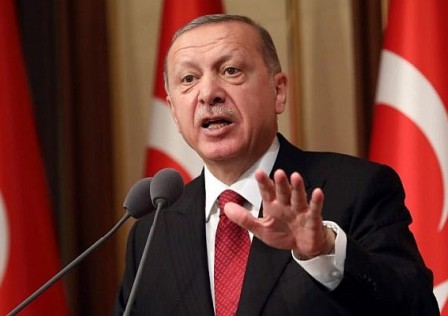

Turkey’s President: Short Term Victory, Long Term Trouble

The election will be held essentially under martial law, and Erdogan has loaded all the dice, marked every card, and rigged every roulette wheel. 

[Conn M. Hallinan | Oped Column Magazine]


When Turkish President Recep Tayyip Erdogan called for a presidential and parliamentary election June 24—jumping the gun by more than a year—the outcome seemed foreordained: the country is under a state of emergency, Erdogan has imprisoned more than 50,000 of his opponents, dismissed 140,000 from their jobs, jailed a presidential candidate, and launched an attack on Syria’s Kurds, that is popular with most Turks.

But Erdogan’s seemingly overwhelming strength is not as solid as it appears, and the moves the President is making to insure a victory next month may come back to haunt him in the long run.

There is a great deal at stake in the June vote. Based on the outcome of a referendum last year, Turkey will move from a parliamentary system to one based on a powerful executive presidency. But the referendum vote was very close, and there is widespread suspicion that Erdogan’s narrow victory was fraudulent.

This time around Turkey’s President is taking no chances. The electoral law has been taken out of the hands of the independent electoral commission and turned over to civil servants, whose employment is dependent on the government. The state of emergency will make campaigning by anything but Erdogan’s Justice and Development Party (AKP) and its ally, the National Action Party (MHP), problematical.

But Erdogan called for early elections not because he is strong, but because he is nervous about the AKP’s strong suit, the economy. While growth is solid, unemployment is 11 percent (21 percent for youth), debts are piling up and inflation—12 percent in 2017—is eating away at standards of living.

The AKP’s 16-year run in power is based on raising income for most Turks, but wages fell 2 percent over the past year, and the lira plunged 7.5 percent in the last quarter, driving up the price of imported goods. Standard & Poor’s recently downgraded Turkish bonds to junk status.

Up until now, the government has managed to keep people happy by handing out low interest loans, pumping up the economy with subsidies and giving bonuses to pensioners. But the debt keeps rising, and investment—particularly the foreign variety— is lagging. The Turkish economy appears headed for a fall, and Erdogan wants to secure the presidency before that happens.

To avoid a runoff, Erdogan needs to win 50 percent of the vote, and most polls show him falling short, partly due to voter exhaustion with the endless state of emergency. But this also reflects fallout from the President’s war on the Kurds, domestic and foreign.

The AKP came to power in 2002 with a plan to end the long-running war with Turkey’s Kurdish minority. The government dampened its suppression of Kurdish language and culture, and called a truce in the military campaign against the Kurdish Workers Party.

But the leftist Kurdish-based People’s Democratic Party (HDP) broke through the 10 percent threshold in 2015 to put deputies in the Parliament, denying the AKP a majority. Erdogan promptly declared war on the Kurds. Kurdish deputies were imprisoned, Kurdish mayors were dismissed, Kurdish language signs were removed, and the Turkish Army demolished the centers of several majority Kurdish cities.

Erdogan also forced a new election—widely seen as fraudulent—and re-claimed the AKP’s majority.

Ankara also turned a blind eye to tens of thousands of Islamic State and Al-Qaeda fighters who crossed the Turkish border to attack the government of Bashar al-Assad and Syria’s Kurdish population. The move backfired badly. The Kurds—backed by American air power—defeated the Islamic State and Al-Qaeda, and the Russians turned the tide in Assad’s favor.

Turkey’s invasion of Syria—operations Olive Branch and Euphrates Shield— is aimed at the Syrian Kurds and is supported by most Turks. But, no surprise, it has alienated the Kurds, who make up between 18 and 20 percent of Turkey’s population.

The AKP has traditionally garnered a substantial number of Kurdish voters, in particular rural, conservative ones. But pollster Kadir Atalay says many Kurdish AKP supporters felt “deceived and abandoned” when Erdogan went after their communities following the 2015 election. Kurds have also been alienated by Erdogan’s alliance with the extreme rightwing nationalist MHP, which is violently anti-Kurdish.

According to Atalay, alienating the Kurds has cost the AKP about 4 percent of the voters. Considering that the AKP won 49.5 percent of the vote in the last national election, that figure is not insignificant.

The progressive HDP is trying hard to win over those Kurds. “The Kurds—even those who are not HDP supporters, will respond to the Afrin operation [invasion of Syria], the removal of Kurdish language signs, and the imprisonment of [Kurdish] lawmaker,” HDP’s parliamentary whip Meral Danis Bestas told Al Monitor.

The HDP, whose imprisoned leader, Selahatt Demirtas, is running for president, calls for a “united stance” that poses “left-wing democracy” against “fascism.” The danger is that if the HDP fails to get at least 10 percent of the vote, its current seats will taken over by the AKP.

Erdogan has also alienated Turkey’s neighbors. He is in a tense standoff with Greece over some tiny islands in the Aegean Sea. He is at loggerheads with a number of European countries that have banned him from electioneering their Turkish populations for the June 24 vote. And he is railing against NATO for insulting Turkey. He does have a point—a recent NATO exercise designated Turkey “the enemy.

However, Erdogan’s attacks on NATO and Europe are mostly posturing. He knows Turkish nationalists love to bash the European Union and NATO, and Erdogan needs those votes to go to him, not the newly formed Good Party—a split from the rightwing MHP—or the Islamist Felicity Party.

No one expects the opposition to pull off an upset, although the centrist and secular Republican People’s Party (CHP) has recently formed an alliance with the Good Party, Felicity, and the Democratic Party to insure that all pass the 10 percent threshold for putting deputies in parliament.

That electoral alliance excludes the leftist HDP, although it is doubtful the Kurdish-based party would find common ground with parties that supported the jailing of its lawmakers. Of the Party’s 59 deputies, nine are in jail and 11 have been stripped of their seats.

There is an outside chance that Erdogan could win the presidency but lose his majority in Parliament. If the opposition does win, it has pledged to dump the new presidential system and return power to parliament.

The election will be held essentially under martial law, and Erdogan has loaded all the dice, marked every card, and rigged every roulette wheel.

There is virtually no independent media left in the country, and there are rumors that the AKP and the MHP have recruited and armed “supporters” to intimidate the opposition. A disturbing number of guns have gone missing since the failed 2016 coup.

However, as Max Hoffman of the Center for American Progress notes, the election might not be a “slam dunk.” A run-off would weaken Erdogan just when he is preparing to take on a number of major problems other than the economy:

  • Turkey’s war with the Kurds has now spread into Syria and Iraq.
  • In Syria, Assad is likely to survive and Turkey will find it difficult—and expensive—to permanently occupy eastern Syria. Erdogan will also to have to deal with the thousands of Islamic State and al-Qaeda fighters now in southern Turkey.
  • Growing tensions with Egypt over the Red Sea, and Ankara’s new alliance with Sudan, which is at odds with Cairo over Nile River water rights.
  • The strong possibility of a U.S confrontation with Iran, a nominal ally and important trading partner for Turkey.
  • The possibility—remote but not impossible—that Turkey will get into a dustup with Greece.
  • And last, the rising price of oil—now over $70 a barrel—and the stress that will put on the already indebted Turkish economy.

The Turkish president may get his win next month, but when trouble comes, he won’t be able to foist it off on anyone. He will own it.


Conn M. Hallinan is a California-based independent journalist. He is a regular columnist for the think tank Foreign Policy In Focus and holds a PhD in Anthropology from the University of California, Berkeley.