If there is a phrase that sums up the local elections results, it might be “revenge of the Kurds.”
[Conn M. Hallinan | Oped Column Magazine]
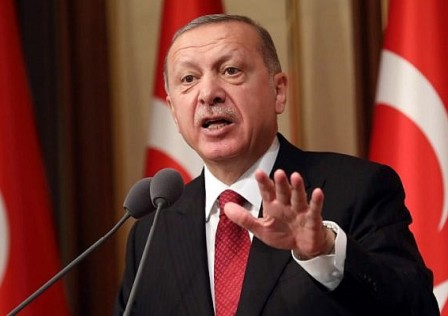
Turkish President Recep Tayyip Erdogan, whose political power had remained unchallenged for last 18 years, is suddenly facing several domestic and foreign crises, with no obvious way out.
It is unfamiliar ground for a master politician like Erdogan, who has moved nimbly from the margins of power to the undisputed leader of the largest economy in the Middle East.
The problems that Erdogan has been facing lately are largely of his own making: an economy built on a deeply corrupt construction industry, a disastrous intervention in Syria and a declaration of war on Turkey’s Kurdish population. All of these policies have backfired badly.
Erdogan’s conservative Justice and Development Party, also known as the AK Party, had lost control of all of Turkey’s major cities, including the country’s political center, Ankara, and the nation’s economic engine, Istanbul in the local elections of March 31, 2019. Worth noting that Istanbul contributes more than 30 percent of Turkey’s GNP.
That is not to say that the man is down and out. The AK Party is demanding a re-run of the Istanbul election and is preventing the progressive mayors of several Kurdish cities in Turkey’s southeast from assuming office.
Erdogan is not a man who is shy of using brute force and intimidation to get his way. Close to 10,000 of his political opponents are in prison, hundreds of thousands of others have been dismissed from their jobs, and opposition media is largely crushed. The final outcome of the election is by no means settled.
Erdogan’s problems will only be exacerbated if he continues to use force.
The Kurds are a case in point. When the leftist Kurdish-based People’s Democratic Party (HDP) made a major electoral breakthrough in 2015 – winning 81 seats in the Parliament and denying the AK Party a majority – Erdogan responded by ending peace talks with the Kurds and occupying Kurdish towns and cities.
However, instead of cowing the Kurds, it sowed the wind, and the AK Party reaped the hurricane in the March election.
An analysis of the Istanbul mayor’s race shows that the AK Party and its right-wing National Movement Party alliance won about the same percentage of votes it had in last year’s presidential election. The same was true for the AK Party’s opposition — the secular Republican People’s Party (CHP) and its ally, the right-wing Good Party.
The difference was that the HDP did not field a candidate, and its imprisoned leader, Selahattin Demiratas, urged the Kurds and their supporters to vote against Erdogan’s candidate. They did so in droves and tipped the balance to the CHP’s candidate. That pattern pretty much held for the rest of the country and accounts for the AK Party’s loss of other cities, like Izmar, Antalya, Mersin and Adana.
When the Turkish state waged a war against the Kurds in the 1980s and ’90s, many fled rural areas to take up life in the cities. Istanbul is now about 11 percent Kurdish. Indeed, it is the largest grouping of urban Kurds in the world. So if there is a phrase that sums up the election, it might be “revenge of the Kurds.”
But the AK Party’s loss of the major urban centers is more than a political setback. Cities are the motors for the Turkish economy and for the past 18 years Erdogan has doled out huge construction projects to AK Party-friendly firms, which, in turn, kick money back to the Party. The President has delivered growth over the years, but it was growth built on the three “Cs”: credit, corruption and cronyism.
Those chickens have finally come home to roost. Foreign currency reserves are low, Turkey’s lira has plummeted in value, debts are out of hand, and unemployment – particularly among the young and well educated – is rising.
In a rare case of political tone deafness, Erdogan focused the recent campaign around the issues of terrorism and the Kurds, ignoring polls that showed most Turks were far more worried about high prices and joblessness.
Where Erdogan goes from here is not clear.
Turkey is holding talks with the International Monetary Fund (IMF) about a possible bailout, but Erdogan knows that this means increased taxes and austerity, not exactly the kind of program that delivers votes.
There will be no elections until the 2023 presidential contest, so there is time to try to turn things around, but how? Foreign investors are wary of Turkey’s political volatility, and the Europeans and Americans are unhappy with Erdogan’s erratic foreign policy.
The latest dust-up is fallout from Turkey’s disastrous 2011 decision to support the overthrow of President Bashar Assad of Syria. Assad has survived – largely because of Russian and Iranian support – and now Turkey is hosting millions of refugees and bleeding out billions of dollars occupying parts of northern Syria.
Turkey initially tried to get NATO to challenge Moscow in Syria – even shooting down a Russian warplane – but NATO wanted no part of it. So Erdogan shifted and cut a deal with Moscow, part of which involved buying the Russians new S-400 anti-missile and aircraft system for $2.5 billion.
Backing the extremists trying to overthrow Assad was never a good hand, but Erdogan has played it rather badly.
The S-400 deal made NATO unhappy, as the NATO doesn’t want high-tech Russian military technology potentially eavesdropping on a NATO member country, particularly on American warplanes based in Turkey’s Incirlik Air Base.
The US Congress is threatening to block Turkey’s purchase of the F-35 fifth generation fighter plane, even though Turkey is an investor in the project. The Trump administration has also warned Ankara that it will apply the 2017 Countering America’s Adversaries Through Sanctions Act if Turkey buys Russian military equipment. Sanctions could damage Ankara’s already troubled economy, given that Turkey is officially in a recession.
The Americans are so upset about this S-400 business, that the Senate recently proposed lifting an arms embargo on Cyprus and signing energy agreements with Greece and Egypt — two of Turkey’s major regional rivals.
Blocking Turkey’s purchase of the F-35 may end up being a plus for Ankara. The plane is an over-priced lemon. Some of Erdogan’s advisers argue that Ankara could always turn to Russia for a fifth generation warplane (and one that might actually work).
There is some talk about throwing Turkey out of NATO, but that is mostly bluff. The simple fact is that NATO needs Turkey more than Turkey needs NATO. Ankara controls access to the Black Sea, where NATO has deployed several missile-firing surface ships. Russia’s largest naval base is on the Crimean Peninsula and relations between Moscow and NATO are tense.
A strategic turn toward Moscow seems unlikely. The Russians oppose Turkey’s hostility toward the Kurds in Syria, don’t share Erdogan’s antagonism toward Egypt, Israel and Saudi Arabia, and have differences with Ankara over Cyprus and the Caucasus.
And for all the talk about increasing trade between Russia and Turkey, the Russian economy is not all that much larger than Turkey’s and is currently straining under NATO-applied sanctions.
On the one hand, Ankara is angry with Washington for its refusal to extradite Fethullah Gulen, a Muslim leader that Erdogan claims was behind the failed 2016 coup. On the other hand, the Turkish President also knows that the US pretty much controls the IMF and he will need American support if he goes for a bailout.
How Erdogan will handle his domestic problems and foreign entanglements is anyone’s guess.
Erdogan the ‘politician‘ made peace with the Kurds, established a good neighbor policy regionally and lifted tens of millions of Turks out of poverty. But Erdogan the ‘autocrat‘ pulled his country into a senseless war with the Kurds and Syria, distorted the economy to build an election juggernaut, jailed political opponents and turned Turkish democracy into one-man rule.
If the local elections were a sobering lesson for Erdogan, they should also be a wakeup call for the mainstream Turkish opposition. The only reason the CHP now runs Turkey’s major cities is because the Kurdish HDP took a deep breath and voted for the Party’s candidates. That must not have been easy. The CHP was largely silent when Erdogan launched his war on the Kurds in 2015 and voted with the AKP to remove parliamentary immunity for HDP members. That allowed the Turkish President to imprison 16 HDP parliamentarians, remove HDP mayors, and smash up Kurdish cities.
The Kurds demonstrated enormous political sophistication in the recent Turkish balloting, but they will not be patient forever. Erdogan can be challenged, but – as the election demonstrated – only by a united front of center-left and left parties. That will require the CHP alliance to find a political solution to the demands of the Kurds for rights and autonomy.
Conn M. Hallinan is a California-based independent journalist. He is a regular columnist for the think tank Foreign Policy In Focus and holds a PhD in Anthropology from the University of California, Berkeley.
 European Union Politics